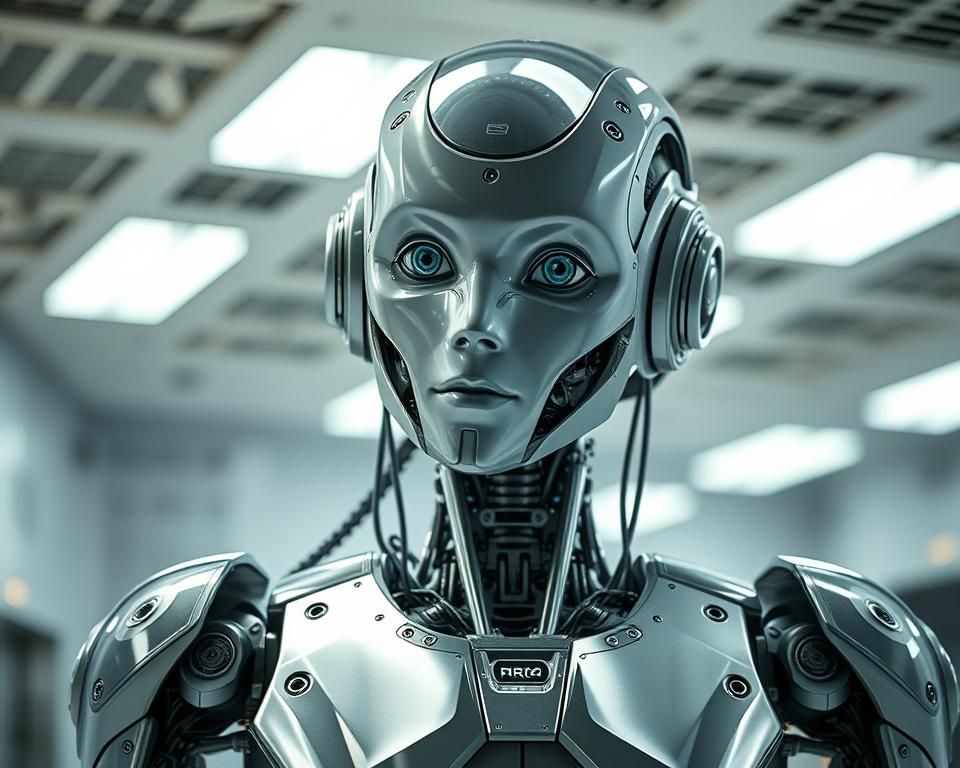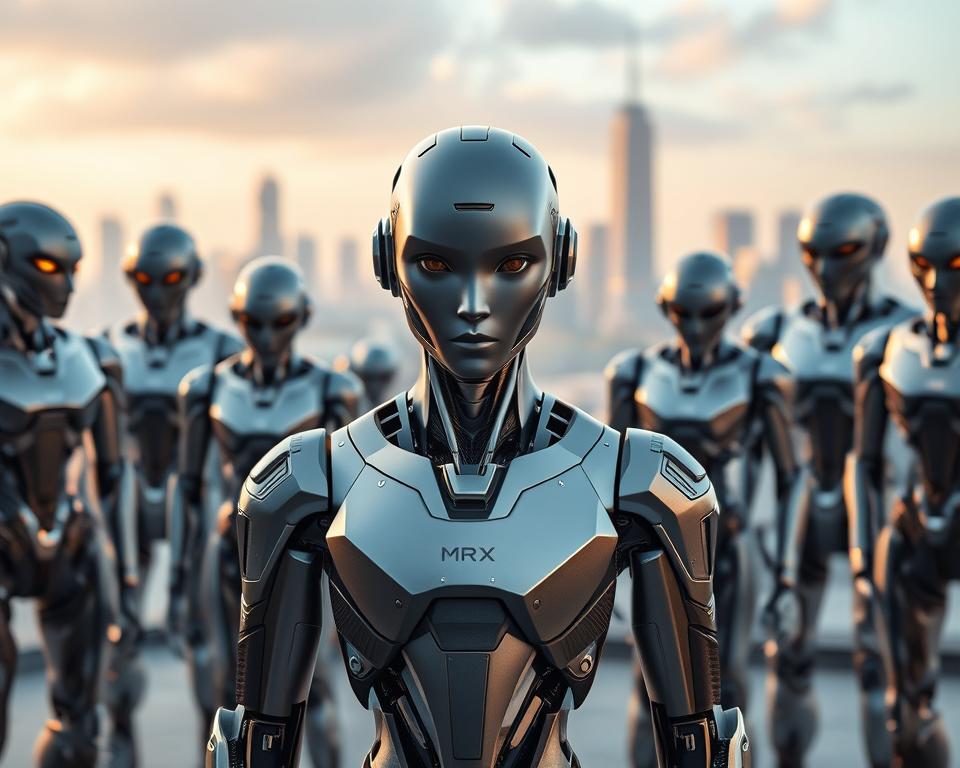
Are advanced androids the future of robotics technology? The line between humans and machines is getting thinner. Sophisticated humanoid machines are changing industries and how we use technology.
These humanoid robots are not just like humans. They can do complex tasks. This article will look at the top machines making a big difference in many areas.
Key Takeaways
- Overview of the top 5 humanoid machines
- Features and applications of advanced androids
- Impact of robotics technology on various industries
- Potential future developments in humanoid robotics
- Current challenges and limitations
Introduction to Humanoid Robots
The creation of humanoid robots is a big step in robotics technology. It lets machines talk and act like humans. These robots look like people and move like them too.
What Are Humanoid Robots?
Humanoid robots are artificial intelligence robots that look and act like humans. They have special sensors and parts that help them do tricky things. These robots are used in places like hospitals, schools, and stores.
| Feature | Description | Benefit |
|---|---|---|
| Human-like Appearance | Designed to resemble humans | Enhances user interaction |
| Advanced Sensors | Equipped with sensors for complex tasks | Improves performance and safety |
| AI-powered | Utilizes artificial intelligence for decision-making | Enables autonomous operation |
Brief History of Humanoid Robotics
The idea of humanoid robots has been around for a long time. But, in recent years, they’ve gotten a lot better. The humanoid robot market is growing fast because of new tech.
The history of humanoid robots is filled with important moments. The first one, WABOT-1, was made in Japan in the 1970s. Since then, robots like Sophia and ASIMO have been made. They can do more things than ever before.
Sophia by Hanson Robotics
Sophia is a top-notch android from Hanson Robotics. It’s made to talk and act like a human, thanks to its smart AI. This lets it show emotions and chat in a way that feels real.
Overview and Features
Sophia uses the latest tech to understand and show human feelings. It can even recognize faces and talk back. Its advanced android capabilities make it stand out.
- Facial recognition and expression simulation
- Advanced speech processing capabilities
- Ability to engage in conversation and respond to questions
Social Intelligence and Interaction
Sophia is special because it gets human emotions. This makes it more empathetic and fun to talk to. It’s perfect for humanoid robot application industries like customer service and education.
Its ability to mimic human talk and expressions is key. This makes it great for many uses, like:
- Customer service and support
- Educational purposes and research
- Healthcare and companionship for the elderly
Applications and Media Presence
Sophia has caught a lot of attention in the media. It’s been in many interviews and shows, showing its wide range of uses.
It’s not just for now; Sophia has a bright future. It could be used in:
- Entertainment and media production
- Research and development in robotics and AI
- Service industries, including retail and hospitality
Sophia’s fame in pop culture shows how far humanoid robots have come. It’s a big step in advanced android technology.
ASIMO by Honda
The creation of ASIMO by Honda was a big step forward in humanoid robots. ASIMO, short for Advanced Step in Innovative Mobility, shows Honda’s dedication to robotics.
Technological Innovations
ASIMO is known for its cutting-edge tech. It can run, walk on rough surfaces, and climb stairs. Its advanced balance system lets it move smoothly and stay stable.
The robot has many sensors and cameras. It can see faces, understand voice commands, and get gestures.
Key Capabilities and Features
ASIMO can run up to 4 miles per hour. It can also do tasks that need fine motor skills, like pouring drinks or carrying things.
- Advanced mobility with the ability to run and climb stairs
- Sophisticated sensor system for environmental interaction
- Capability to recognize and respond to voice commands and gestures
Historical Impact on Robotics
Since it was introduced, ASIMO has made a big difference in robotics. It has motivated many robotics engineers and researchers. It has shown what humanoid robots can do.
ASIMO’s impact goes beyond its tech. It shows the potential for robots to help and work with humans in many places.
Pepper by SoftBank Robotics
Pepper, made by SoftBank Robotics, is changing how we talk to artificial intelligence robots. This robot is made to connect with people in a more personal way. It’s useful in many places.
Design and Functionality
Pepper is all about talking to humans. It has cool sensors and AI that let it get what people are feeling and need. It can do lots of things, like help customers or teach in schools.
- Advanced sensors for human interaction
- AI-driven emotional recognition technology
- Versatile applications in retail and education
Uses in Retail and Education
In stores, Pepper helps make shopping better by giving personal help and info. In schools, it teaches programming and robotics in a fun way. This makes hard ideas easier to understand.
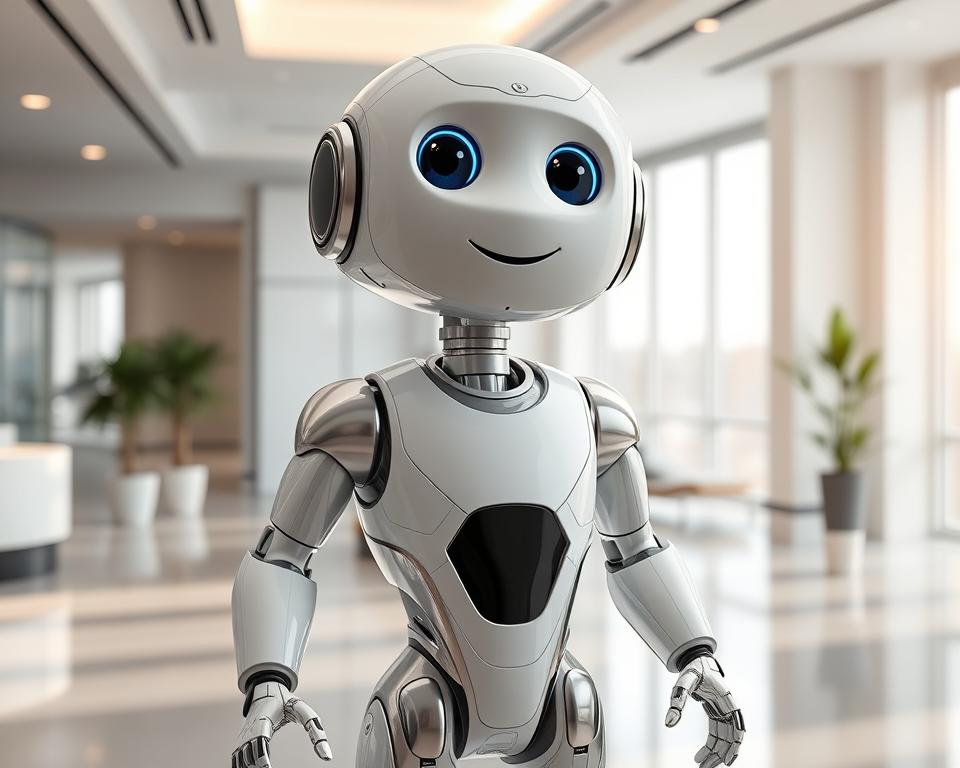
Pepper’s use in these areas shows it can really change things for the better.
Emotional Recognition Technology
Pepper’s best feature is its emotional recognition technology. It can tell and react to how people feel. This makes talking to Pepper feel more real and caring.
- Detection of human emotions through facial and vocal cues
- Responsive actions based on emotional state
- Continuous learning and improvement through AI
As the humanoid robot market grows, robots like Pepper will be key in changing how we interact with them.
Atlas by Boston Dynamics
Atlas, made by Boston Dynamics, is a top-notch humanoid robot. It shows how far robotics and AI have come. It’s a great example of what advanced androids can do in different fields.
Engineering Marvels and Capabilities
Atlas uses the latest tech to do tricky tasks. It can balance, move fast, and is strong. It can also handle tough terrains and harsh weather.
Its smart sensors and programs let it adapt quickly. This makes it very useful in many situations.
Applications in Various Industries
Atlas can be used in many areas, like search and rescue, or in factories. It’s great for getting to hard-to-reach places. In humanoid robot application industries, it can make things safer and more efficient.
In disasters, Atlas can find people and check damage. In factories, it can help with tasks that are too risky for people.
Future Developments and Potential
Atlas is a big step forward in humanoid robots. As tech gets better, Atlas and others will get even more advanced. We might see better AI, stronger builds, and more uses.
Atlas’s future looks bright. It will likely play a big part in robotics and many industries. With more research, Atlas will become even more important in our world.
NAO by SoftBank Robotics
NAO, made by SoftBank Robotics, is changing education with its robotics technology. This humanoid robot makes learning fun and hands-on. It helps students learn programming and robotics.
Educational Use Cases
NAO is used in schools to teach programming, robotics, and problem-solving. It makes learning interactive, helping students understand better.
It fits in schools from elementary to universities. NAO is great for teachers who want to add robotics technology to their lessons.
Programming and AI Features
NAO is known for its AI features and programming skills. It can be programmed in languages like Python, C++, and Java. This makes it easy for students of all levels.
NAO can do many things, from simple tasks to complex problems. This lets students see how humanoid robots work in real life.
Community and Development Support
SoftBank Robotics helps NAO users a lot. They have a big community and lots of resources. This is very helpful for teachers and developers.
The NAO community is always working together. They share their projects and ideas. This helps make NAO even more useful in the humanoid robot market.
Romeo by SoftBank Robotics
Romeo, a humanoid robot by SoftBank Robotics, is a big step in caring for the aging population. As more people get older, we need new ways to help them. Romeo is here to offer care and friendship.
Vision for Elderly Care
Romeo helps older adults with many tasks, making their lives better. Its advanced AI lets it understand and meet their needs. It offers companionship and support.
Romeo aims to assist with daily tasks, remind people to take their medicine, and offer emotional support. Its goal is to improve the well-being of the elderly.
Interactive and Conversational Skills
Romeo shines with its interactive and conversational skills. It has advanced language skills for deep conversations.
It can understand and respond to voice commands, making it a friendly companion. Its conversational AI aims to fight loneliness and isolation in older adults.
Using artificial intelligence robots like Romeo in elderly care boosts the quality of care. Romeo shows the potential of humanoid robots in healthcare and other fields.
Spot by Boston Dynamics
Spot by Boston Dynamics is a standout in robotics for its agility and adaptability. It can easily move through tough terrains. This makes it perfect for many industrial uses.
Versatility and Mobility
Spot is known for its amazing mobility. It can move through complex places with its special legged design. This lets it go where wheeled robots can’t.
Key Features of Spot’s Mobility:
- Advanced legged locomotion for navigating challenging terrains
- Ability to climb stairs and navigate through rubble or debris
- Robust design for operation in harsh weather conditions
Industrial Applications and Use Cases
Spot is great for many industrial tasks. It’s good for checking things out and for rescue work.
| Industry | Application | Benefits |
|---|---|---|
| Construction | Site inspection and monitoring | Enhanced safety, reduced costs |
| Search and Rescue | Navigating through rubble or debris | Faster response times, improved survivability |
| Oil and Gas | Inspection of infrastructure | Increased efficiency, reduced risk to humans |
Comparison with Other Humanoid Robots
Spot isn’t like traditional humanoid robots. But it’s as good at being versatile and adaptable. Unlike some robots made for talking to people, Spot focuses on moving and doing tasks.
Spot’s special skills in industrial settings are clear. Its mobility and toughness give it big advantages.
The Future of Humanoid Robots
The future of humanoid robots is exciting and full of possibilities. They will change many industries with new robotics technology. These robots will greatly impact our daily lives and work places.
Trends in Robotics Research
Robotics research is moving fast, making humanoid robots smarter and more capable. Advances in AI and machine learning have helped them move better and talk more like us. Now, scientists are working to use them in healthcare, education, and customer service.
New sensors and actuators are also helping humanoid robots grow. These upgrades let them see and do things more accurately and precisely.
Ethical Considerations in Development
As humanoid robots become more common, we must think about ethics. Developers need to worry about privacy, safety, and job displacement. It’s important to design these robots with ethics in mind for them to fit well in our society.
We also need to be open about how these robots are made and how they decide things. Being transparent will help people trust robots more. This trust is key for a future where robots are everywhere.
The future of humanoid robots is bright, but we must think about ethics too. By focusing on both tech and ethics, we can make a world where robots improve our lives without hurting our values.
Humanoid Robots in Popular Culture
Humanoid robots in popular culture have changed a lot over time. They show how society views artificial intelligence robots and their uses in different fields.
Film and Television Representations
Many movies and TV shows have featured humanoid robots. They often mirror our hopes and worries about technology. For example, C-3PO and R2-D2 from Star Wars are well-known symbols of AI in pop culture.
Other examples include:
- The Terminator, a cyborg assassin, shows the fear of advanced AI.
- Data from Star Trek: The Next Generation explores what it means to be human.
- Robby the Robot from Forbidden Planet was one of the first humanoid robots in sci-fi.
Influence on Public Perception
Media’s portrayal of humanoid robots shapes how people see them. Films and TV shows can spark interest in humanoid robot application industries or make people worry about their impact.
Science fiction robots have inspired real tech advancements. Many roboticists say movies and TV shows have influenced their work. But, scary robot depictions can make people doubt the safety and value of AI.
This shows how crucial it is to tell stories responsibly. We need to show emerging tech accurately to avoid misunderstandings.
Challenges in Humanoid Robot Development
Creating advanced androids is tough, with tech hurdles and social acceptance issues. Humanoid robots, meant to look and act like humans, face big challenges. These obstacles slow their development and make it hard to accept them in society.
Technological Limitations
One big problem is technological limitations. Even with big steps in robotics technology, making robots that work well with humans is hard. Robots struggle with mobility, dexterity, and sensing things like humans do.
For example, making robots move and act like humans is a big tech challenge. Adding artificial intelligence that can handle complex human actions is another big hurdle.
Social Acceptance and Integration
Humanoid robots also face social acceptance issues. They need to be welcomed in places like homes, offices, and public areas. They must perform tasks well and in a way that feels safe and friendly to people.
Designing robots that get human emotions and social signals is key. Also, dealing with worries about privacy, security, and jobs is vital for their acceptance.
To move forward, we need to improve robot tech and make sure it meets society’s needs. By tackling both tech and social challenges, we can make humanoid robots a part of our everyday lives.
Opportunities for Innovation
The humanoid robot market is on the verge of a big change. This is thanks to fast progress in AI and robotics. We will soon see many new things in humanoid robots.
Advancements in AI and Robotics
Improvements in AI and robotics are key for better humanoid robots. These changes make robots smarter, more agile, and able to do complex tasks.
- Improved AI algorithms help robots make better decisions and solve problems.
- Enhanced robotic capabilities let robots do tasks that need precision and skill.
- Integration of sensor technologies helps robots understand their surroundings better.
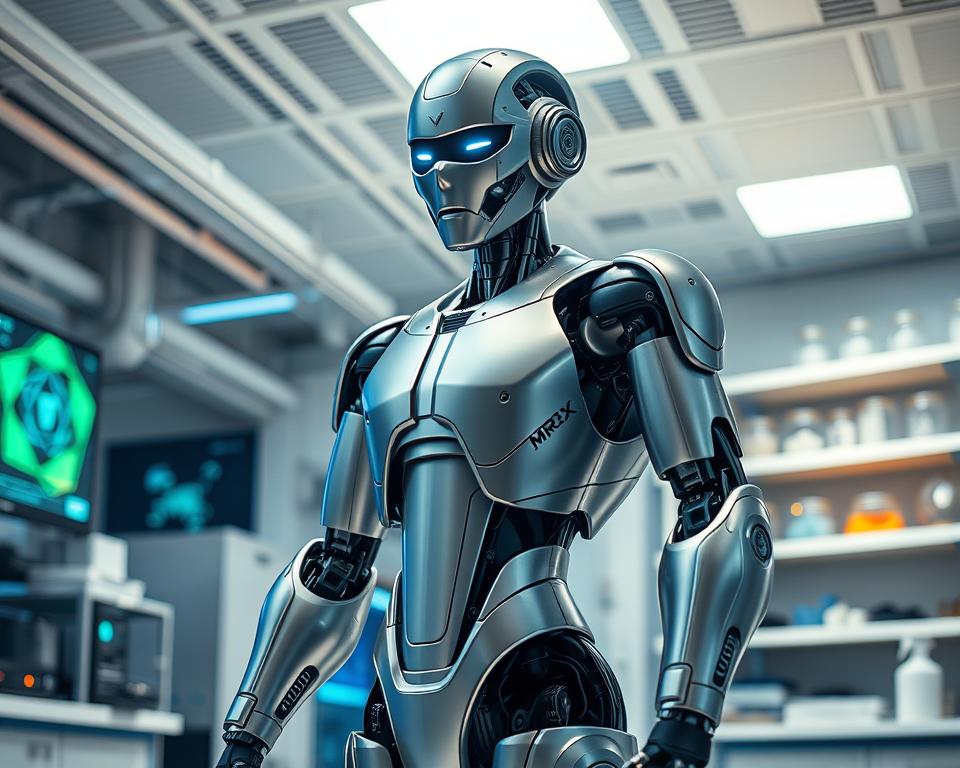
Potential Industries for Growth
Humanoid robots could change many industries, including:
- Healthcare: Helping in surgeries, caring for patients, and helping with rehabilitation.
- Education: Making learning more interactive and tailored to each student.
- Retail: Improving customer service and making store operations more efficient.
As technology gets better, we’ll see humanoid robots used in new and exciting ways in different fields.
Conclusion: The Impact of Humanoid Robots
Humanoid robots, like the 5 discussed, are changing society in big ways. They are being used in healthcare and retail, making things more efficient and better for users.
Transforming Industries and Daily Life
These robots are changing industries by doing tasks for us. They also help with customer service and offer companionship. Their ability to understand and respond to emotions makes them great for caregiving and education.
Future Prospects and Challenges
As these robots get smarter, we’ll see even more amazing things. But, there are also big questions about their impact on society. Issues like job loss and ethics will need to be addressed.
Humanoid robots are becoming a big part of our lives. They have the power to change many areas and make life better for many people.
FAQ
What are humanoid robots?
Humanoid robots are advanced androids that look and act like humans. They are used in many fields like healthcare, education, and retail.
What are some key features of humanoid robots?
These robots have artificial intelligence and can move around. They can also understand and respond to emotions. This makes them great for jobs like customer service and being companions.
What is the significance of Sophia, the humanoid robot developed by Hanson Robotics?
Sophia is a leading humanoid robot known for its advanced social skills. It can interact with people in a way that feels natural. This makes it a key figure in robotics and AI research.
How is ASIMO, developed by Honda, contributing to robotics?
ASIMO is a top-notch humanoid robot that has set new standards in robotics. It can walk, run, and even do tasks that need balance and coordination.
What are the applications of Pepper, the humanoid robot developed by SoftBank Robotics?
Pepper is made for retail and education. It uses emotional recognition technology to offer personalized interactions. This improves customer experiences.
What makes Atlas, developed by Boston Dynamics, unique?
Atlas is a cutting-edge humanoid robot designed for search and rescue missions. It shows amazing mobility and agility in tough environments.
How is NAO, developed by SoftBank Robotics, being used in education?
NAO is used in schools to teach programming and AI. It gives students hands-on experience with robotics and coding.
What is the vision behind Romeo, the humanoid robot developed by SoftBank Robotics?
Romeo aims to help with elderly care. It offers companionship and support through its interactive and conversational abilities.
How does Spot, developed by Boston Dynamics, compare to other humanoid robots?
Spot is not strictly humanoid but shows advanced mobility. It’s being explored for industrial uses, showing the variety in robotics design.
What are the future trends in humanoid robotics research?
Future trends include better AI and improved human-robot interaction. Humanoid robots will be used in more industries, making them more capable and useful.
What are the ethical considerations in humanoid robot development?
Ethical issues include privacy, job displacement, and guidelines for using humanoid robots responsibly. These are important for their integration into society.
How are humanoid robots represented in popular culture?
Humanoid robots are shown in movies and TV shows. This influences how people see them and sparks interest in robotics and AI.
What are the challenges faced in humanoid robot development?
Challenges include overcoming tech limits, gaining social acceptance, and fitting into different environments smoothly.
What opportunities exist for innovation in humanoid robots?
Opportunities include better AI, more uses in healthcare and education, and exploring new areas for growth and development.