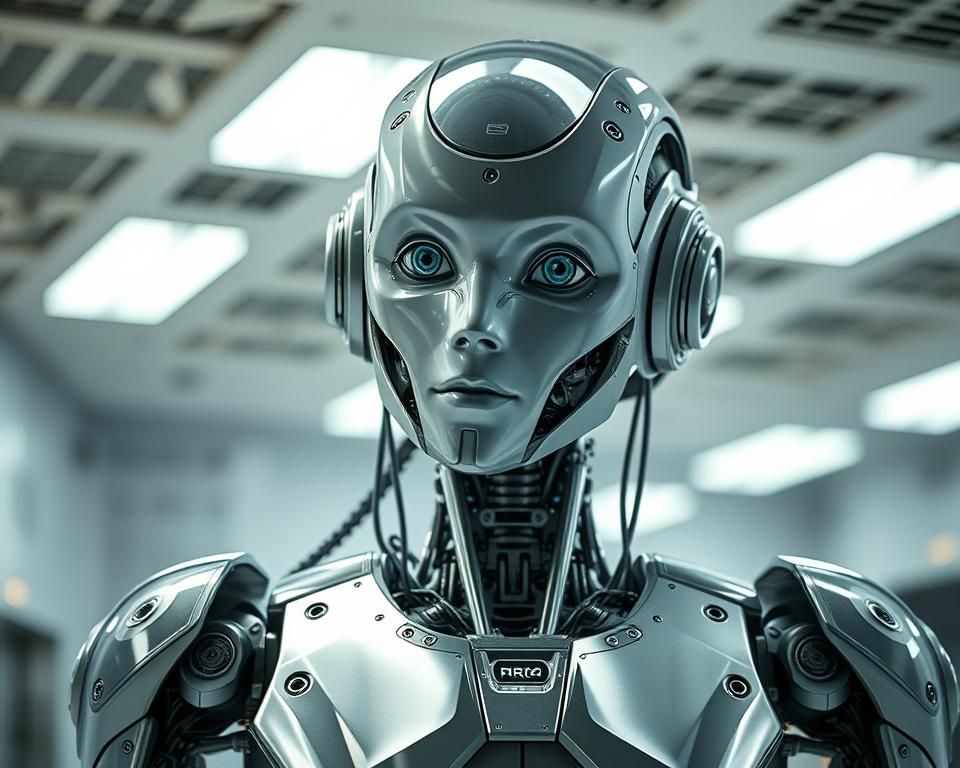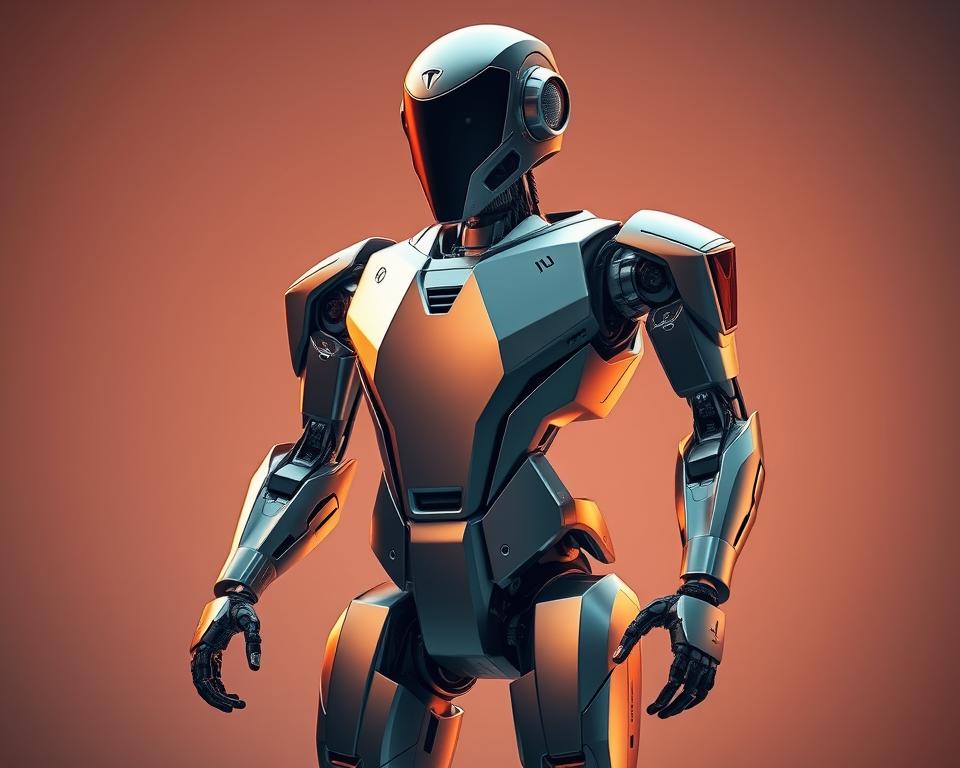
Could the Tesla Optimus Robot change how we work with AI? When Elon Musk showed off the Tesla Optimus robot in 2022, everyone noticed its human-like movements. It could change many industries.
This AI-driven robot is more than a machine. It shows a future where robots do tasks from making things to helping with daily chores. But how soon will we see this future?
The Tesla Optimus robot uses advanced AI and is designed to work well with humans. It has gotten better at moving and doing things, making us wonder about its impact on work and daily life. It could change how we automate tasks in factories and homes.
Key Takeaways
- Elon Musk’s Optimus project highlights Tesla’s shift from cars to humanoid robotics.
- The robot’s AI capabilities focus on learning through real-world interactions.
- Potential applications span industries, from manufacturing to elder care.
- Public interest reflects growing curiosity about human-robot collaboration.
- Technical challenges like energy efficiency remain central to its development.
Introduction to the Tesla Optimus Robot
The Tesla Optimus Robot is a new, advanced humanoid robot. It was unveiled in 2022 and is a big step for Tesla in robotics. It has a sleek design and is meant to make tasks easier for humans.
Optimus is designed to be versatile. It aims to help in industrial automation, residential assistance, and healthcare. In factories, it can assemble products. At home, it can do household chores. In healthcare, it could help with patient care or rehabilitation.
- Industrial Use: Optimus aims to enhance productivity in warehouses and assembly lines.
- Home Support: Tasks like cleaning or grocery shopping could become automated.
- Healthcare Integration: Potential to assist in therapy or mobility support for patients.
Tesla sees Optimus as more than a tool. It’s a platform where AI integration makes it adaptable. It learns routines and preferences, fitting into human spaces. This fits with Tesla’s goal to automate more areas of life, not just electric vehicles.
Even though it’s still being developed, Optimus is exciting. It could change how we work and live. As more details come out, its role in making tasks easier and more efficient will be key in robotics.
Origins and Development of the Optimus Project
Tesla started working on a humanoid robot in 2021. They wanted to make a machine that could do everyday tasks. The tesla robot features were made to move like humans, using AI and sensors from Tesla’s cars.
They aimed to make the robot useful for jobs that are hard or dangerous for humans.
“Tesla’s goal is to create a robot that can handle tasks humans find too mundane or dangerous.” — Elon Musk, 2021 AI Day
The Vision Behind Tesla’s Humanoid Robot
The main idea was to make a robot that could help in many ways. Engineers worked on making it flexible, so it could fit into different places. The first versions showed off tesla robot features like walking and picking up things.
They also kept the design simple to save money. In 2022, they showed off the robot’s basic skills like walking and grasping.
Key Milestones in Development
The project moved forward in steps, with big achievements along the way:
| Year | Milestone |
|---|---|
| 2021 | Concept unveiled at AI Day, emphasizing utility over aesthetics. |
| 2022 | Prototype named “Optimus” demonstrated walking and arm movements. |
| 2023 | Enhanced mobility showcased, with improved battery life and task execution. |
By 2023, the robot could move on rough ground. This was a big step toward using it in real life.
Technical Specifications of the Optimus Robot
The Tesla Optimus robot is a marvel of engineering. It’s designed to be efficient and versatile. Its functionality is balanced with durability and adaptability, making it a standout choice.
Size and Design Features
Optimus stands at about 5’8″ and weighs 125 lbs. It’s made of lightweight aluminum and advanced composites. This reduces strain during movement.
Its humanoid frame has articulated joints and sensors in its limbs. This allows for precise motion. The design also ensures stability in various environments.
Core Functionalities
- Mobility: Hydraulic actuators and torque control enable walking, balancing, and avoiding obstacles.
- Load Capacity: It can carry up to 45 lbs, making it great for tasks like material handling.
- Dexterity: Its five-fingered hands with force sensors can perform delicate tasks, from gripping tools to assembling parts.
Power Source and Battery Life
Optimus is powered by a 2.3 kWh battery. It can run for 24+ hours on a single charge. This long battery life is a big tesla robot benefits for work and commercial use.
It’s energy-efficient thanks to optimized motor systems and AI-driven power management. This means less downtime and more productivity.
Applications of the Tesla Optimus Robot
The Tesla Optimus robot uses tesla robot technology to solve problems in many fields. It combines automation with a focus on people. Its systems can change to fit different needs, from factories to hospitals.
Industrial Automation
In places like factories and warehouses, Optimus takes over boring tasks. It checks air filters, plumbing, and electrical systems. This means less time stopped and fewer safety risks.
It can even fix things on its own, thanks to its smart brain. This cuts down on the need for people to work in dangerous places.
- Facility management: Air filter replacement and system diagnostics
- Maintenance: Self-calibration and predictive equipment analysis
- Warehouse operations: Inventory sorting and package handling
Residential Assistance
At home, tesla robot technology helps seniors and people with disabilities live on their own. Optimus helps with everyday tasks like cooking and getting around. It also keeps people company.
Its AI learns what each person needs. This makes life safer and better for everyone.
Healthcare Innovations
In hospitals, Optimus helps doctors and nurses by managing medicines and watching over patients. This lets caregivers focus on the most important work. It also makes sure things are done right, like giving the right medicine.
| Application | Key Tasks | Impact |
|---|---|---|
| Industry | Maintenance, autonomous repairs | Reduced labor costs, safer environments |
| Home | Assistance, companionship | Improved accessibility, independence |
| Healthcare | Medication management, telemedicine | Enhanced patient outcomes, staff efficiency |
Optimus gets smarter as it works in the real world. It’s a key part of smart systems. Its ability to adapt makes it a game-changer in many areas.
Comparisons with Other Humanoid Robots
When we look at tesla robot capabilities, we see how Optimus stands out against rivals like Boston Dynamics’ Atlas and Honda’s ASIMO. Optimus is made for everyday tasks, like working in factories and helping at home. It uses the same AI as Tesla cars, making it easy to fit into work settings.
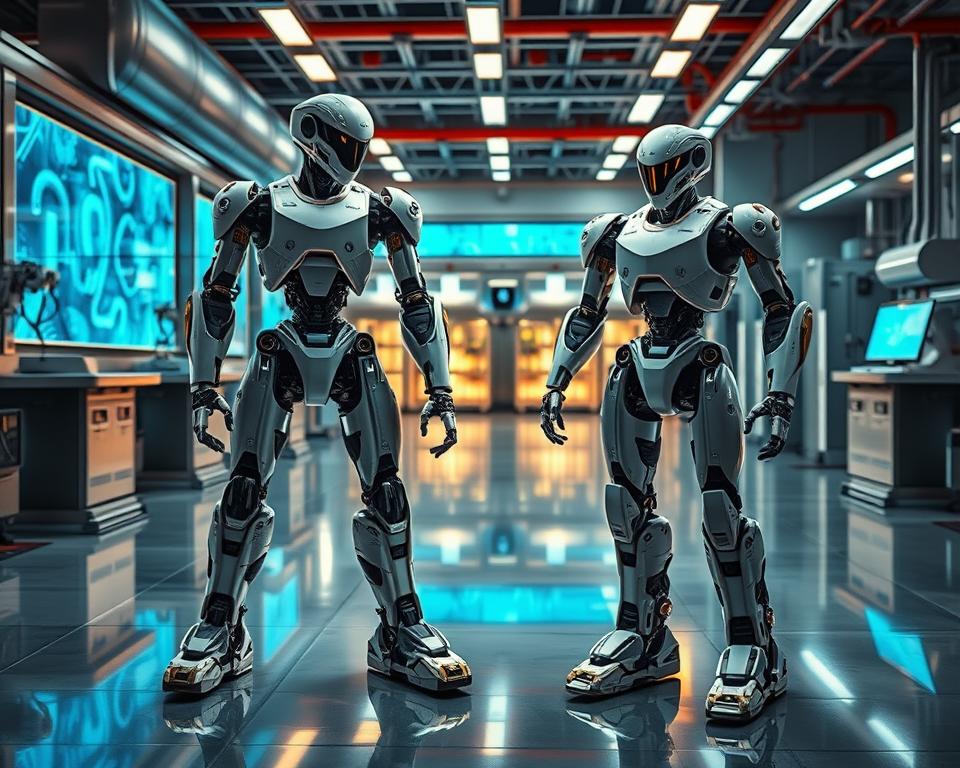
“Optimus could cost between $20,000 and $30,000, undercutting human labor costs for repetitive jobs.”
Boston Dynamics’ Atlas
Atlas is known for its amazing stunts, like doing backflips. But it’s not as focused on being affordable for work. Atlas is made of strong materials, showing its agility. Optimus, on the other hand, is built for lasting work and is more affordable.
Honda’s ASIMO
ASIMO was a trailblazer in humanoid robots but stopped in 2018. It didn’t have the advanced AI that Optimus has today. Optimus is ready for 2025, with modern sensors and a design made for work.
Other Notable Competitors
| Robot | Purpose | Mobility | Payload | AI System |
|---|---|---|---|---|
| Optimus | Industrial/residential | Walking/precision tasks | 20kg capacity | Tesla neural networks |
| Atlas | Research/demonstration | Acrobatic | Light payloads | Proprietary AI |
| ASimo | Research/exhibition | Walking/stair navigation | 5kg capacity | Early-gen AI |
Atlas and ASIMO are more about showing off or research. But Tesla’s tesla robot capabilities aim for real-world use. Optimus is set to start work in 2024 and will cost between $20k and $30k, making it a unique choice in the market.
The Role of AI in Tesla Optimus
Artificial intelligence is key to Tesla Optimus’ abilities. It makes the robot learn and interact with its surroundings. Many tesla robot reviews highlight its smart learning and response to commands, thanks to advanced AI.
| AI Component | Purpose | Key Application |
|---|---|---|
| Machine Learning | Adaptive decision-making | Task optimization through data |
| Natural Language Processing | Voice interaction | Command recognition and response |
| Computer Vision | Environmental awareness | Obstacle detection and navigation |
“Optimus’ AI allows it to ‘think’ like a human worker, making it a game-changer for automation.” — tech analyst review
Machine Learning Capabilities
Optimus gets better with time thanks to deep learning. It learns to lift objects and navigate uneven ground without being programmed.
Natural Language Processing
Optimus understands voice commands through NLP. Users say it gets better at tasks like fetching tools or sorting items.
Vision and Perception Systems
Optimus has cameras and sensors to map its surroundings. This helps it avoid accidents and spot objects, as many reviews mention.
These AI components make Optimus a self-improving robot. Reviews show it’s a top contender in humanoid robotics.
Potential Market Impact
The Tesla Optimus robot could change many industries. But, its success depends on the tesla robot price and how easy it is to adopt. It might cost less than $20,000, which could make it more affordable than many electric cars.
Labor Market Disruption
- Manufacturing and logistics might see more automation of tasks.
- There could be a need for more people to maintain these robots.
Economic Benefits
Companies might save up to 40% on labor costs by using these robots. The tesla robot price also includes a design that can be easily changed for different tasks:
| Industry | Annual Labor Savings |
|---|---|
| Healthcare | $15,000–$25,000 |
| Retail | $10,000–$18,000 |
Challenges to Adoption
High costs for small businesses could slow adoption. Uncertainty about AI rules in the workplace also adds to the challenge. Training people to work with these robots will be key to overcoming these hurdles.
Public Perception and Reception
People have mixed feelings about the Tesla Optimus robot. Some are excited about its possibilities, while others are skeptical about its current abilities.
Media Coverage
Big news outlets have compared the Tesla Optimus robot to others like Boston Dynamics’ Atlas. Tesla’s “Cybercab” event was criticized after its stock dropped 9%, losing $67 billion. Analysts said Tesla’s robot is not as advanced as Honda’s ASimo.
At the “We, Robot” launch, robots were controlled remotely. This made people question if they are truly autonomous.
Analysts called the presentation “underwhelming,” citing a lack of verifiable advancements.
Public Engagement and Feedback
- At events, Optimus units needed human help for simple tasks like pouring drinks.
- Social media buzz included Kim Kardashian’s photos with the robot, sparking debates about marketing.
- Online polls show 45% of users doubt its readiness for home use, citing reliability concerns.
The Role of Tesla’s Brand Image
Tesla’s reputation for innovation initially raised hopes. But recent issues have made people more critical. The brand’s influence attracts early adopters, but investors are unsure if it’s worth the risk.
Critics say the robot’s current demo doesn’t live up to Tesla’s AI goals. Despite Musk’s promises of future advancements, the robot seems far from ready.
Ethical Considerations Surrounding AI Robotics
AI robotics are getting better, but this raises big questions. Tesla Optimus’s abilities make us think about privacy, jobs, and safety. We need to find a balance between new tech and being responsible.
“Without clear ethical guidelines, AI could deepen societal divides,” warns a 2023 MIT study on automation ethics.
Three key areas demand immediate attention:
Privacy Concerns
Robots in homes and workspaces collect a lot of data. This data can include our faces and daily habits. To protect our privacy, we need strong rules. Companies should be open about how they use our data.
Job Displacement Issues
AI might take jobs in many fields. We need to make sure workers are supported. Ideas like training programs and basic income are being looked at to help.
Safety Regulations
We must have strict rules to keep people safe. It’s important to know who is liable if something goes wrong. We need tests and global rules to keep up with new tech.
Acting now will help shape AI robotics. We need to talk openly and make laws to ensure AI is used for good.
Future Developments in Robotics
Looking ahead, Tesla’s Optimus robot is set to change robotics with new tesla robot specifications. It will bring better design and function, making robots work better with humans. These changes could change many industries, from making things to helping in healthcare.
Upcoming Features and Innovations
Big updates include better movement and tesla robot specifications for more precision. The goal is to make the robot carry more and move faster. It will also learn to avoid obstacles and get better at tasks over time.
- Lightweight materials for mobility
- Advanced tactile feedback systems
- Improved battery endurance
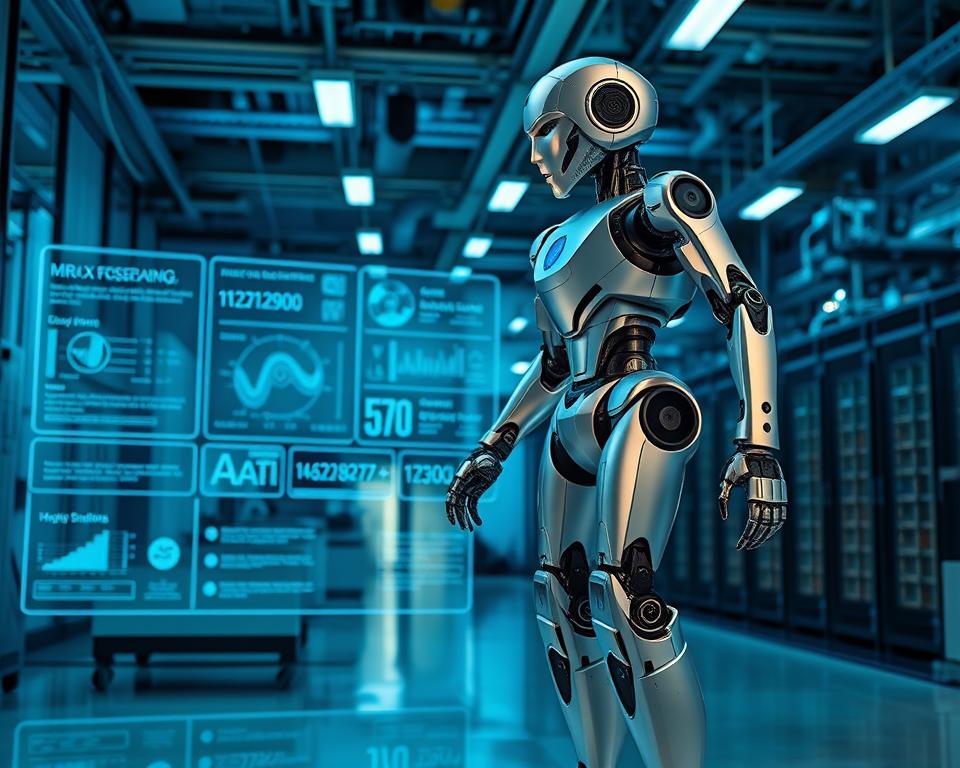
Predictions for AI Integration
AI will make Optimus learn from humans, needing less programming. Experts say it will have features like:
- Context-aware decision-making
- Seamless voice command execution
- Collaboration with autonomous vehicles
Tesla’s Long-term Goals
“Optimus will evolve beyond factories to assist in daily life.”
Tesla plans for Optimus to do more than just factory work. By 2030, they want to make many robots for different places. They also want to make robots affordable for everyone, as Elon Musk wants a robot in every home.
These changes could change many industries. They will mix precise hardware with smart AI. As we see more, Optimus is shaping the future of automation around the world.
The Global Robotics Market Landscape
Investment in robotics around the world is growing fast. This is thanks to new tech in AI and automation. Experts think the market will hit over $200 billion by 2030. Industries like manufacturing and healthcare are leading the way.
Companies all over are changing how robots work in different fields. They’re making robots a big part of our daily lives.
The focus in robotics investment is on solutions that can grow. In 2023, venture capital for robotics startups reached $8.5 billion. Areas like logistics and healthcare robotics saw a 40% increase year-over-year.
Big tech companies and manufacturers are teaming up. This partnership is speeding up the growth of robotics.
Trends in Robotics Investment
- Manufacturing automation accounts for 35% of global spending
- Healthcare robotics grew 28% in 2023
- AI-driven robots now dominate 60% of new robotics R&D projects
Key Players in Robotics Innovation
Big names like Boston Dynamics, Sony, and SoftBank Robotics are leading the way. Tesla is also making waves by using its car tech in Optimus. Honda and Ford are investing in humanoid robots.
Startups in Silicon Valley are working on special robots for different tasks.
The Importance of Sustainable Practices
Companies are focusing on making robots that are good for the planet. Tesla is using energy-saving batteries in Optimus. This fits with the EU’s Circular Economy Action Plan.
Big players are now using sustainable practices. They’re using materials that can be recycled and making their factories carbon-neutral.
“Sustainability isn’t optional—it’s core to long-term robotics viability,” stated Dr. Emily Chen, MIT Robotics Lab.
As robotics grows, it’s important to keep up with green practices. This way, robots can help the world without harming it.
How Tesla Optimus Compares to Autonomous Vehicles
Tesla’s Optimus robot and its cars share key technologies. They both use AI, sensors, and process data in real-time. This shows Tesla’s plan to link its robotics and car innovations.
Shared Technologies
| Technology | Optimus Use | Autonomous Vehicles Use |
|---|---|---|
| Computer Vision | Navigating environments | Reading road conditions |
| Battery Tech | Powering movements | Electric vehicle propulsion |
| Neural Networks | Learning human tasks | Predicting driving scenarios |
Lessons from Self-Driving Development
Improvements in self-driving cars help Optimus. Tesla’s work on lidar-free systems guides Optimus in avoiding obstacles. Real-world testing for cars also helps train robots.
“The same AI that drives our cars will power our robots.” – Elon Musk, Tesla CEO
Future Synergies Between Vehicles and Robots
- Shared software updates could streamline both systems.
- Optimus might assist in car manufacturing or delivery logistics.
- Energy efficiency gains in one field benefit the other.
Tesla’s work in both mobility and robotics opens new paths. As these areas grow, their combined power could change how we automate.
Education and Training for Future Robotics Workforce
Robotics is changing many industries, and we need to prepare workers for this change. Now, education focuses on technical skills and being able to adapt. Schools and companies are working together to make learning more relevant to the real world.
Skills Required for Robotics Careers
To succeed in robotics, you need to know programming, mechanical engineering, and AI basics. Employers want people who can solve problems and use automation tools. STEM education is key for these jobs.
Educational Programs and Initiatives
Universities like MIT and Georgia Tech have special robotics degrees. Online platforms like Udacity offer microcredentials in AI. Community colleges work with tech companies to create specific programs. A 2023 report says:
“85% of employers prioritize candidates with hands-on robotics training.”
Role of Vocational Training
Vocational programs teach practical skills like sensor calibration and robotic maintenance. Certifications from groups like IEEE show you know your stuff. Companies like Tesla team up with schools for apprenticeships. This way, workers get real-world experience.
Collaborations and Partnerships
Robotics innovation grows when experts work together. Tesla’s Optimus project is a great example. It brings together industry know-how and academic research to explore new frontiers.
Working with tech leaders is key. Tesla teams up with companies that are experts in AI and battery tech. These partnerships help speed up development and save money.
Strategic Alliances
- AI hardware providers make Optimus faster
- Material science firms create strong, light parts
Research Partnerships with Universities
- AI hardware providers make Optimus faster
- Material science firms create strong, light parts
Research Partnerships with Universities
Universities play a big role in solving tough problems. Schools like Stanford and Carnegie Mellon help with:
- How robots move like humans
- Systems that use less energy
Collaborations with Tech Companies
Working with tech companies speeds up progress. Partners like NVIDIA and Siemens offer:
- Top-notch simulation tools
- Tools for analyzing data in real-time
| Partner Type | Key Areas | Impact |
|---|---|---|
| Strategic Alliances | Battery tech | Extended operational lifespan |
| University Partnerships | Motion control | Improved balance systems |
| Tech Collaborations | Sensor integration | Enhanced environmental awareness |
Impacts on Daily Life and Society
The Tesla Optimus robot could change how we live and use technology. It aims to make daily tasks easier by automating them. This means you could have more time for things you enjoy.
For example, cooking, cleaning, or running errands might be done by the robot. This could make your life less stressful.
Enhancements in Daily Tasks
Imagine waking up to Optimus making breakfast and planning your day. It could even do your laundry. This could make your mornings more relaxed and free.
These changes could also help in healthcare, retail, and education. Robots could take over repetitive tasks, making work more efficient.
Shifts in Human-Robot Interaction
Using robots like Optimus could become easier. They might learn what you like and respond to your voice. This could make working with robots feel more natural.
A study found 68% of people want tech to understand their needs. Optimus is designed to meet this expectation.
Contributions to Work-Life Balance
- Time savings: You could have 2-3 more hours each day for fun or family.
- Healthcare support: Robots could help with elder care, making life easier for caregivers.
- Accessibility: Optimus could help people with disabilities do things on their own, promoting equality.
This technology could become a true partner in our lives. Recent demos show Optimus can do complex tasks like assembling things. It’s a step towards making robots a part of our daily routines.
Conclusion: What Lies Ahead for the Optimus Robot
The Tesla Optimus robot is set to change how humans and robots work together. Its advanced AI and wide range of uses show a big step towards making robots part of our daily lives.
Recap of Key Points
Optimus uses top-notch AI and a flexible design for tasks like making things and helping in healthcare. Tesla’s work on sustainable tech and solutions that grow with needs is clear. But, we must tackle issues like ethical use and how it affects jobs as this tech advances.
Final Thoughts on AI’s Role in Society
AI, like Optimus, can make workplaces safer and work more efficiently. But, we must balance new tech with keeping our privacy and helping workers adapt. Tesla shows us how important it is to use AI in a way that helps society.
The Future of Tesla Robotics
Tesla sees a big future for its robots, beyond what we see now. They plan to make their AI better and work with more companies. Optimus could be key to Tesla’s future, helping humans do more, not less. This journey needs teamwork from tech leaders, lawmakers, and communities to make sure it’s good for everyone.
FAQ
What are the key features of the Tesla Optimus Robot?
The Tesla Optimus Robot has a humanoid design. It uses advanced tech like machine learning and natural language processing. It also has sensor-driven vision systems. This allows it to interact with humans and perform various tasks in different places.
How does the Tesla Optimus Robot compare to other humanoid robots?
The Tesla Optimus Robot stands out from others like Boston Dynamics’ Atlas and Honda’s ASIMO. It has a unique design and works efficiently. It also uses Tesla’s advanced AI technology, making it versatile for both home and industrial use.
What are the potential benefits of using the Optimus robot in everyday life?
The Optimus robot can make daily tasks easier. It can help in homes and industries. It also supports healthcare. Its advanced tech can make workflows better, improving productivity and life quality.
How does the artificial intelligence in the Tesla Optimus Robot work?
The AI in the Tesla Optimus Robot uses machine learning. It makes decisions on its own and learns from new situations. It understands human commands and sees its surroundings with its sensors, helping it do tasks well.
What is the expected price range for the Tesla Optimus Robot?
The price of the Tesla Optimus Robot is not yet known. But, it might be cheaper than a car. This makes it a good deal for people and businesses looking to automate.
Are there any ethical concerns related to the Tesla Optimus Robot?
Yes, there are ethical worries. These include jobs being lost, privacy issues, and the need for safety rules. As the tech grows, these discussions will keep changing.
What are the anticipated future developments for the Optimus robot?
Future updates will make the Optimus robot even better. It will use AI more in daily life. Tesla plans to use robots in many areas to make things more efficient and change society.
How could the deployment of the Optimus robot impact the labor market?
The Optimus robot could change jobs by automating tasks. This might lead to some jobs disappearing. But, it could also create new jobs in robotics and management.
How has the public responded to the Tesla Optimus Robot?
People have mixed feelings. Some are excited about its tech, while others worry about jobs. The media has played a big part in how people see the robot, showing both the good and the bad.
What role will education play in preparing the workforce for robotics technology?
Education is key to getting ready for robotics jobs. Schools and training programs will focus on STEM and vocational skills. This will help people for the jobs of the future.