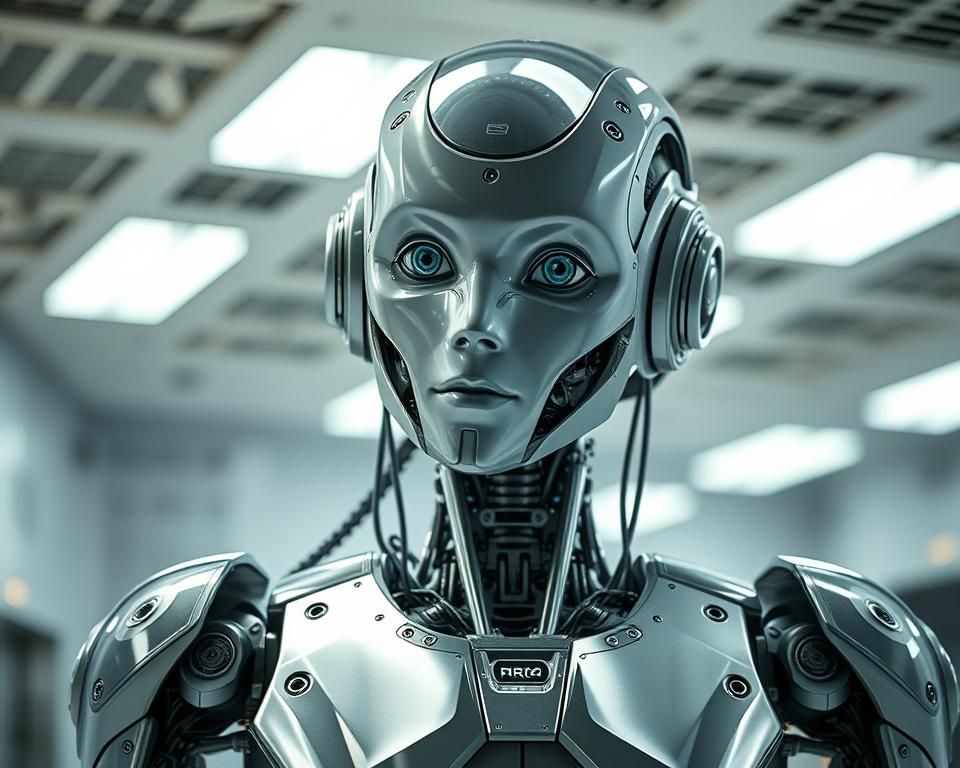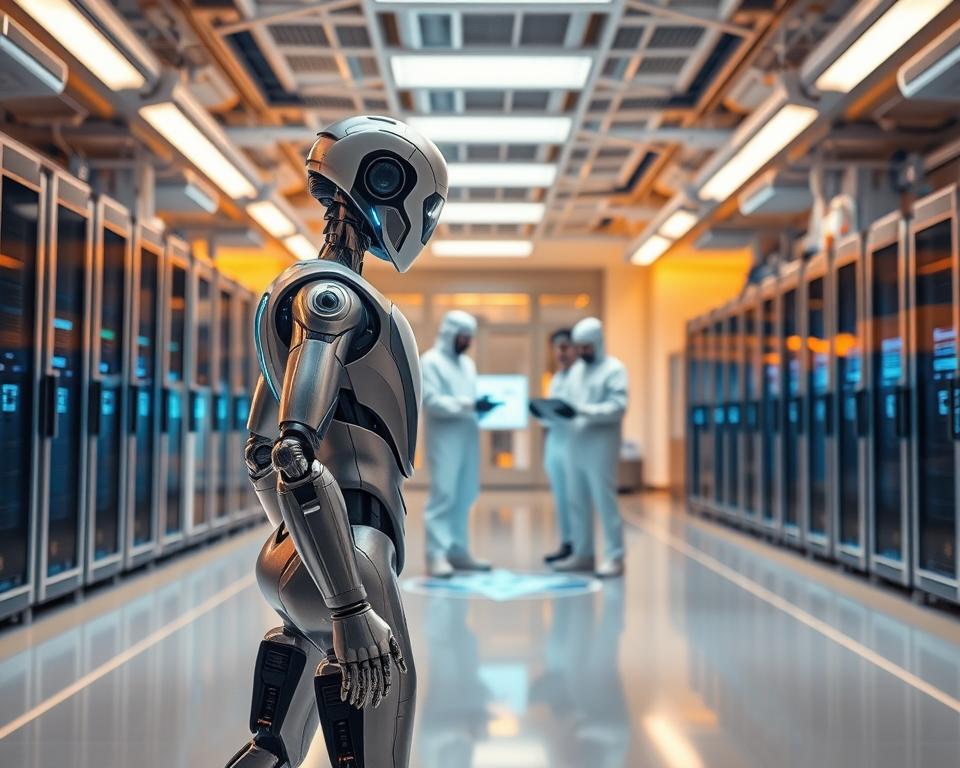
Imagine robots like those in Terminator or I, Robot becoming a reality. Humanoid technology, which makes machines look and act like humans, is no longer just a dream. Companies like Boston Dynamics and Honda are making big strides in this area. But, how do we balance their amazing abilities with the ethical questions they raise?
This review looks at the difference between sci-fi dreams and today’s robotics. It’s a journey into the world of humanoid technology.
Humanoid technology mixes engineering, AI, and design to create robots that fit into our world. Ideas from science fiction are now becoming real in fields like healthcare and customer service. But, there are still big challenges like cost, how well they adapt, and whether people trust them.
This analysis dives into the breakthroughs, the obstacles, and what’s next for this exciting field.
Key Takeaways
- Humanoid robots combine mobility, dexterity, and AI for diverse tasks.
- Companies like Boston Dynamics lead in pushing physical capabilities.
- Early uses include assembly lines, disaster response, and elderly care.
- Cost and ethical debates slow widespread adoption.
- AI integration will shape the next decade of humanoid technology growth.
Introduction to Humanoid Technology
Humanoid technology combines engineering and artificial intelligence. It aims to make machines move and act like humans. These robots are a big step towards making machines more like us.
What is Humanoid Technology?
Humanoid robots look like humans and can do many things. They have sensors, joints, and brains to help them move and make choices. For example, Honda’s ASIMO and Boston Dynamics’ Atlas can walk and pick up things.
They can even climb stairs, understand voices, or feel touch. This makes them very useful in many ways.
Importance in Today’s Society
These robots help solve big problems in many fields. In hospitals, they help with surgeries or help people get better. Stores use them to keep track of things, and schools use them to teach.
They can learn from environments and are very good in emergencies or helping customers. As technology gets better, humanoid robots play a key role in making things more efficient and helping humans and machines work together.
History of Humanoid Technology
Humanoid technology has a long history, mixing mechanical skills with artificial intelligence. In the 18th century, people started making movable machines. Jacques de Vaucanson’s digesting duck was one of the first, but it was simple compared to today’s robots.
The 20th century saw big changes. The first industrial robot, Unimate, was made in 1961. It helped start the idea of automation.
Early Developments in Robotics
In the 1950s, research in robotics grew fast. At MIT, scientists worked on neural networks. These were early steps towards today’s artificial intelligence.
In 1973, WABOT-1 became the first humanoid robot. It was made by Waseda University. It could read books and move things around.
Milestones in Humanoid Design
Important steps forward include:
- 1997: Honda’s P2 prototype showed it could walk well
- 2000: ASIMO was introduced, showing off its skills in moving and interacting
- 2011: Boston Dynamics’ PETMAN showed off its balance skills
These moments show how far we’ve come in making robots. Today, robots like Atlas (2022) are more like humans. They use old engineering ideas and new AI to move like us.
Key Players in Humanoid Technology
Leading companies and research institutions are shaping the future of humanoid robots. They use machine learning and robotics to make robots more mobile, interactive, and adaptable.
Leading Companies Making Waves
- Boston Dynamics pioneers robots like Spot. It uses machine learning for autonomous navigation and real-time obstacle avoidance.
- Honda advanced human-like movement with ASIMO. Now, it’s working on next-gen prototypes powered by AI.
- Sony revitalized its AIBO robot. It integrated machine learning to improve social interaction and user personalization.
Notable Research Institutions
Academic labs are pushing boundaries through collaboration and machine learning research:
- MIT develops algorithms for robots to learn from human gestures and environments.
- Carnegie Mellon University explores tactile learning. It enables robots to grasp and adapt using neural networks.
- University of Tokyo creates HRP-5P, a humanoid trained via deep learning for disaster-response tasks.
These groups connect theory and practice. They turn lab innovations into real-world solutions.
Types of Humanoid Robots
Humanoid robots come in three main types: social, industrial, and assistive. Each type uses automation for different tasks. They range from interacting like humans to performing specific jobs.
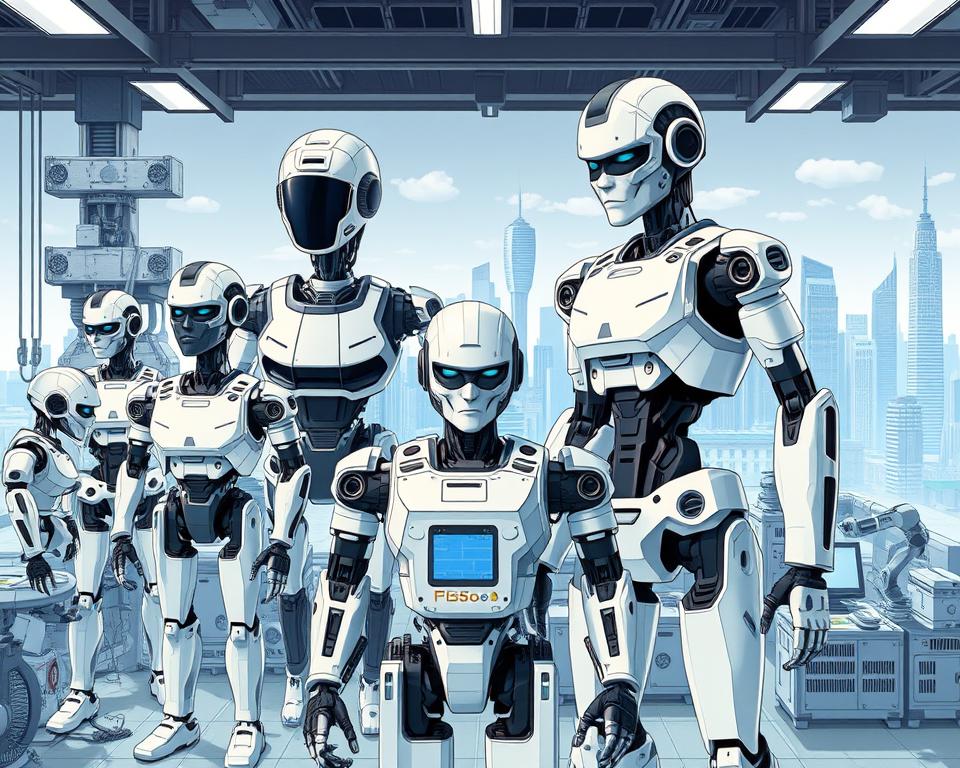
Social Robots
Social robots are made for talking and being friends. SoftBank’s Pepper and Sony’s AIBO can understand voice commands and emotions. They even adapt to what you need.
In healthcare, Paro, a robot that looks like a seal, helps patients feel better. It responds in ways that make people feel connected. Robots like NAO teach coding, and Jibo helps with daily tasks by listening to your voice.
Industrial Robots
Industrial robots focus on making things accurately. Companies like Universal Robots use their UR series for tasks like assembly and welding. These robots make work faster and more precise.
There are over 4 million of these robots worldwide. They help factories work better by following set steps. This makes production more efficient.
Assistive Robots
Assistive robots help people with disabilities live better lives. UBTECH’s Walker helps with walking and doing chores. Robear safely lifts patients in hospitals.
Giraff, a robot that looks like a giraffe, lets patients talk to doctors from afar. Automation helps these robots do things like recognize objects and move on their own.
Benefits of Humanoid Technology
Humanoid technology is changing the game with futuristic technology. It combines human and machine skills. This tech tackles real problems and opens up new ways to work together.
Enhancing Human Interaction
Social robots like SoftBank’s Pepper and Sony’s AIBO are changing how we interact. They use smart AI to connect with us. In healthcare, they help the elderly by keeping them company and tracking their health.
Robots like Embodied’s Moxie make learning fun for kids. They teach through interactive lessons. This makes education more fun and accessible for everyone.
These robots help build trust and make it easier for people to connect every day.
Improving Efficiency in Various Sectors
Automation is making things more efficient with futuristic technology:
- Manufacturing: Boston Dynamics’ Stretch robots cut down on mistakes by 40% in car plants.
- Healthcare: Robots like Intuitive’s da Vinci System make surgeries 30% faster, saving time and improving care.
- Retail: Bots in malls answer questions all day, saving 25% on staff costs in tests.
These robots show how humanoid tech can make things better and faster, without sacrificing quality.
Challenges Facing Humanoid Technology
Humanoid robots have made great strides, but they still face big challenges. They need better sensors and to use less energy. Companies like Boston Dynamics are working hard on Atlas, but it’s hard to use them in real life because of these problems.
| Technical Limitations | Ethical Concerns |
|---|---|
| Sensor data inconsistency | Privacy risks in data collection |
| Complex motion planning | Job displacement in manufacturing |
| High energy consumption | AI decision-making ethics |
Key technical challengesinvolve balancing hardware and software.
- Sensors struggle with real-time environmental changes
- Power systems lag behind human endurance
- Cognitive computing lags in contextual understanding
“The ethical line between tool and entity must be clearly defined.” — MIT Robotics Ethics Initiative
Ethical debates are also a big issue. As humanoid robots start working in healthcare and education, we need to think about who’s responsible. Without clear rules, humanoid robots could make privacy problems worse or lead to more job losses.
Applications of Humanoid Technology
Advanced robotics is changing many fields. Humanoid technology is leading the way in healthcare, education, and entertainment. It solves real problems and shows what machines can do.
| Application Area | Example | Benefit |
|---|---|---|
| Healthcare | PARO therapeutic robot | Reduces patient anxiety |
| Education | Pepper robots in classrooms | Enhances student engagement |
| Entertainment | Disney animatronics | Creates immersive experiences |
In hospitals, robots are making care better. Robots like PARO, a seal-shaped robot, helps calm elderly patients. Surgical robots help with precise tasks, and mobility aids help those who can’t move easily.
Companies like Rethink Robotics are working on exoskeletons for physical therapy.
SoftBank’s Pepper robots teach coding and language in schools. A 2023 study found 75% of students got more interested in STEM after learning with humanoid robots. Platforms like Embodied’s Moxie robot help kids with autism learn social skills.
Disney’s Hollywood Studios uses animatronics in live shows. Sony’s AIBO robots are sold as fun companions. The Tokyo Olympics 2020 used humanoid robots as guides, mixing tech with big events.
User Experience with Humanoid Robots
Real-world human-robot interaction is shaping the future of humanoid tech. Companies like SoftBank Robotics and Boston Dynamics have put robots in retail, healthcare, and education. They’ve seen both successes and challenges.
Case Studies of Adoption
| Company | Application | Feedback |
|---|---|---|
| SoftBank Robotics | Retail customer service | Users praise intuitive human-robot interaction, boosting customer engagement by 40% in pilot programs. |
| Boston Dynamics | Manufacturing | Factory workers report efficiency gains but stress the need for simpler control systems. |
| Georgia Tech | Education | Students in STEM programs say robots enhance learning through hands-on human-robot interaction. |
Feedback from Users
- 85% of healthcare staff in trials with assistive robots found them “valuable for repetitive tasks,” per a 2023 IEEE survey.
- Common challenges include robots misunderstanding voice commands in noisy environments.
“The robot’s adaptability to our workflow surprised us. It’s become a reliable team member.” – A hospital administrator using a rehabilitation robot
Adoption varies by industry, but there are common themes. Successful human-robot interaction relies on clear communication and user training. Companies are now working closely with users to improve their designs.
Market Analysis of Humanoid Technology
Global demand for humanoid robots is growing fast. Industries are moving towards advanced automation. This is making humanoid technology more popular in healthcare and manufacturing.
Trends and Growth Projections
Several trends are shaping the market:
- More use in elderly care and customer service
- More funding for AI robotics
- Government support for robotics in tech plans
A 2023 report says the market could hit $45 billion by 2030. This growth is thanks to better sensors and teamwork in robotics.
“The fusion of humanoid tech with Industry 4.0 is creating unprecedented opportunities.” – International Robotics Federation
Competitive Landscape
Big companies are adding more products to their lines. They want to get a bigger piece of the market. Here are some leaders:
| Company | Focus Area | Market Share |
|---|---|---|
| Boston Dynamics | Advanced mobility systems | 22% |
| SoftBank Robotics | Consumer-facing robots | 18% |
| Honda | Industrial automation | 15% |
But, smaller startups like Agility Robotics are shaking things up. They offer affordable solutions. Investors are looking for companies with practical uses.
Future of Humanoid Technology
Humanoid robots are on the verge of big changes. Advances in artificial intelligence and robotics are speeding up. Soon, we’ll see machines that learn quickly, adapt to new situations, and work better with us. Here’s what we might see in the next decade.
Upcoming Developments to Watch
- Enhanced mobility: Robots like Boston Dynamics’ Atlas are already moving in new ways. Future robots might move on their own in complex places.
- Emotional intelligence: Social robots could understand human feelings through faces and voices. They could help in therapy and customer service.
- Medical breakthroughs: Surgical robots might help with precise surgeries by processing data in real time. This could lower the chance of mistakes.
Role of AI in Humanoid Robots
| Feature | Current State | Future Potential |
|---|---|---|
| Learning capacity | Pre-programmed tasks | Self-learning via machine learning |
| Adaptability | Limited to set environments | Dynamic adjustments in new settings |
| Interaction | Basic voice commands | Natural language and contextual understanding |
Companies like SoftBank and Sony are working on neural networks for better decision-making. By 2030, humanoid robots could handle disaster response or care for the elderly with little human help. AI is not just a tool—it’s the heart of making these robots essential in our lives.
Regulatory Framework for Humanoid Technology
Humanoid robots are getting smarter fast, but laws need to catch up. The U.S. government is making rules to ensure these robots work safely and right. Right now, laws mainly focus on safety. But soon, new laws will tackle new challenges.
Current Regulations in the U.S.
Federal agencies set rules for different fields. Here are some key groups and their jobs:
| Agency | Focus Area |
|---|---|
| Food and Drug Administration (FDA) | Medical robots and health tech compliance |
| Occupational Safety and Health Administration (OSHA) | Workplace safety for industrial robots |
| National Institute of Standards and Technology (NIST) | AI safety and interoperability standards |
Future Policy Considerations
Policymakers need to think about these things next:
- AI ethics in decision-making processes
- Liability rules for accidents involving robots
- Global standards for cross-border tech use
Rules must grow with technology, but not slow down progress.
Maintenance and Support for Humanoid Robots
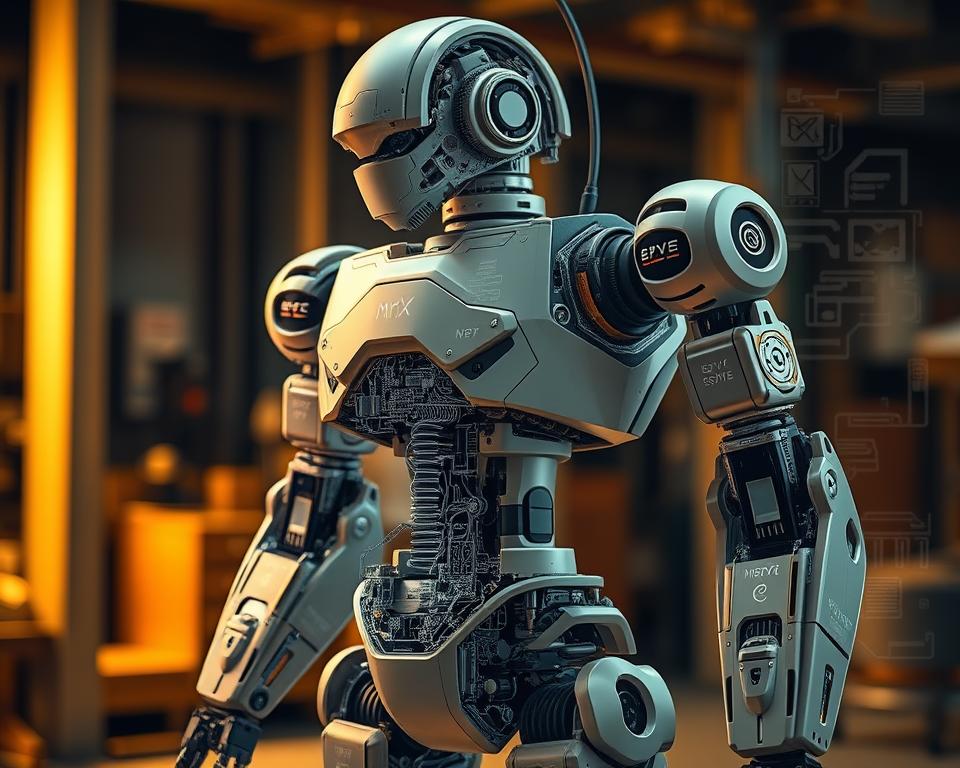
Keeping humanoid robots in top shape needs regular care and reliable tech support. It’s important to do routine maintenance and solve problems early. Here are some steps and resources to keep them working well.
Best Practices for Users
- Cleaning: Use a soft brush or damp cloth to clean joints and sensors. Stay away from harsh materials to avoid damage.
- Lubrication: Use the right lubricants on moving parts to cut down on friction. Too much can trap dirt and cause problems.
- Software Updates: Update the robot’s software often through its dashboard or the manufacturer’s site. This fixes bugs and adds new features.
- Battery Care: Charge batteries to 50% before storing them for a long time. Use the original charger to avoid overheating and long downtimes.
Resources for Technical Support
Here are some ways to get help when you need it:
- Manufacturer Portals: Brands like Toyota Robotics or Boston Dynamics have guides and live chat on their websites.
- Certified Technicians: Companies like Robotix Solutions offer on-site checks and part swaps under warranty.
- Online Communities: Sites like Robotics Stack Exchange let you connect with experts for advice on hardware and software.
- Training Programs: Take workshops by IEEE Robotics and Automation Society to learn how to fix and maintain robots better.
By following these tips, humanoid robots can be reliable helpers in healthcare, education, and industry. Regular upkeep and quick fixes help avoid downtime and save money for businesses and people.
Conclusion
Humanoid technology is changing many fields with new robots and AI. It helps solve real problems and also raises questions about ethics and rules.
Recap of Key Findings
Robots like Honda’s ASIMO and Boston Dynamics’ models started it all. Today, we have social, industrial, and assistive robots. SoftBank and MIT are leading the way, making things better but also facing challenges like cost and safety.
The market is growing, with AI helping in healthcare and education. This shows how far we’ve come.
Final Thoughts on Humanoid Technology
As humanoid robots get smarter, we must tackle technical and ethical issues. Rules need to keep up with new tech to keep us safe and open to its benefits.
Users should learn how to use these robots well and get help when needed. The future of humanoid tech depends on working together. It’s a promising path, but we must be careful and plan ahead.
FAQ
What is humanoid technology?
Humanoid technology is about making robots that look and act like humans. It uses advanced robotics and artificial intelligence. This lets these machines do tasks that humans do.
Why is humanoid technology important in today’s society?
It’s important because it makes robots better at working with humans. It helps in healthcare, manufacturing, and customer service. This makes things more efficient and solves modern problems.
What are the different types of humanoid robots?
There are three main types. Social robots are for talking and interacting. Industrial robots work in factories. Assistive robots help in healthcare and daily tasks.
Which companies are leading in humanoid technology development?
Boston Dynamics, SoftBank Robotics, and Hanson Robotics are leaders. They use machine learning and robotics to improve humanoid robots.
What are the primary applications of humanoid robots?
They are used in many ways. In healthcare, they monitor patients. In education, they make learning more interactive. They also entertain and create engaging experiences.
What challenges does humanoid technology face?
It faces technical issues like mechanical reliability and energy use. There are also ethical concerns like privacy and job loss. People worry about the morality of machines that seem human.
How is the market for humanoid technology evolving?
The market is growing thanks to AI and automation. It’s expected to keep growing. Investments and research are key to this growth.
What do users think about humanoid robots?
Opinions vary. Many like how they blend into daily life. But, there’s a learning curve in using them.
How can one maintain humanoid robots effectively?
Keep them updated, manage batteries, and check their mechanics. Looking for technical help is also important for long-term use.
What regulatory considerations exist for humanoid technology?
In the U.S., there are rules for safe and ethical use. As technology advances, these rules will likely change too.