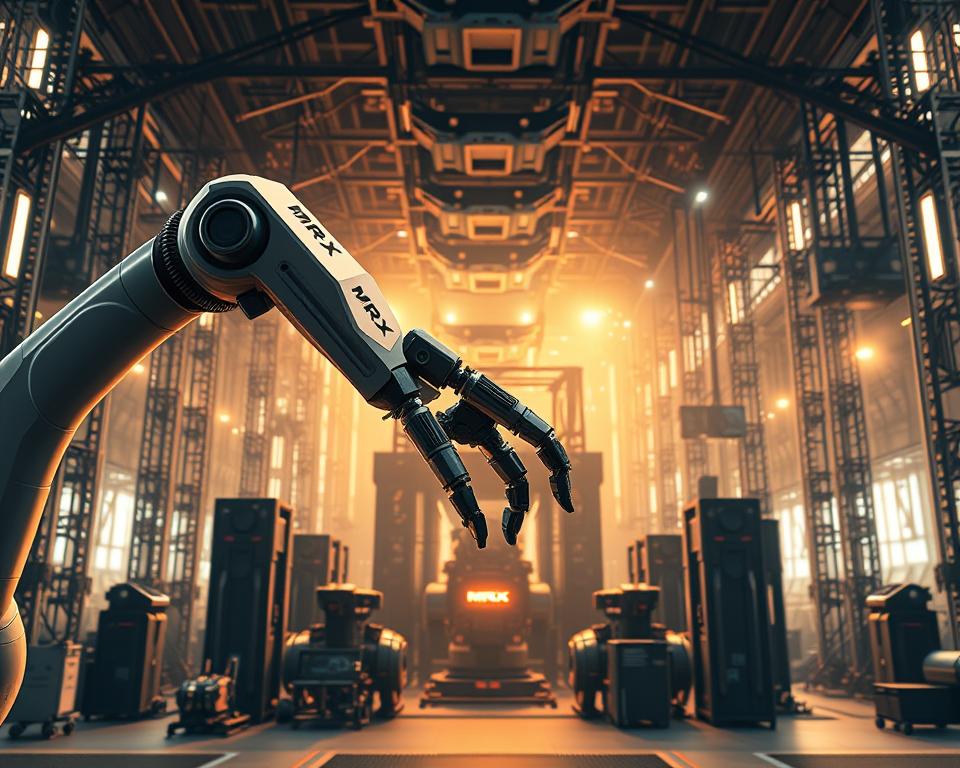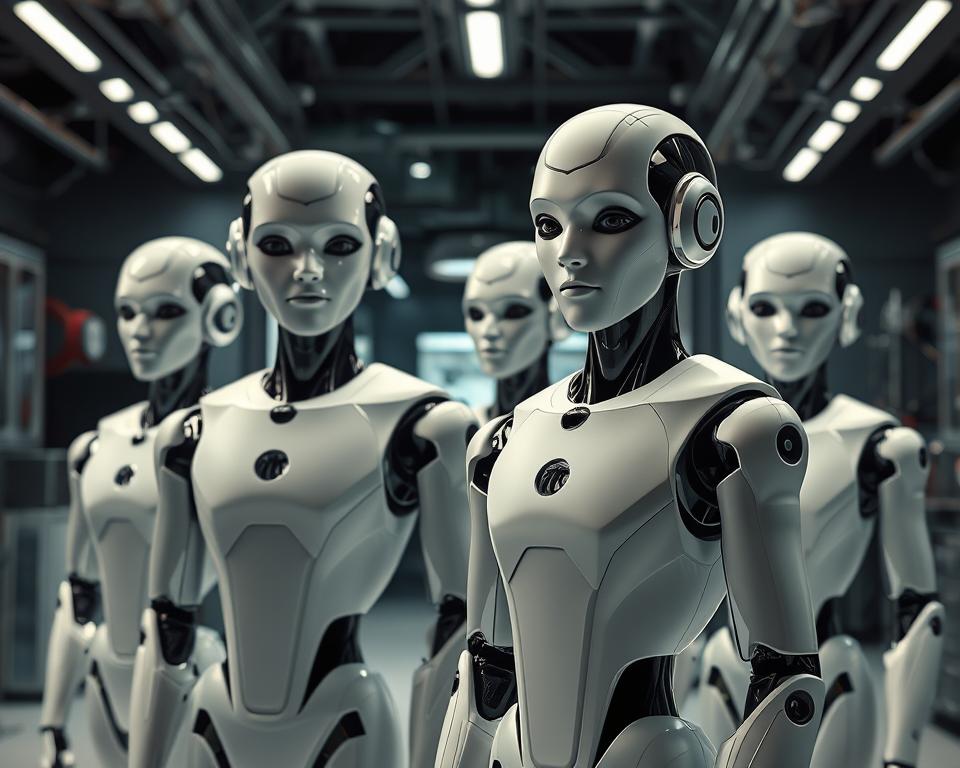
Can machines that look and act like humans change how we work? The rise of humanoid robots is changing many industries. They automate tasks that need human-like movement and interaction.
Companies like Tesla, Agility Robotics, and Honda are leading this change. They are making lifelike robotic beings that can do complex tasks. These tasks include assembly, inspection, and handling materials with great precision.
The abilities of these robots are growing fast. Their uses are endless. As we dive into the world of humanoid robots, we’ll see how they’re reshaping automation.
Key Takeaways
- Humanoid robots are being developed to automate tasks that require human-like movement and interaction.
- Companies like Tesla, Agility Robotics, and Honda are leading the development of lifelike robotic beings.
- These robots can perform complex tasks, such as assembly, inspection, and material handling.
- The capabilities of humanoid robots are expanding rapidly, and their potential applications are vast.
- The use of humanoid robots is transforming industries and changing the face of automation.
Introduction to Humanoid Robots
Humanoid robots look like humans and are changing customer service, healthcare, and education. These AI humanoid machines are made to talk and act like people. This makes them perfect for many jobs.
Creating humanoid robots needs advanced humanoid robot technology. This tech lets them move and look like humans. Because of this, they’re being used more in places where people are important.
Some key things about humanoid robots are:
- They have smart AI for complex talks
- They look and move like people
- They can be set up for different tasks
These robots are used in many ways, like:
- Customer service: Helping and supporting customers
- Healthcare: Helping with patient care and getting better
- Education: Making learning fun with interactive lessons
Using humanoid robots makes things better and more efficient. As humanoid robot technology gets better, we’ll see even more cool uses in the future.
In short, humanoid robots are a big step forward in robotics. They have a lot of potential for growth and change in many fields.
The Evolution of Human-Like Robots
The journey to create robots that look like humans has been long and complex. It has involved many technological breakthroughs. From the early days of robotics to today’s AI advancements, making humanoid robots has taken time.
Early Innovations in Robotics
The idea of humanoid robots started in the early 20th century. The first robots were more like automatons than today’s advanced machines. Early innovations aimed to create machines that could do simple tasks. This laid the foundation for more complex robots.
- Development of the first robotic arms and grippers
- Introduction of basic programming languages for robots
- Initial experiments with robotic locomotion
Key Technological Milestones
Over time, several key technological milestones have greatly advanced humanoid robotics. These include better mechanical design, sensing technologies, and control systems.
- Advances in actuator technologies, allowing for more human-like movement
- Development of sophisticated sensor systems for better environmental interaction
- Improvements in battery technology, enabling longer operation times
The Rise of AI in Robotics
The addition of Artificial Intelligence (AI) has been a major breakthrough for humanoid robots. It lets them do complex tasks, understand their surroundings, and interact with humans more naturally.
- Machine learning algorithms for adaptive behavior
- Natural Language Processing (NLP) for improved human-robot interaction
- Computer vision for enhanced perception and understanding
These technological advancements have made humanoid robots more capable. They are now used in many parts of our lives.
How Humanoid Robots Are Designed
Humanoid robots are made with advanced materials and methods to look and act like humans. They combine insights from robotics, materials science, and AI. This makes them look and move like us.
Creating these robots needs careful thought about materials, making techniques, and AI. Carbon fiber, aluminum, and advanced polymers are used for their structure.
Materials and Manufacturing Techniques
The right materials and making methods are key for humanoid robots. 3D printing and CNC machining help make precise parts.
These methods allow for robots with detailed, human-like looks. For example, silicone and other elastomers make skin-like surfaces that last and look real.
Anatomy Replication: A Closer Look
Creating robots that look like humans is important. They need to have the right proportions and movements. Advanced robotics and AI algorithms help achieve this.
Understanding human biomechanics and movement is key. This lets researchers make robots that can do tasks like us.
Software and AI Integration
Software and AI are crucial for humanoid robots to do complex tasks. Machine learning algorithms and computer vision help them see and react to their world.
The AI in these robots is what lets them interact with us and do things on their own. Advanced AI lets them learn and adapt to new situations.
Understanding Human-Like Motion
Human-like robots move naturally thanks to advanced engineering and AI. They are made to act like humans, making them seem real and relatable.
Mechanics of Movement
These robots move like humans through clever mechanical designs. Their skeletons are light but strong, allowing for quick and precise actions. Actuators and motors help them mimic human flexibility and range.
Their mechanics include complex systems for walking, running, and doing fine tasks. For example, hydraulic systems or servo motors control limb movements.
Sensors and Feedback Systems
Sensors are key for a humanoid robot’s natural movement. They give feedback on position, balance, and movement. This info helps the robot adjust its actions for lifelike motion.
- Gyroscopes and accelerometers help maintain balance.
- Force sensors enable the robot to adjust its grip and pressure.
- Vision sensors allow the robot to perceive its environment.
The Role of Machine Learning
Machine learning boosts humanoid robots’ abilities. They learn from data, improving their movements and adapting to new situations. Algorithms process sensor data to refine motion patterns.
“The integration of machine learning into robotics has revolutionized the field, enabling robots to learn from experience and improve their performance over time.”
Machine learning makes humanoid robots more independent and efficient. They are now better for many tasks, from service to industrial automation.
Applications of Human-Like Robots
Humanoid robots can move and act like humans. They are changing many fields. Their skills make things better and easier for everyone.
Assisted Living and Healthcare
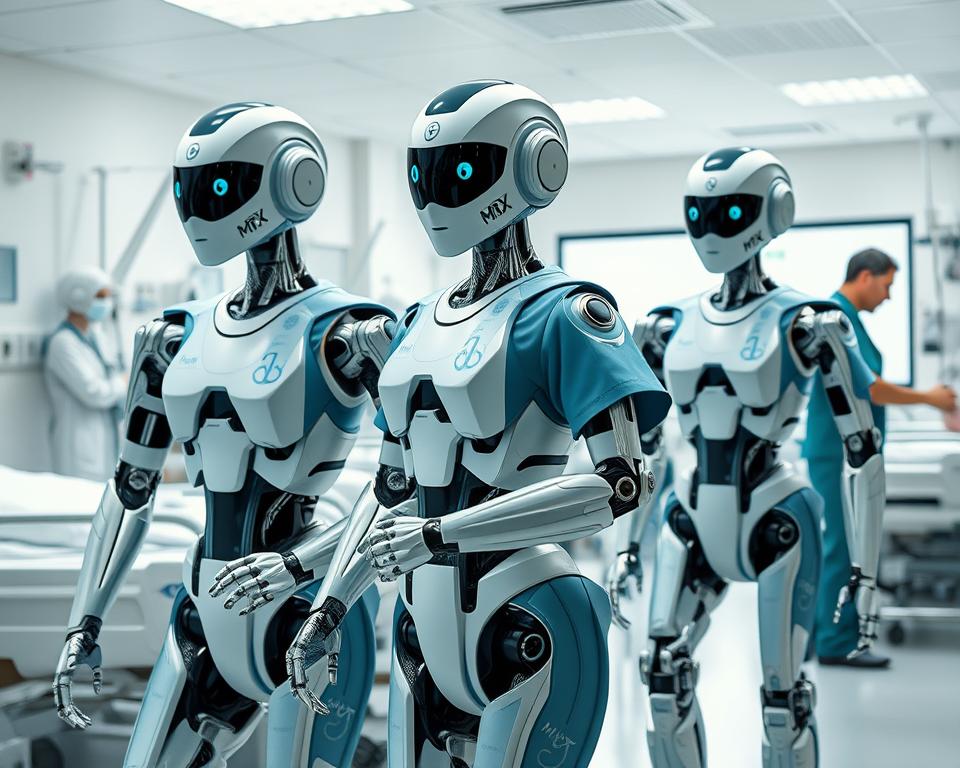
These robots help in healthcare and assisted living. They do daily tasks and watch over patients. They also keep people company, making life better for those who need it.
Benefits in Healthcare:
- They keep an eye on patients all the time.
- They help with getting better and moving again.
- They offer friendship and support.
Customer Service and Hospitality
In customer service and hospitality, humanoid robots make things better. They welcome guests, answer questions, and help with needs. It’s a new and exciting way to interact.
| Industry | Application | Benefits |
|---|---|---|
| Customer Service | Greeting customers, providing information | Enhanced customer experience, 24/7 support |
| Hospitality | Assisting with guest services, room service | Personalized service, increased efficiency |
Education and Training
Humanoid robots are also helping in schools. They help teach, make learning fun, and improve social skills.
Educational Benefits:
- They make learning fun and interactive.
- They help with social and emotional skills.
- They offer personalized learning plans.
In summary, humanoid robots are very useful in many areas. They can act like humans, helping in healthcare, education, and more. Their abilities make life easier and better for everyone.
Ethical Considerations in Humanoid Robotics
Humanoid robots can look and act like humans, which raises ethical questions. As they become more common, we must think about their impact on society. It’s important to consider the ethics behind their creation and use.
The Turing Test and Its Implications
The Turing Test is a way to see if a robot can think like a human. If a robot passes, it could mean they can trick or fool people. This makes us wonder about their role in our lives.
Key Considerations:
- Deception and Manipulation
- Trust and Reliability
- Transparency in Human-Robot Interaction
Social Acceptance of Human-Like Robots
How people feel about humanoid robots varies a lot. It depends on culture, society, and personal views. Understanding these factors helps us integrate robots into our lives better.
| Factor | Description | Impact on Acceptance |
|---|---|---|
| Cultural Background | Influences perceptions of robots | High |
| Social Interaction | Affects how robots are perceived in social settings | Medium |
| Personal Experience | Influences individual attitudes towards robots | High |
Privacy and Security Concerns
Humanoid robots in homes or personal spaces raise big privacy and security worries. They can access private info and might be used for bad things if not kept safe.
Key Measures to Address Concerns:
- Implementing robust security protocols
- Ensuring transparency in data collection and use
- Regularly updating software to prevent vulnerabilities
As humanoid robots get more advanced, we must tackle these ethical issues head-on. This way, we can make sure these robots help society without causing harm.
The Future of Humanoid Robots
Humanoid robots are making big strides in robotics and AI. They are becoming smarter and more able to work with humans. This is thanks to advanced AI and robotics.
Advancements in AI and Robotics
The future of humanoid robots depends on AI and robotics progress. Machine learning and deep learning are key. They help robots get better over time.
Breakthroughs in natural language processing (NLP) have also helped. Now, robots can understand and talk to humans better. This makes them more useful in communication.
| Technology | Description | Impact on Humanoid Robots |
|---|---|---|
| Machine Learning | Enables robots to learn from data and improve performance. | Enhances adaptability and efficiency. |
| Deep Learning | Allows for complex data analysis and pattern recognition. | Improves decision-making capabilities. |
| NLP | Facilitates understanding and generation of human language. | Enhances human-robot interaction. |
Potential New Applications
Humanoid robots are set to enter new fields. In healthcare, they could help with patient care and rehab. This is a big chance for them to make a difference.
In education, they could be great teaching aids. They could offer personalized lessons to students.
The Role of Humanoid Robots in Society
Humanoid robots will soon be a big part of our lives. They will help in many ways, from service to being friends. Their ability to connect with us is key to their success.
As we look ahead, we must think about the ethics. We need to make sure these robots help everyone, not just a few.
Challenges Faced by Humanoid Robots
Creating lifelike robots is tough. They face many challenges that affect how well they work and how people see them. Even with big steps forward in robotics and AI, humanoid robots still have a long way to go.
Technical Limitations
Humanoid robots struggle with technical issues. They need to move and act like humans, which is hard. Advanced sensors and actuators help them get around and interact better.
These robots are also tricky to keep stable, which is a big problem. Improving mechanical design and control algorithms is key to making them better and more reliable.
Financial Costs of Development
Making humanoid robots is expensive. Research and development expenses are high because of the need for advanced materials and complex software. It’s costly to make one robot, which limits their use.
Keeping these robots running also costs a lot. They need regular checks and sometimes repairs, which can be pricey and time-consuming.
Public Perception and Acceptance
How people see humanoid robots matters a lot. Some are excited, but others are worried or scared. Addressing concerns about job displacement, privacy, and safety is key to winning people over.
Talking to the public about the good and bad of humanoid robots can help. As the tech gets better, it’s important to have open discussions about their role in our lives.
Key Players in Humanoid Robotics
Many companies and schools are leading in humanoid robotics. They are making big steps in AI and robotics. This brings us closer to a future where humanoid robots are part of our lives.
Prominent Companies in the Field
Honda and Boston Dynamics are leading in humanoid robotics. They invest a lot in research and development. This pushes the limits of what humanoid robots can do.
Honda’s ASIMO is a robot that shows how far we’ve come. ASIMO can walk, run, and do complex tasks. It shows how robots can be precise and balanced.
Academic Contributions and Research
Schools and research centers are key in advancing humanoid robotics. They do studies and develop new tech. This is important for humanoid robots to evolve.
Studies in machine learning and natural language processing help robots get smarter. This is key for robots to understand and talk to humans better.
Notable Projects and Innovations
There are many cool projects in humanoid robotics. They show the potential of these robots in different areas. From healthcare to entertainment, the projects are diverse.
The RoboThespian is a robot for fun and learning. Projects like this show how versatile humanoid robots can be. They can engage people and offer fun experiences.
User Interaction with Humanoid Robots
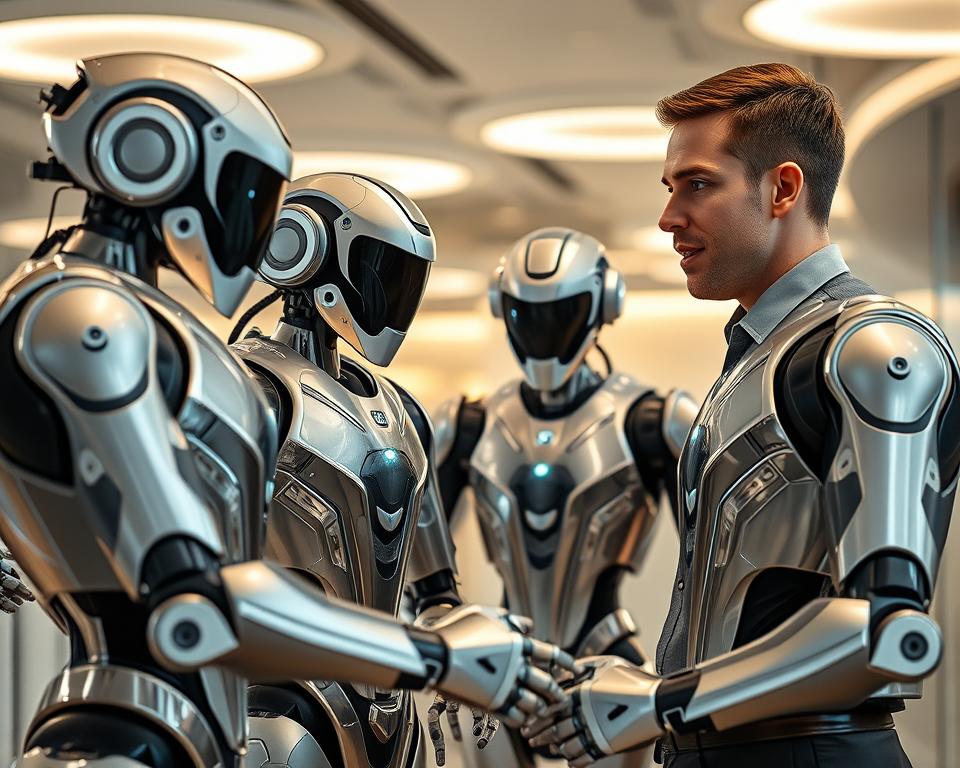
Humanoid robots are made to make talking to machines feel more natural. This is key for them to fit well into our lives. They can help in many areas like service, healthcare, education, and fun.
Natural Language Processing
Natural Language Processing (NLP) is a big help for humanoid robots. It lets them understand and talk back to us in our own words.
- Speech recognition algorithms help robots to identify and interpret spoken language.
- Semantic understanding enables robots to comprehend the meaning behind the words, facilitating more accurate and relevant responses.
- Language generation capabilities allow robots to produce human-like responses, enhancing the interaction experience.
Emotional Recognition and Response
Being able to read human emotions is very important for robots. This way, they can respond in a way that feels more like talking to a person.
Emotion recognition technologies look at facial expressions, voice tone, and body language. This helps the robot know how we’re feeling. Then, it can answer in a way that feels right for the moment.
- Facial expression analysis helps in identifying emotions such as happiness, sadness, or anger.
- Voice tone analysis can detect the emotional nuances in a person’s voice.
- Body language interpretation provides additional context to understand a person’s emotional state.
Enhancing User Experience
Making the experience better for users is key for humanoid robots to become more popular. It’s not just about understanding and answering us. It’s also about making it fun and easy to use.
Developers work hard to make robots that can learn from interactions. This means they can get better over time, thanks to what we tell them.
By improving NLP, emotional recognition, and how easy they are to use, humanoid robots are getting better at interacting with us. They’re becoming more natural and fun to talk to.
Regulatory Framework Surrounding Humanoid Robots
Humanoid robots are becoming more common in our lives. This means we need clear rules to keep everyone safe and private. Questions about safety, privacy, and ethics are growing.
Current Legislation in the U.S.
The U.S. is starting to make laws for humanoid robots. The focus is on safety and how they can be used in different fields. For example, the National Robotics Initiative works on robots that can work with humans safely.
Some key laws include:
- Setting safety and performance standards for robots
- Creating rules for using robots in healthcare and schools
- Dealing with privacy issues from robot data collection
International Standards and Guidelines
Worldwide, groups like the International Organization for Standardization (ISO) are making global robot standards. These standards will make sure humanoid robots are safe and work well everywhere.
| Organization | Standard/Guideline | Description |
|---|---|---|
| ISO | ISO 10218 | Robots and robotic devices — Safety requirements |
| IEC | IEC 61508 | Functional safety in electrical/electronic/programmable electronic safety-related systems |
Future Policy Considerations
As humanoid robots get smarter and more common, we’ll face new policy challenges. We’ll need to think about:
- Who is responsible when a robot causes an accident
- How robots will change jobs and the workforce
- What ethics mean for using robots in places like hospitals and schools
Lawmakers will have to find a balance. They need to support innovation while keeping people safe and private.
The Influence of Pop Culture on Robotics
Humanoid robots in pop culture have changed how we see them. Movies and TV shows have shown us what robots can do. This has shaped our ideas about their abilities.
Media Representations
Media has a big role in how we view humanoid robots. Movies like Blade Runner and A.I. Artificial Intelligence show robots that are almost like us. They make us think about what it means to be alive.
TV shows and books also shape our views. For example, Data from Star Trek: The Next Generation makes us think about AI wanting to be human. This adds to our understanding of robots.
Impact on Public Perception
Media’s take on robots affects how we see them. It shows us both the good and bad sides of robots. This shapes how we think about using them in real life.
People are really interested in robots because of what they see in media. They show robots helping or working with humans. This makes us want to make robots that can do things like us.
Educational Trends Inspired by Media
Pop culture’s influence is also seen in education. It makes people want to learn about robotics. Schools are starting to teach about robots and AI.
Robotics and AI classes are becoming more common. They help students get ready for a future with robots. Media inspires kids to study science and tech, preparing them for robotics careers.
Humanoid Robots in the Workplace
Humanoid robots are now part of the workforce. They help with tasks and work alongside humans. This change brings both good and bad sides.
Automation in Various Industries
These robots are used in many fields like manufacturing, healthcare, and customer service. In factories, they help with assembly and checks, making things more precise and saving money.
In hospitals, they help with patient care. They offer companionship and support, which can make patients feel better.
| Industry | Application | Benefits |
|---|---|---|
| Manufacturing | Assembly and Inspection | Precision, Reduced Labor Costs |
| Healthcare | Patient Care | Companionship, Support |
| Customer Service | Customer Interaction | 24/7 Support, Efficiency |
Collaborative Robots and Human Integration
Humanoid robots are great at working with humans. They help make work more efficient and productive.
Key aspects of collaborative robots include:
- Enhanced Safety: Designed to work safely alongside humans.
- Flexibility: Can be programmed for various tasks.
- Improved Productivity: Automate repetitive tasks, freeing humans for complex work.
Challenges and Benefits of Implementation
There are both good and bad sides to using humanoid robots. They can be expensive, need special training, and might replace jobs.
The future of humanoid robots in the workplace will depend on addressing these challenges while leveraging their benefits.
| Challenges | Benefits |
|---|---|
| High Initial Costs | Increased Efficiency |
| Specialized Training Required | Enhanced Productivity |
| Potential Job Displacement | Improved Safety |
The Science Behind Human-Like Features
To make robots look and act like humans, we need to understand a lot about humans. This includes their body, behavior, and feelings. Robots use advanced tech like facial recognition and showing emotions to seem more human.
Facial Recognition Technology
Facial recognition is key for robots to seem human. It lets them see and react to our feelings. This makes talking to robots feel more natural.
| Technology | Application | Benefit |
|---|---|---|
| Facial Recognition | Emotion Detection | Enhanced Human-Robot Interaction |
| Machine Learning | Adaptive Response | Personalized Experience |
| Advanced Sensors | Accurate Emotion Reading | Improved Robot Empathy |
Design Challenges with Human Faces
Designing robot faces that look human is hard. It’s tough to copy the complexity of human expressions. We also don’t want robots to look scary.
To solve these problems, experts are looking into new materials and ways to make robots. They want to make robot faces look more like ours.
Emotional Expression in Robotics
Robots that show emotions can connect with us better. When robots seem to feel emotions like we do, we trust them more.
Using advanced AI and machine learning, robots can understand and respond to our feelings. This makes our interactions with them smoother and more enjoyable.
Public Engagement with Robotics
As human-like robots become more common, it’s key to understand how people interact with them. This is important for their successful use in our lives.
Many efforts help people get to know robotics better. Workshops and educational programs are among these. They teach about what humanoid robots can do and what they can’t. This helps clear up any misunderstandings.
Workshops and Educational Programs
Workshops and educational programs are essential for connecting people with robotics. They offer hands-on experiences and demos. This way, people learn about the tech behind human-like robots and their uses.
For example, robotics workshops let people build or program simple robots. It’s a fun way to learn about robotics and spark interest in STEM fields.
Public Perception Surveys
It’s vital to know how people see humanoid robots. Surveys help understand public views on robotics resembling humans. They show how different groups see these robots.
These surveys show that people’s views are shaped by many things. Media, personal experiences, and culture play big roles. Knowing this helps improve how we teach and market robotics.
Community Involvement in Robotics
Getting the community involved is crucial for robotics. People can join local events, competitions, and maker spaces. This way, they help make humanoid robots better.
Community projects often aim to make robots that help in daily life. This could be in healthcare or education. It boosts innovation and makes human-like robots seem more positive to society.
Conclusion: The Future of Human-Like Robots
Humanoid robots are changing how we live and work. AI humanoid machines are getting smarter. We’ll see more of these robots in healthcare and customer service soon.
Key Developments
Big steps have been taken in making humanoid robots. They can now move like humans, talk to us, and show feelings. This is key for robots to fit well in our world.
Future Prospects
More cool uses for humanoid robots are coming. Thanks to better AI and robotics, they’ll soon be even more like us. This will help them help and talk to us better.
Ongoing Research Importance
More research is needed for humanoid robots to grow. Scientists and engineers keep making them better. This will change many parts of our lives for the better.
FAQ
What are humanoid robots?
Humanoid robots look and move like humans. They are also called androids or artificial humanoids.
How are humanoid robots used in healthcare?
In healthcare, humanoid robots help with daily tasks. They offer companionship and support to patients.
What is the Turing Test, and how does it relate to humanoid robots?
The Turing Test checks if a machine acts like a human. Robots are made to pass this test by talking and acting like people.
What are the benefits of using humanoid robots in customer service?
Robots can work all day, answering simple questions. This lets human helpers deal with harder problems.
How are humanoid robots designed to mimic human anatomy?
Robots are made with advanced materials and 3D printing. They use AI to act like humans.
What are the challenges faced by humanoid robots in terms of public acceptance?
People might find robots too human-like. This can make them feel uneasy or worried about job loss.
How are humanoid robots being used in education?
Robots help in teaching, like in STEM and language classes. They also assist in special education.
What is the current state of legislation surrounding humanoid robots?
Laws about robots are changing. Some places have rules, while others are still figuring things out.
How do humanoid robots interact with humans?
Robots talk and understand emotions using special tech. This lets them connect with people better.
What are the potential applications of humanoid robots in the workplace?
Robots can do many tasks, helping humans work better. They’re useful in many jobs, like in factories and hospitals.
What is the role of AI in the development of humanoid robots?
AI is key for robots to learn and act like humans. It helps them understand and interact with us.
What are the key technological advancements driving the development of humanoid robots?
Advances in AI, robotics, and sensors are important. So are better materials and making techniques.