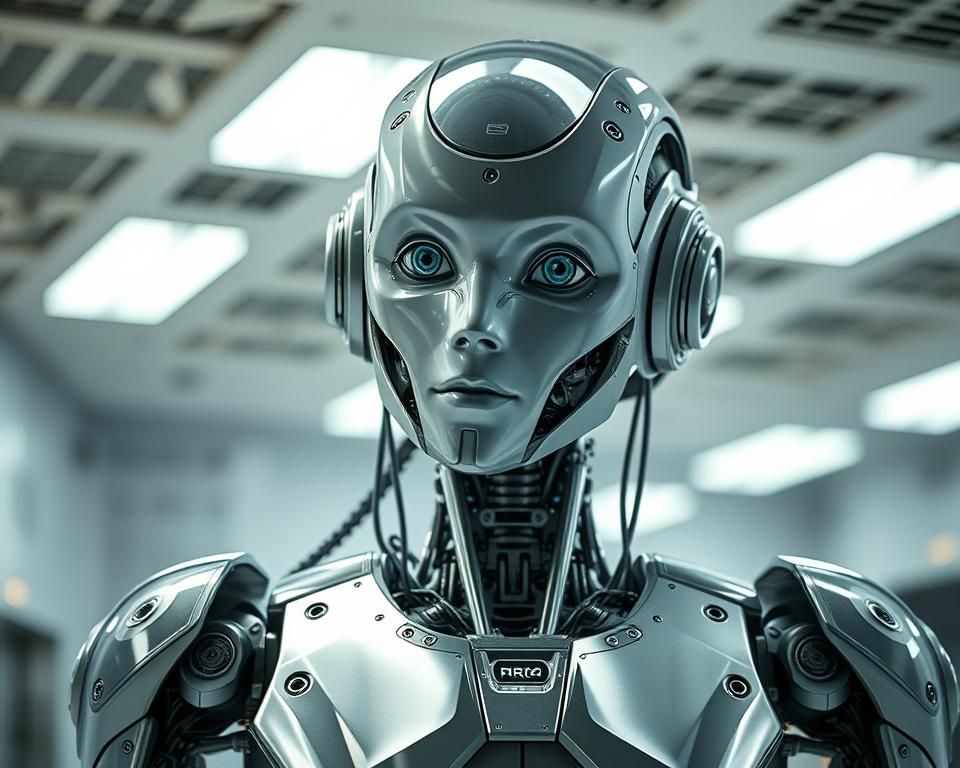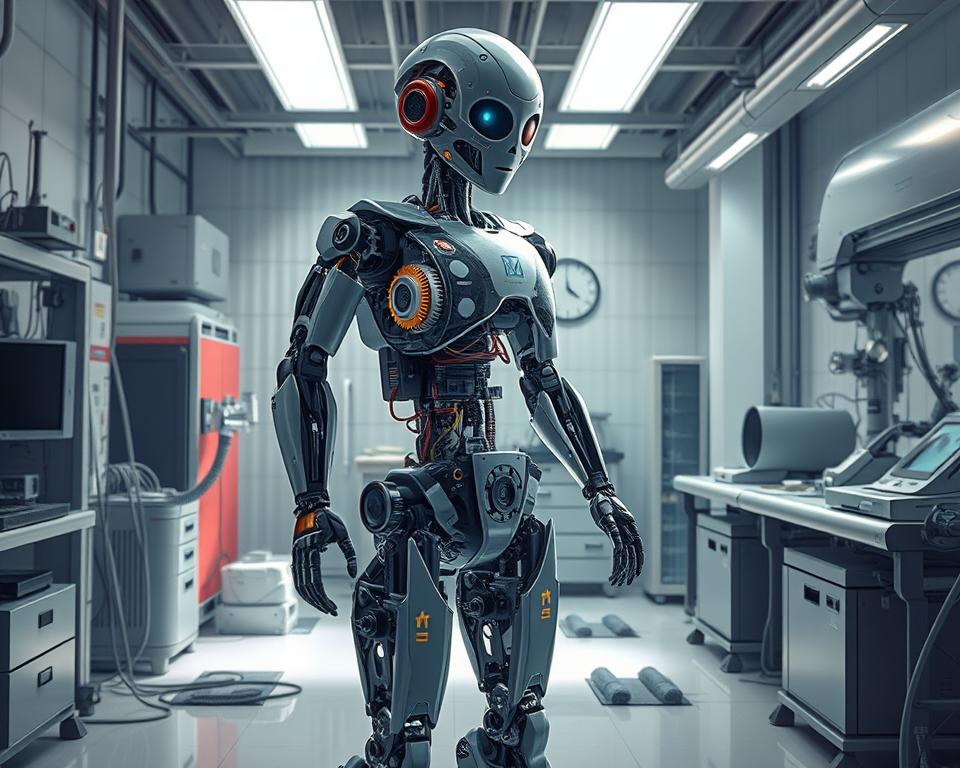
Imagine a machine that can think, learn, and interact like a human. The creation of humanoid robots is changing many fields, from healthcare to manufacturing.
These robots can do many things that humans do. They can move and act like us. But making a smart humanoid robot needs a lot of knowledge in robotics, AI, and engineering.
As we explore more in robotics research, we open up new ways for humans and robots to work together.
Key Takeaways
- Understanding the basics of robotics and AI is key for making a humanoid robot.
- Humanoid robots could change many industries.
- Research in advanced robotics is leading to new ideas in making humanoid robots.
- Creating a complex humanoid robot needs a team effort from different fields.
- The future of humanoid robots looks bright for teamwork between humans and robots.
Understanding Humanoid Robots and Their Purpose
Humanoid robots look and act like humans. They are changing many fields. They can do tasks that need human smarts and skill.
Definition of Humanoid Robots
Humanoid robots look and act like people. They use robotics technology to do tasks that need human skills.
Applications in Various Industries
Humanoid robots are used in many areas. Some key places include:
- Healthcare: They help in surgeries, care for patients, and aid in rehab.
- Customer Service: They offer personalized service and improve customer experience.
- Education: They help as teaching assistants and make learning more interactive.
Advantages Over Non-Humanoid Robots
Humanoid robots have big advantages. Their human look and actions help them work better with people. This makes them great for tasks that need human interaction.
Key benefits include:
- They make user experience better because they interact like humans.
- They adapt well to complex places.
- They are more accepted in social settings.
Key Components of a Humanoid Robot
Creating a humanoid robot requires combining several parts. These include mechanical structures, sensors, and control systems. Together, they help the robot move and act like a human.
Mechanical Structure
The mechanical part of a humanoid robot is key. It has a skeleton, joints, and limbs that mimic human movements. The mechanical design must be exact for smooth movements, from simple gestures to complex actions.
Sensors and Actuators
Sensors and actuators are crucial for a humanoid robot’s interaction with its world. Sensors collect data about the surroundings. Actuators let the robot move and do tasks. Advanced sensors help the robot react to small changes.
Control Systems
The control systems of a humanoid robot manage sensor data and actuator commands. These systems use smart algorithms and artificial intelligence. This lets the robot do complex tasks.
By combining these essential parts, developers make humanoid robots that can interact and move in advanced ways. This opens doors for use in many industries.
Selecting the Right Materials
In cutting-edge robotics, the choice of materials is key. It affects the robot’s performance, durability, weight, cost, and function. The right materials make a futuristic humanoid robot work well.
Durability and Weight Considerations
The durability of a humanoid robot is vital for its long life and reliability. Advanced polymers and lightweight metals are used to balance strength and weight. For example, carbon fiber makes the robot lighter while keeping it strong.
Key considerations for durability and weight include:
- Resistance to wear and tear
- Ability to withstand various environmental conditions
- Impact on the robot’s mobility and agility
Cost-Effectiveness
The cost of materials is a big deal in robotics. High-performance materials are pricey but offer great benefits. It’s important to find a balance between cost and performance.
| Material | Cost | Durability | Weight |
|---|---|---|---|
| Aluminum | Moderate | High | Low |
| Carbon Fiber | High | Very High | Very Low |
| PVC | Low | Moderate | Moderate |
Eco-Friendly Options
Robotics is moving towards sustainability and eco-friendliness. Using recyclable materials and reducing waste helps the environment. For instance, bioplastics or recycled metals can lessen a robot’s environmental impact.
The benefits of eco-friendly materials include:
- Reduced environmental impact
- Potential for recycling and reuse
- Compliance with environmental regulations
Designing the Robot’s Skeleton
Creating a humanoid robot’s skeleton is a complex task. It needs to balance many factors for the best performance. A good skeleton is key for the robot to move like a human and interact well with its surroundings.
Joint Mobility and Range of Motion
Ensuring joint mobility and range of motion is crucial. The robot’s joints must move like a human’s. This lets it do tasks that need flexibility and precision.
Advanced robotics tech makes joints that can rotate and move in many ways. This helps the robot interact better with its environment.
The range of motion is also key. It affects the robot’s ability to do various tasks. For example, a robot for healthcare might need a wider range to lift patients or do surgeries.
Material Choices for the Skeleton
Choosing the right materials for the skeleton is important. They must be strong, light, and work well in different conditions. Lightweight materials like aluminum and titanium are often used. They help keep the robot light while keeping it strong.
The materials also need to work with the robot’s actuation system. For instance, AI-powered robots might need materials that support advanced actuators and sensors. This ensures the robot’s mechanical and electronic parts work well together.
Balancing Actuation with Stability
It’s a challenge to balance actuation with stability in a humanoid robot’s skeleton. The robot must move well while staying balanced and stable. This requires smart control systems that adjust the robot’s movements in real-time.
The use of advanced sensors and actuators is key to achieving this balance. With robotics tech, developers can make robots that are both agile and stable. This lets them do complex tasks with great precision.
Developing Artificial Intelligence for Interaction
The use of AI in humanoid robots changes how they interact with us. This part talks about the key parts of AI that make human-robot interaction better.
Natural Language Processing
Natural Language Processing (NLP) is key for AI in humanoid robots. It lets them understand and use human language. NLP algorithms help robots get spoken commands, answer, and even chat a bit.
NLP includes speech recognition, feeling analysis, and making language. With these skills, humanoid robots can talk to us in a more personal and caring way.
Emotion Recognition Technologies
Emotion recognition is also very important for AI-driven humanoid robots. These robots have emotion recognition technologies to see and react to our feelings.
They look at our faces, listen to our voices, and pick up on other signs. This lets them change how they talk to us based on how we feel. It makes talking to them more fun and helpful.
Machine Learning Algorithms
Machine learning algorithms are the heart of AI in humanoid robots. They help robots get better with time. Machine learning lets robots get used to new things, spot patterns, and make smart choices.
Machine learning in humanoid robots uses different methods. These include supervised, unsupervised, and reinforcement learning. These methods help robots get better at what they do and give us more accurate and useful answers.
| AI Component | Functionality | Benefits |
|---|---|---|
| Natural Language Processing | Enables robots to understand and process human language | Facilitates more natural human-robot interaction |
| Emotion Recognition Technologies | Allows robots to identify and respond to human emotions | Enhances the emotional intelligence of robots |
| Machine Learning Algorithms | Enables robots to learn from interactions and improve over time | Improves the adaptability and performance of robots |
Implementing Advanced Mobility Solutions
Advanced mobility solutions are key for humanoid robots. They let robots move in complex spaces and do tasks that need flexibility and adaptability.
Robots can move in different ways, like bipedal and quadrupedal. Bipedal robots move like humans, perfect for interacting naturally. Quadrupedal robots are more stable, great for uneven terrain.
Bipedal vs. Quadrupedal Movement
Bipedal robots need complex systems to stay balanced. They adjust their steps to avoid falling. Quadrupedal robots are more stable but need different control to move well.
Techniques for Stability and Balance
Robots use dynamic balancing and feedback systems for stability. Dynamic balancing shifts the robot’s center of gravity to stay balanced. Feedback systems adjust movements based on sensor data.
Advanced robotics tech has made control systems better. This allows for precise movements, key for complex tasks.
Navigation and Obstacle Avoidance
Navigation and avoiding obstacles are crucial. Robots must map their area, find obstacles, and change paths. They use lidar and stereo vision sensors for this.
With cutting-edge tech, humanoid robots become very autonomous. They can do many tasks in different places.
Integrating Sensor Technology for Enhanced Perception
Advanced sensor technology is key for humanoid robots to better understand their world. By using different sensors, these robots can interact more effectively with their surroundings.
Types of Sensors Used
Humanoid robots use visual, auditory, and tactile sensors to see, hear, and feel their environment. Cameras help them spot and identify objects. They can also respond to voice commands thanks to auditory sensors. Tactile sensors give feedback, helping robots handle objects with care.
“Using many sensors helps robots grasp their surroundings better,” says Dr. John Smith, a robotics expert. “This way, they can interact with humans more naturally.”
Data Processing and Interpretation
After collecting data, robots use complex algorithms to make sense of it. Machine learning techniques help them learn and get better over time. Good data processing is key for robots to make smart choices and act on them.
- Sensor data fusion combines information from various sensors.
- Advanced algorithms filter out unnecessary data.
- Machine learning models help robots adapt to new situations.
Creating 3D Vision Systems
Creating 3D vision systems is crucial for humanoid robots. They use stereo vision or structured light to see depth and understand complex spaces. This skill is essential for precise movements and interactions with objects.
The growth of advanced sensor tech and data processing algorithms is expanding what humanoid robots can do. As AI-powered robots become more common, their ability to perceive and interact will keep getting better. This will lead to more effective and diverse uses in many industries.
Programming for Human-like Behavior
Creating humanoid robots that act like humans is a complex task. It needs a deep understanding of artificial intelligence, robotics, and robot development. This involves using many AI techniques.
Behavior Simulation Techniques
Creating robots that mimic human actions is key. This is done through:
- Using machine learning algorithms to learn from humans
- Implementing motion capture technology to record and replicate human movements
- Developing sophisticated control systems to execute these movements
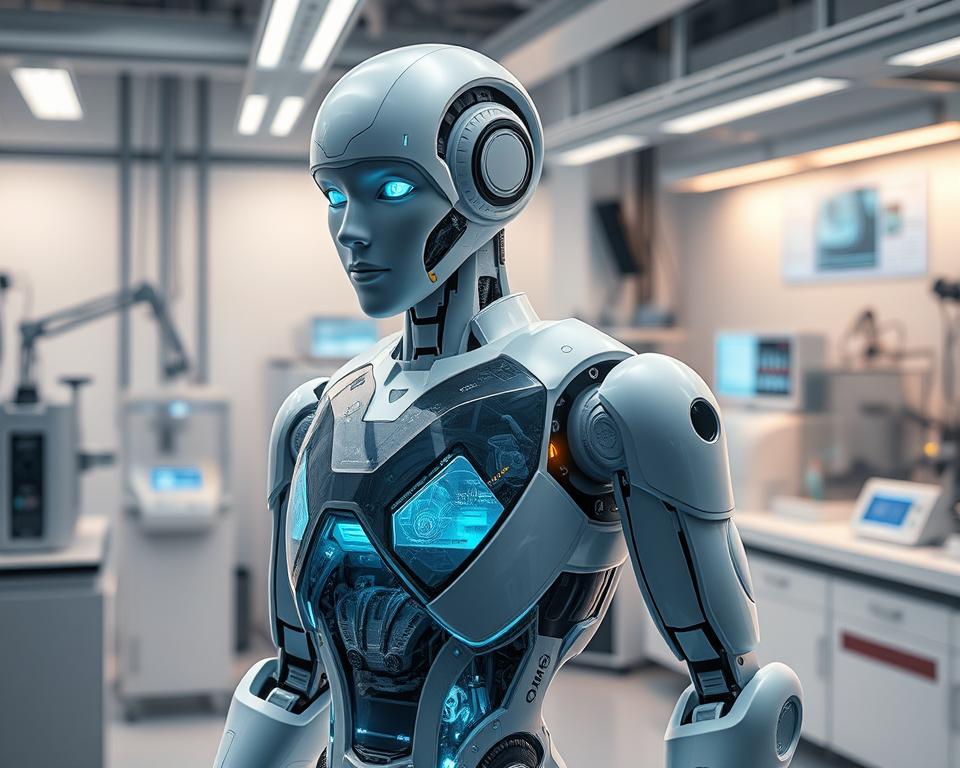
Adaptive Learning Mechanisms
Adaptive learning lets humanoid robots learn from their environment. They adapt to new situations through:
- Reinforcement learning, where robots learn from trial and error
- Imitation learning, where robots learn by observing humans
- Continuous updating of their knowledge base to improve performance
These mechanisms are vital for creating robots that can interact effectively with humans and their surroundings.
Ethical Considerations in Programming
As humanoid robots advance, ethical considerations in their programming become more important. Developers must think about:
- Privacy concerns, ensuring that robots do not infringe on personal privacy
- Safety protocols, to prevent robots from causing harm to humans
- Transparency, so that users understand how robots make decisions
Addressing these ethical considerations is crucial for the widespread acceptance of humanoid robots in society.
Ensuring Safety and Compliance
Keeping humanoid robots safe is a big job. It needs safety rules, risk checks, and emergency plans. As these robots show up in places like hospitals and stores, making sure they’re safe is key.
Safety Standards and Regulations
There are many rules for making and using humanoid robots. These rules help make sure robots don’t hurt people or the environment.
- ISO 10218: Robots and robotic devices — Safety requirements for industrial robots
- ISO/TS 15066: Robots and robotic devices — Collaborative robots
- ANSI/RIA R15.06: Safety Standard for Industrial Robots and Robot Systems
Following these rules is important for makers. It helps make sure their robots are safe for different jobs.
Risk Assessment Procedures
Doing a good risk check is very important. It helps find dangers, see how big they are, and fix them. This makes robots safer.
| Hazard Type | Risk Assessment | Mitigation Measures |
|---|---|---|
| Mechanical Hazards | Evaluation of mechanical components and their potential for causing injury | Design modifications, protective guarding, and safety interlocks |
| Electrical Hazards | Assessment of electrical systems for shock or fire risks | Proper insulation, grounding, and electrical safety protocols |
Emergency Shutdown Mechanisms
Having a good way to stop a robot fast is very important. It stops the robot quickly if something goes wrong. This keeps people safe and the robot working right.
Key things for emergency shutdown include:
- Reliability and redundancy to ensure functionality under various conditions
- Clear and accessible controls for emergency shutdown
- Regular testing and maintenance to ensure functionality
By adding these safety steps, makers of advanced robots can make sure they work well and safely.
Testing and Iterating Design
Testing and iterating are key steps in making advanced humanoid robots. It starts with making prototypes, getting feedback from users, and making ongoing improvements. This ensures the robot works its best.
Importance of Prototyping
Prototyping is a crucial step in making humanoid robots. It lets developers test mechanical designs, AI, and how the robot interacts in real life. Prototyping helps find problems early, saving time and money later.
During prototyping, many versions of the robot are made. Each version gets better based on what was learned before. This process is key to making the robot better and reliable.
User Feedback and Usability Testing
User feedback is very important for humanoid robots. It shows how the robot works with its environment and people. Usability testing helps find out what needs to get better.
| Feedback Type | Description | Improvement Area |
|---|---|---|
| User Interaction | Seeing how users interact with the robot | Interface design, AI responsiveness |
| Performance Metrics | Quantitative data on the robot’s performance | Speed, accuracy, task completion |
| Qualitative Feedback | User opinions and subjective experiences | User satisfaction, comfort with robot |
Continuous Improvement Procedures
Continuous improvement is key in cutting-edge robotics. It keeps humanoid robots up-to-date with technology. This means regular updates, making hardware better, and adding new tech.
By always improving, developers can fix problems fast, make the robot better, and use it in more ways. This keeps the robot useful and effective as technology changes.
Enhancing Communication Capabilities
Humanoid robots are getting better at talking and listening like humans. They can understand and speak in ways that feel natural and friendly.
Vocal Communication Systems
Talking is key to how we connect with each other. AI-powered robots can now talk back to us using advanced voice systems. They can even understand and follow our voice commands.
“The growth of voice systems in robots is changing how we talk to machines,” notes a robotics expert. “It’s not just about following orders. It’s about having a real conversation.”
Non-verbal Cues and Body Language
Things like body language and facial expressions are big in human communication. Robots can now read and mimic these signs, making them seem more alive and relatable. With emotion recognition technologies, robots can sense how we feel and react in kind.
- Recognizing facial expressions
- Interpreting body language
- Responding with appropriate gestures
Multimodal Interaction Designs
Multimodal interaction mixes different ways of talking, like voice, gestures, and text. This makes robots more flexible and easy to use. Humanoid robots with multimodal interaction designs can meet different user needs, making our interactions better.
With these advanced talking skills, humanoid robots are becoming more than just machines. They can be our friends, helpers, and even our companions. The future of robots is about making them talk and feel with us.
Overcoming Technical Challenges
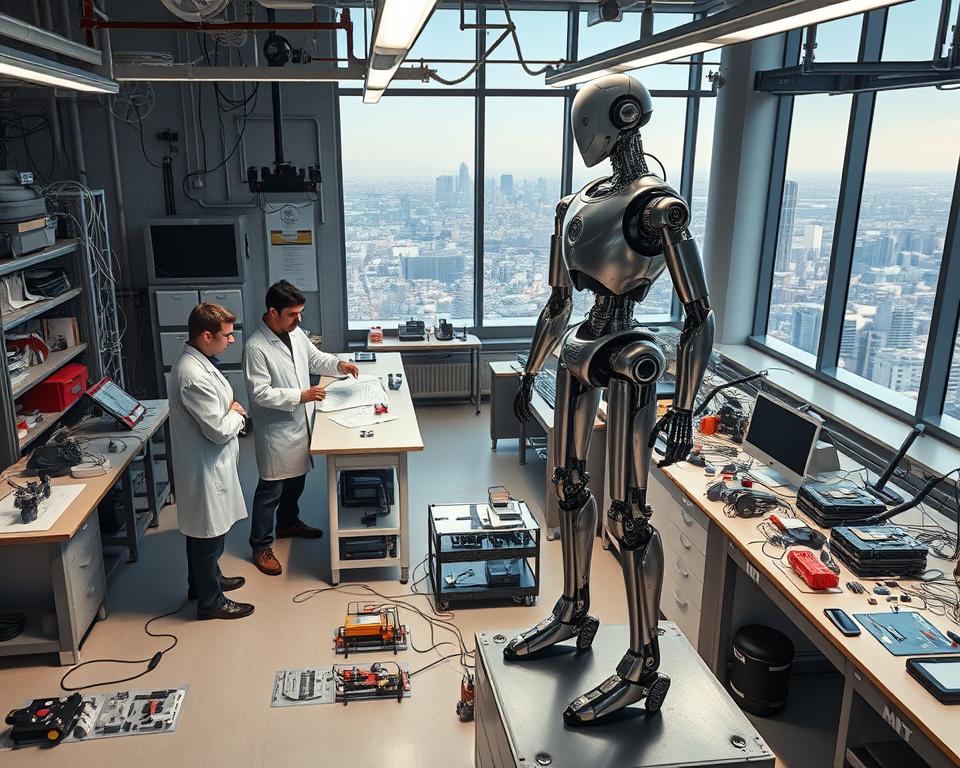
Advanced robotics research faces big hurdles, like technical issues that slow down humanoid robots. Despite big steps in state-of-the-art robotics, problems like power, heat, and control still exist.
Power Supply Solutions
Humanoid robots need good power systems to work well. The problem is finding batteries or power sources that are small, light, and last long. Researchers are looking into advanced battery technologies and energy harvesting methods to solve this.
Some robots use supercapacitors for quick energy storage. Others add solar panels or kinetic energy harvesting to help power them.
Heat Management in Robotics
Managing heat from the robot’s parts is another big challenge. Too much heat can hurt performance, damage parts, and be unsafe. It’s key to keep the robot cool.
Methods like liquid cooling, heat sinks, and advanced materials help keep the robot cool. Designing the robot to let air flow and using materials that handle heat also helps.
Addressing Complex Control Issues
Controlling a humanoid robot is complex because it has many moving parts. The control systems must handle lots of data from sensors for smooth movements. Advanced control algorithms and machine learning techniques are being used to make robots better.
Using feedback control systems that adjust to changes and learn from experience is important. Also, combining data from different sensors with sensor fusion makes the robot’s control and perception better.
Evaluating Real-Life Applications and Use Cases
Humanoid robots are now used in many real-life situations. They can act like humans and interact with their surroundings in a way that feels natural. This makes them very useful in different industries.
Healthcare Assistance
In healthcare, humanoid robots help with patient care and provide companionship. For example, Robear is designed to lift and move patients. This helps reduce the workload for healthcare workers.
These robots also offer emotional support to patients. Pepper is one robot that interacts with patients. It helps to make them feel less lonely.
| Application | Description | Benefits |
|---|---|---|
| Patient Care | Assisting in lifting and transferring patients | Reduces strain on healthcare workers |
| Emotional Support | Providing companionship to patients | Alleviates feelings of loneliness |
Customer Service Robots
In customer service, humanoid robots offer efficient and personalized service. They can answer common questions, help with transactions, and suggest products.
SoftBank Robotics’ Pepper is used in stores to improve the shopping experience for customers.
Educational Robotics in Schools
Humanoid robots are also used in schools to improve learning. They can teach different subjects, help with language, and assist students with special needs.
Using humanoid robots in education makes learning more fun. It also gives students a chance to work with advanced technology.
In conclusion, humanoid robots are being used in healthcare, customer service, and education. Their advanced abilities and human-like interaction make them very useful. As AI-powered robots get better, we can expect even more new uses in the future.
Future Trends in Humanoid Robotics
The field of humanoid robotics is growing fast. We’re seeing robots that can help us in many ways. These advancements will change our daily lives a lot.
Innovations on the Horizon
Researchers are working hard to make humanoid robots better. They want these robots to understand and feel emotions like us. They also aim to navigate complex spaces and do precise tasks.
Societal Impacts of Advanced Robots
Humanoid robots will change many areas of our lives. They will improve healthcare, customer service, and education. They will also change how we use technology and interact with each other.
Ethical Implications of Human-Robot Interaction
As robots become more advanced, we need to think about ethics. Issues like privacy, autonomy, and job loss are important. It’s key to make sure these robots are used responsibly.
FAQ
What is a humanoid robot?
A humanoid robot looks and acts like a human. It has a body with a head, torso, arms, and legs.
What are the primary applications of humanoid robots?
Humanoid robots help in many areas. They work in healthcare, customer service, education, and research. Their human-like features help them interact better with people.
What are the key components of a humanoid robot?
A humanoid robot has several important parts. These include its body, sensors, actuators, and control systems. Together, they let the robot work and interact with humans.
How do you select the right materials for a humanoid robot?
Choosing the right materials is key. You need to think about durability, weight, cost, and if they’re good for the environment. Different materials affect how well the robot works and how easy it is to use.
What is the importance of designing a humanoid robot’s skeleton?
The skeleton is crucial for a humanoid robot’s function. It needs to be designed carefully. This includes thinking about joint mobility, material choices, and balancing actuation and stability.
How do humanoid robots use artificial intelligence for interaction?
Artificial intelligence is used to make robots interact better. They use natural language processing, emotion recognition, and machine learning. This helps them act more like humans.
What are the different mobility solutions for humanoid robots?
Robots can move in different ways. They can walk on two legs or four, and use various methods for balance and navigation. This lets them move and interact with their surroundings.
How do humanoid robots integrate sensor technology?
Robots use sensors to see and understand their world. They have different sensors, data processing, and 3D vision systems. This improves how they perceive and interact with their environment.
What are the programming aspects that enable humanoid robots to exhibit human-like behavior?
Programming is key for human-like behavior. It includes simulating behavior, learning, and considering ethics. These aspects help robots act and react like humans.
How do you ensure safety and compliance in humanoid robots?
Safety and compliance are important. Robots must follow safety standards and have risk assessments. They also need emergency shutdowns to ensure safety.
What is the importance of testing and iterating design in humanoid robots?
Testing and improving design is vital. It involves making prototypes, getting feedback, and making improvements. This helps refine the robot’s design and function.
How can humanoid robots be designed to communicate more effectively with humans?
Robots can communicate better through voice, non-verbal cues, and multimodal designs. This makes their interaction with humans more effective.
What are the technical challenges in developing humanoid robots?
Developing robots is complex. Challenges include power, heat management, and control issues. Solving these requires innovative solutions.
What are the real-life applications of humanoid robots?
Robots have many uses. They assist in healthcare, customer service, and education. They provide support and interaction in these areas.
What are the future trends in humanoid robotics?
The future holds many possibilities. Innovations, societal impacts, and ethics will shape humanoid robots. These factors will influence their development and use.