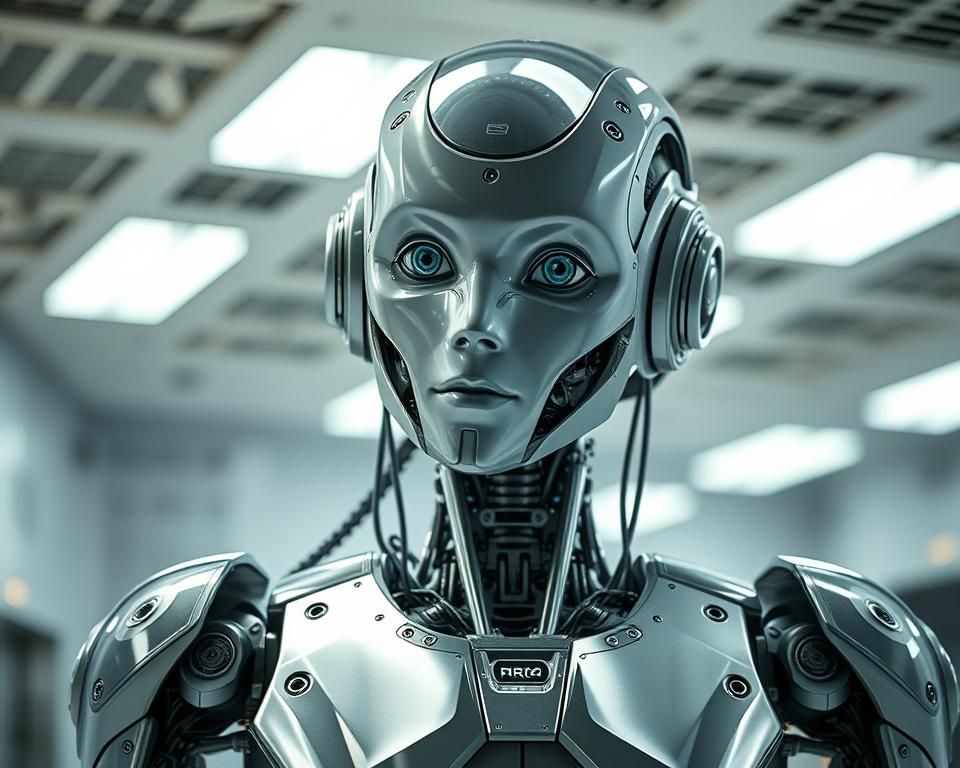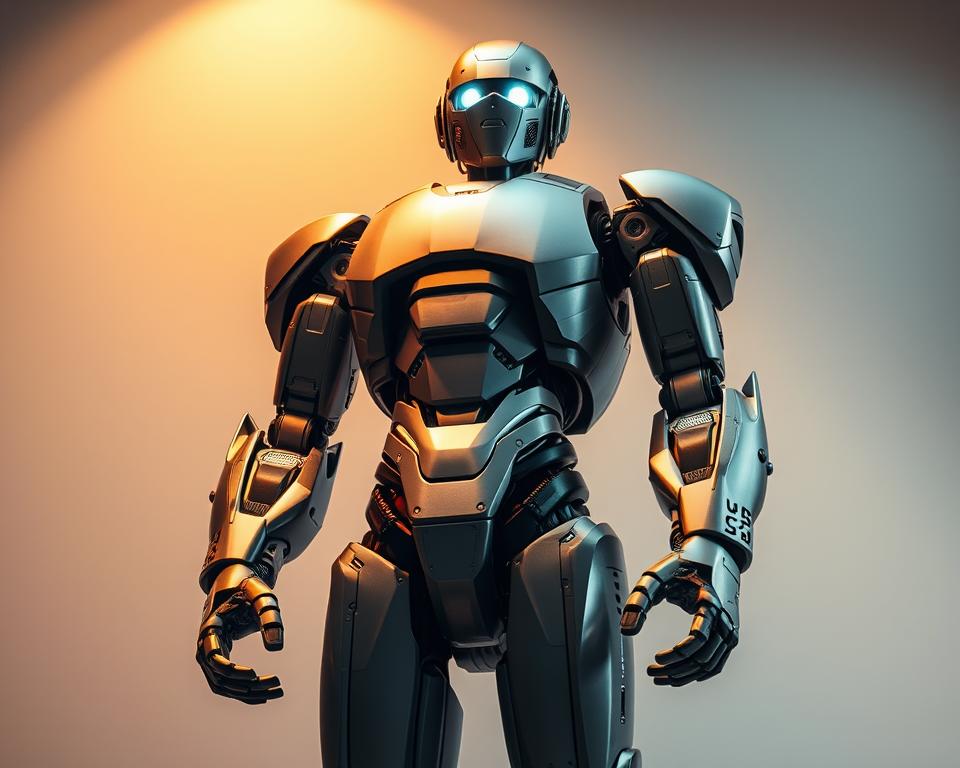
Imagine a being that looks and acts like a human, but is made of wires and circuits. This being uses advanced artificial intelligence. The idea of making an android humanoid has excited scientists and engineers for years. It shows us what’s possible in robotics.
As technology gets better, making a human-like android is becoming real. This guide will show you how, from design to technical parts and uses. We’ll look at the newest AI and robotics to see what android humanoids can do.
Key Takeaways
- Understanding the design principles behind android humanoids
- Exploring the technical components required for creating a human-like android
- Discovering the applications of android humanoids in various industries
- Learning about the latest advancements in AI and robotics
- Unlocking the potential of android humanoids in real-world scenarios
Introduction to Android Humanoids
The creation of android humanoids marks a big step in robotics evolution. These robots look and act like humans. They can move and interact with their world in ways humans do.
These robots have artificial intelligence (AI) that lets them do complex tasks. They can understand and follow human commands. They even show emotions, making them more like us.
This mix of robotics and AI is leading to future technology. It could change many industries in big ways.
Definition and Overview
An android humanoid is a robot that looks and moves like a person. It has sensors and actuators. These help it move and interact with its world.
Creating these robots takes knowledge from many fields. Robotics, AI, biomechanics, and cognitive science all play a part. The goal is to make robots that fit into our world easily.
Historical Context
The idea of android humanoids has been around for a long time. They first showed up in science fiction. But now, thanks to robotics and AI, they are real.
- Early versions were not very human-like.
- New materials and tech have made them look more like us.
- Today, they can have complex interactions thanks to AI and machine learning.
Importance in Robotics
Android humanoids are key in robotics. They are a step towards robots that can work with humans. Their design lets them move easily in spaces made for people.
They have many uses, like in healthcare and the service industry. They can also help in research, studying how humans and robots interact.
In short, android humanoids are leading the way in robotics. They combine AI with a human-like design. This makes them important for our future, where robots will be a big part of our lives.
Types of Humanoid Robots
Humanoid robots are changing the world of robotics. They look like humans and can do many things. From simple tasks to complex interactions, they are very versatile.
Bipedal vs. Quadrupedal Design
Humanoid robots come in two main types: bipedal and quadrupedal. Bipedal robots walk on two legs, just like humans. They are great for moving around and fitting into spaces made for people. Quadrupedal robots, on the other hand, have four legs. They are more stable and can handle tough terrain.
Which type to choose depends on what the robot will do. Bipedal robots are better for working with people or moving through human spaces. Quadrupedal robots are good for places that are hard for bipedal robots to go.
Social Robots vs. Industrial Robots
Humanoid robots can be social or industrial. Social robots are made to talk and work with people. They are used in places like hospitals, schools, and service industries. They can understand and show emotions, making them great for jobs that need empathy.
Industrial robots are for making things and working in factories. They are fast and precise. They do jobs that are too hard or dangerous for people.
“The future of robotics lies in creating machines that can understand and interact with humans in a more natural way.”
Popular Examples of Android Humanoids
Some android humanoids are famous for their skills and human-like looks. Honda’s ASIMO and Hanson Robotics’ Sophia are two examples. ASIMO can run, walk, and even climb stairs. Sophia can have deep conversations thanks to its advanced AI.
- Honda’s ASIMO: Known for its mobility and human-like movements.
- Hanson Robotics’ Sophia: Recognized for its advanced AI and conversational abilities.
- SoftBank’s Pepper: Used in various service industries for its social interaction capabilities.
These robots show how android humanoids can be used in many areas.
Key Components of Android Humanoids
Android humanoids need many parts to act like humans. These parts help them move and interact like us. They are key to making androids work well.
Sensors and Actuators
Sensors and actuators are essential for androids. Sensors help the robot see and hear its world. Actuators let it move and touch things.
Some sensors include:
- Visual sensors (cameras)
- Auditory sensors (microphones)
- Tactile sensors (touch sensors)
- Proprioceptive sensors (joint angle sensors)
Actuators can be:
- Electric motors
- Pneumatic actuators
- Hydraulic actuators
Processing Units
The brain of an android is its processing unit. It handles all the robot’s actions. Today’s androids use advanced units like:
- Graphics Processing Units (GPUs)
- Central Processing Units (CPUs)
- Tensor Processing Units (TPUs)
These units help androids do smart things. Like artificial intelligence and machine learning.
| Processing Unit | Functionality | Application in Android Humanoids |
|---|---|---|
| GPU | High-performance computing | Image processing, AI computations |
| CPU | General-purpose computing | Control systems, task management |
| TPU | Machine learning acceleration | AI model training, inference |
Power Supply Systems
The power system is vital for androids. It gives them the energy to move and work. Common systems include:
- Batteries (lithium-ion, lead-acid)
- Fuel cells
- Supercapacitors
Improving power systems is key. It helps androids last longer and work better.
Designing an Android Humanoid
Designing an android humanoid is a complex process. It needs precision and innovation. It combines robotics, artificial intelligence, and design to make robots that move and act like humans.
Initial Concept and Planning
The first step is to decide what the robot will do. It could be for work, health care, or fun. Defining the robot’s objectives helps figure out what it needs to do.
Designers think about the robot’s look, how it moves, and how it interacts. This planning is key to making a design that fits the needs.
3D Modeling Techniques
3D modeling is vital in designing androids. It lets designers make detailed digital models. They use CAD software to create models that can be tested and improved virtually.
With advanced 3D modeling, designers can test the robot in different situations. This ensures it works well and lasts long.
Prototyping and Iteration
After the digital model is ready, a physical prototype is made. This turns the digital design into a real robot. It’s tested to find and fix any problems.
The iteration process is important for improving the design. It makes sure the android humanoid works as planned. Through testing and making changes, the robot gets better and more reliable.
Programming Fundamentals
To make a sophisticated android humanoid, you need to know programming and machine learning well. These robots are complex and need a mix of programming languages, operating systems, and AI techniques.
Languages Used in Android Development
Choosing the right programming language is key in android humanoid development. Java, Kotlin, and C++ are popular choices. Java is great for Android apps, while C++ is better for systems programming because it’s fast and reliable.
- Java: It’s known for being platform-independent and having a huge library ecosystem.
- Kotlin: It has modern features and works well with Java.
- C++: It’s good for low-level memory management and high-performance tasks.
Operating Systems for Humanoids
The operating system (OS) is crucial for an android humanoid. It manages hardware and supports app development. Common OS choices are Android, ROS (Robot Operating System), and Linux.
| Operating System | Key Features | Use Cases |
|---|---|---|
| Android | Wide hardware support, extensive app ecosystem | Consumer robotics, interactive applications |
| ROS | Flexible, modular architecture, rich set of robotics libraries | Research, complex robotic systems |
| Linux | Highly customizable, secure, and stable | Embedded systems, custom robotics projects |
Implementing AI and Machine Learning
Artificial intelligence (AI) and machine learning (ML) are essential for android humanoids. They help these robots do complex tasks and interact smartly. Techniques like deep learning, reinforcement learning, and computer vision are used.
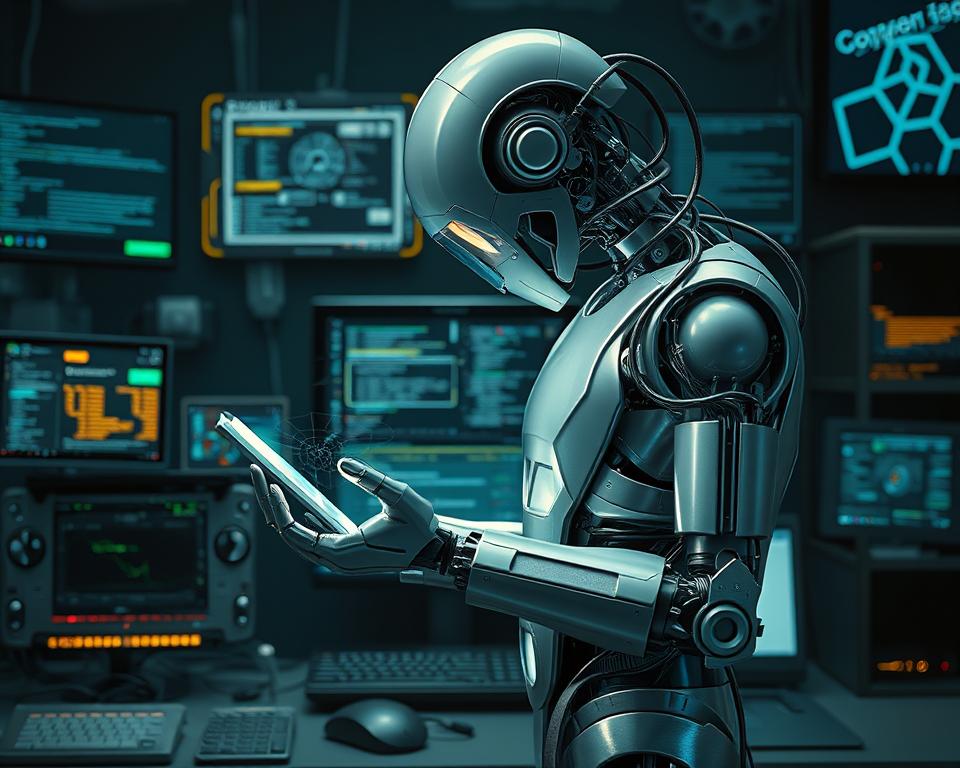
Adding AI and ML involves picking the right algorithms and training models. You also need to fine-tune their performance. This requires a deep understanding of the technology and its application.
Motion Planning and Control
Motion planning and control are key for android humanoids to do many tasks. They need advanced systems to move and interact well.
Kinematics in Humanoid Robotics
Kinematics is vital in humanoid robotics. It studies how bodies move without looking at the forces behind it. Knowing kinematics helps design androids for complex movements.
It involves figuring out the position, speed, and acceleration of the robot’s parts. This is key for precise control over its movements.
Gait Analysis and Optimization
Gait analysis is crucial for androids that walk or run. It studies their walking patterns to make it stable, efficient, and adaptable.
To improve an android’s gait, you need to understand its movement and dynamics well. Adjusting things like step length and joint angles helps achieve a natural walk.
Real-Time Motion Control
Real-time motion control is vital for androids to adapt to new situations. It involves using sensor data to adjust movements.
Advanced algorithms and sensors help androids stay balanced, avoid obstacles, and do tasks that need precise control.
| Motion Planning Aspect | Description | Importance in Android Humanoids |
|---|---|---|
| Kinematics | Study of motion without considering forces | Essential for precise movement control |
| Gait Analysis | Study of locomotion patterns | Critical for stability and efficiency in walking/running |
| Real-Time Control | Adjusting movements based on sensor data | Vital for responding to changing environments |
User Interaction and Interfaces
User interaction and interfaces are key to how well android humanoids work. As these robots join our daily lives, it’s important they interact with us naturally. This means they should be easy to talk to and understand.
Human-Robot Interaction Principles
Good human-robot interaction (HRI) is crucial for android humanoids to succeed. HRI focuses on making interactions between humans and robots smooth and natural. It involves creating interfaces that are simple to use and understand.
Robots should also be able to grasp and react to human emotions and commands correctly.
- Understanding human behavior and emotions
- Designing intuitive interfaces
- Ensuring robot responsiveness
Voice Recognition Technologies
Voice recognition is a big part of how android humanoids interact with us. It lets them understand and respond to voice commands. Thanks to voice recognition, robots can now talk to us more like people.
Important parts of voice recognition include:
- Speech processing algorithms
- Noise reduction techniques
- Contextual understanding
Visual and Emotional Intelligence
Android humanoids need to understand and react to human emotions and non-verbal signals. This requires advanced computer vision and machine learning. They need to read facial expressions and body language well.
By using these technologies, android humanoids can offer more empathetic and personalized interactions. This makes them more accepted and enjoyable to be around.
Safety Considerations
Creating android humanoids requires a careful look at safety to avoid risks. As these robots get more advanced, making sure they work safely is key.
Risk Assessment in Humanoid Design
When designing android humanoids, risk assessment is vital. It helps spot potential dangers and understand the risks. This includes checking the robot’s mechanical parts, electrical systems, and software for any issues.
Key areas of focus in risk assessment include:
- Mechanical failures
- Electrical shorts or surges
- Software glitches or bugs
- Human-robot interaction risks
| Risk Factor | Description | Mitigation Strategy |
|---|---|---|
| Mechanical Failures | Failure of mechanical components such as actuators or gears | Regular maintenance, use of high-quality components |
| Electrical Issues | Short circuits, overheating, or electrical surges | Proper insulation, surge protection devices |
| Software Glitches | Bugs or errors in the robot’s programming | Thorough testing, robust debugging processes |
Safety Protocols and Emergency Shutdowns
It’s important to have safety plans and emergency shutdowns to prevent accidents. These should cover different problems, like mechanical failures, software bugs, and unexpected interactions with humans.
Effective safety protocols include:
- Automatic shutdown in case of malfunction
- Manual override for emergency situations
- Regular system checks and maintenance
Ethical Considerations in Robotics
There are also ethical issues to think about when making android humanoids. These include protecting privacy, making sure AI is fair, and thinking about how robots will affect society.
Key ethical considerations:
- Privacy protection
- Transparency in AI decision-making
- Accountability for robot actions
By looking at both safety and ethics, developers can make android humanoids that are not just useful but also safe and responsible.
Applications of Android Humanoids
Android humanoids are used in many fields because of their advanced abilities. They are found in different industries thanks to their capabilities.
Healthcare and Assistance
In healthcare, android humanoids help patients and medical teams. They assist with:
- Patient care and companionship
- Help in surgeries and medical procedures
- Support in rehabilitation
For example, Pepper by SoftBank Robotics is used in hospitals. It interacts with patients and offers emotional support.
Entertainment and Education
Android humanoids also impact entertainment and education. They are used in:
- Theme parks and entertainment venues for interactive experiences
- Educational settings to make learning fun and interactive
- Research and development for advanced AI and robotics
For example, they teach programming and robotics in schools. This makes learning complex topics more fun and easy to understand.
Industrial Automation
In industries, android humanoids help improve efficiency and productivity. They do tasks like:
- Assembly and inspection
- Material handling and logistics
- Maintenance and repair
| Industry | Application | Benefits |
|---|---|---|
| Healthcare | Patient care and assistance | Improved patient outcomes, reduced workload for medical staff |
| Entertainment | Interactive experiences | Enhanced visitor experience, increased engagement |
| Industrial | Manufacturing and assembly | Increased efficiency, reduced production costs |
The uses of android humanoids are growing as technology improves. Their ability to do complex tasks and interact with humans makes them very useful in many fields.
Challenges in Android Humanoid Development
Creating android humanoids is a tough task. It faces many technical, financial, and social challenges.
Technical Constraints and Limitations
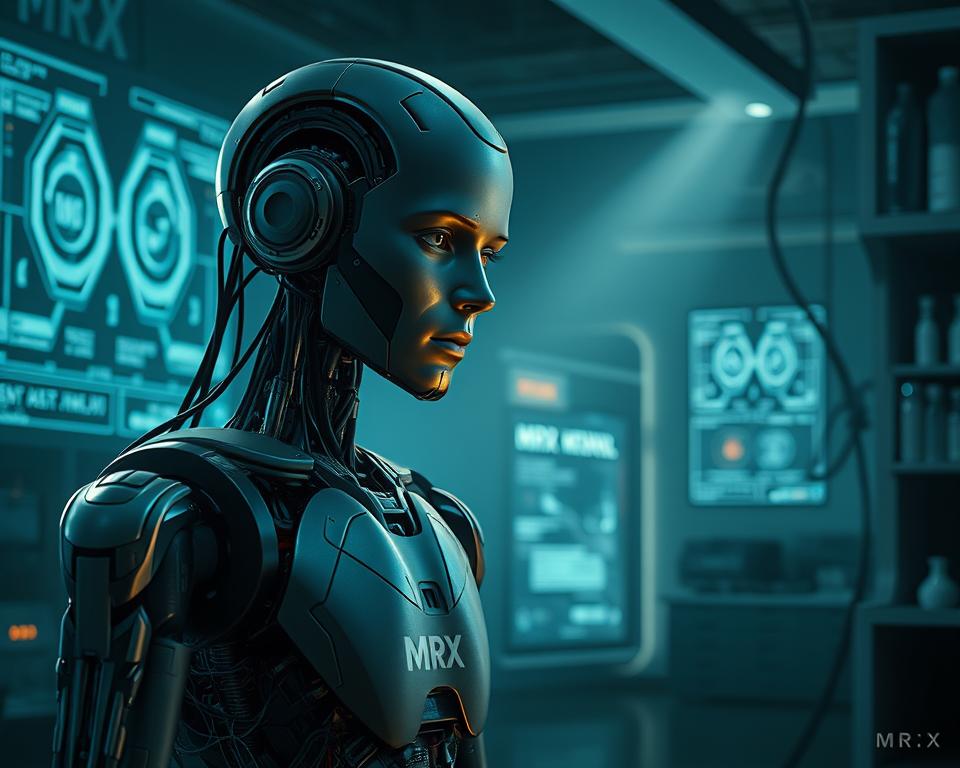
One big challenge is technical constraints and limitations. Making robots that move and act like humans is hard. They need to be strong and work well all the time.
Designing a robot that can move and act like a human is very complex. Sensorimotor integration is key. It needs precise control and calibration.
Cost and Resource Management
Another big challenge is cost and resource management. Making advanced android humanoids costs a lot. It needs a lot of money for research, making, and using them.
It’s hard to manage these costs and keep the robots good and working. It’s about making the best design, finding good materials, and making more robots.
Public Perception and Acceptance
Public perception and acceptance are also key. How people see these robots affects if they will use them.
It’s important to talk openly about privacy, jobs, and ethics. Transparent communication helps build trust and acceptance.
Future Trends in Humanoid Robotics
AI and machine learning are making android humanoids smarter and more independent. This change is big for the robotics world and many other fields where these robots work.
Advances in AI and Machine Learning
AI and machine learning are helping humanoid robots do complex tasks better. Machine learning lets them learn from their surroundings and handle new situations.
- Enhanced object recognition capabilities
- Improved decision-making processes
- Better human-robot interaction
Integration with IoT
The Internet of Things (IoT) is key in making humanoid robots better. By linking them to the IoT, they can use lots of data and work with other devices smoothly.
- Seamless data exchange between devices
- Enhanced remote monitoring and control
- Improved coordination between robots and other IoT devices
Potential for Autonomous Functionality
The future of humanoid robots is in being able to work on their own. Thanks to AI and IoT, they will make choices without needing a human.
As humanoid robotics gets better, we’ll see robots that can really help us. The mix of AI, IoT, and the ability to work alone will lead this progress.
Case Studies of Successful Android Humanoids
Android humanoids are changing the future of robotics. They show big steps in AI, mechanics, and how we interact with them. These robots have amazed the public and shown us what’s possible in robotics.
Boston Dynamics’ Atlas
Boston Dynamics’ Atlas is a top android humanoid in robotics. It’s made for search and rescue, and it’s very agile. It can handle tough terrains thanks to its advanced sensors and actuators.
Honda’s ASIMO
Honda’s ASIMO is a versatile android humanoid. It can do many tasks, from simple ones to complex ones like running and climbing stairs. It also understands voice commands and gestures, showing great human-robot interaction.
SoftBank’s Pepper
SoftBank’s Pepper is a social robot used in retail and healthcare. It’s friendly and can understand and respond to human emotions. It’s great for businesses wanting to improve customer experience.
These examples show how android humanoids can change many industries and our lives.
Building a Team for Development
Creating a team for android humanoid development is key to making innovative robotics projects a reality. As noted by
“The future of robotics is not just about the robots themselves, but about the people who build and program them.” –
Android humanoid projects are complex. They need a team with many skills.
Essential Roles and Skills
A good android humanoid development team has both technical and non-technical roles. Important positions include robotics engineers, software developers, AI specialists, and project managers. Robotics engineers design and build the robot’s body. Software developers program the robot and add AI.
Teamwork is vital. Everyone must work well together to combine hardware and software. Good communication and problem-solving skills help solve development challenges.
Collaboration and Team Dynamics
Good teamwork is the heart of any android humanoid project. It’s not just about working together but also about sharing ideas openly.
To improve team spirit, hold team-building events and keep communication open. A culture of trust and respect helps teams work better and achieve their goals.
Networking in the Robotics Community
Networking in the robotics world is important to keep up with new tech and methods. Attend conferences, join forums, and talk to other experts. Partnerships and collaborations with other groups can also bring in new tech and knowledge.
As android humanoid development grows, networking and connecting with the robotics community becomes even more crucial. Teams that engage with the community will be more likely to innovate and succeed.
Funding and Investment Opportunities
Funding and investment are key for android humanoid research and development. As the tech evolves, many funding sources and investment chances are opening up. These help innovators and companies in this field.
Sources of Funding for Robotics Projects
Android humanoid projects can get funding from many places. Government grants and research funding are big help, supporting projects with social benefits. Also, private investors and venture capital firms are now more into robotics, seeing its growth and profit potential.
- Crowdfunding platforms
- Corporate investments
- Research grants
- Government initiatives
Venture Capital in Robotics
Venture capital is key for funding android humanoid projects, mainly those with new tech and scalable business plans. Venture capitalists seek projects with high growth chances. They focus on companies that can shake up old industries or start new ones.
| Investment Criteria | Description | Importance Level |
|---|---|---|
| Market Potential | Assessment of the market size and growth potential | High |
| Technological Innovation | Evaluation of the project’s technological uniqueness and advancements | High |
| Team Experience | Review of the project team’s experience and expertise | Medium |
Grants and Research Funding
Grants and research funding are vital for android humanoid projects, mainly those in research and development. These funds come from government agencies, non-profits, and schools. They support projects that push robotics forward.
By looking into these funding and investment chances, developers and companies can get the resources they need. This helps bring their android humanoid projects to life, driving innovation and growth.
Conclusion and Future Outlook
The field of android humanoids is growing fast. Advances in AI, machine learning, and robotics are changing how we use technology. This guide has shown us how to make an android humanoid, from design to safety and interaction.
Key Takeaways and Future Vision
Looking back, we see the big steps in android humanoid development. The future looks bright with AI and machine learning getting better. This means androids will do more and talk to us like people.
Empowering Innovators
Innovators must keep pushing what’s possible with android humanoids. We need to find new uses, make them better, and solve problems. This will open up new chances for growth.
For those up for the challenge, the future is full of possibilities. Androids could change healthcare, entertainment, and more. Let’s work together to make a future where tech and humans blend in exciting ways.
FAQ
What is an android humanoid?
An android humanoid is a robot made to look and act like a human. It uses advanced artificial intelligence and machine learning.
What are the key components of an android humanoid?
Key parts include sensors, actuators, processing units, and power systems. These work together to let the android see, think, and interact with its world.
What programming languages are used in android humanoid development?
Python, C++, and Java are popular for making android humanoids. They help with movement, control, and AI.
What are some applications of android humanoids?
Android humanoids are used in healthcare, entertainment, and education. They can do tasks that need human-like skills and interaction.
What are the challenges in developing android humanoids?
Challenges include technical limits, cost, and public acceptance. These must be overcome to make android humanoids that work well and are accepted by people.
How do android humanoids interact with humans?
They use voice recognition, visual displays, and emotional intelligence. This lets them understand and respond to human needs and feelings.
What is the future of android humanoid development?
The future will bring more advanced AI, IoT integration, and autonomous functions. This will make android humanoids more sophisticated and useful.
What are some successful examples of android humanoids?
Atlas by Boston Dynamics, ASIMO by Honda, and Pepper by SoftBank are examples. They show what android humanoids can do in different areas.
How can I get started with developing an android humanoid?
Start by building a team with robotics, AI, and software skills. Look for funding through venture capital and grants.
What safety considerations are important in android humanoid development?
Safety includes risk assessment, protocols, and emergency shutdowns. It also involves ethics, ensuring androids respect human dignity and safety.