Are humanoid robots worth the investment? As businesses and individuals think about adding robotics, knowing the costs is key.
The price of a humanoid robot changes a lot. It depends on what it can do, how it’s used, and its tech. From simple to smart AI robots, the cost can be high.
To choose wisely, it’s important to know what affects the cost of humanoid robots. This guide will dive deep into these factors. It aims to help you understand the complex world of robotics.
Key Takeaways
- Understanding the factors that influence the cost of humanoid robots is crucial for making an informed investment decision.
- The price of humanoid robots varies significantly based on their capabilities and technological features.
- Advanced AI-powered robots require a more substantial financial investment.
- Research and development expenses play a significant role in determining the cost of humanoid robots.
- Material costs and technological features also impact the final price.
Introduction to Humanoid Robots
Humanoid robots look and act like humans. They are used in research and entertainment. These robots can do tasks that need human smarts and skills.
What is a Humanoid Robot?
A humanoid robot looks like a human. It can do tasks humans can. They have advanced sensors and AI for natural interaction.
These robots are great for many jobs. They help in healthcare and customer service. Their human-like actions are perfect for interacting with people.
Brief History of Humanoid Robotics
The first humanoid robot was made in the 1960s. But, recent years have seen big improvements. This is thanks to AI, machine learning, and robotics.
AI and machine learning have made humanoid robots smarter. They can learn and adapt better. This has led to new uses in education, entertainment, and research.
Factors Influencing the Cost of Humanoid Robots
Knowing what affects the cost of humanoid robots is key for buyers. The price is shaped by several things. These include the cost of making the robot and how advanced it is.
Research and Development Expenses
Creating humanoid robots requires a lot of money for research and development (R&D). This money goes into designing and testing the robots. It also covers the cost of making them smart and able to do complex tasks. R&D expenses are a big part of the cost of these robots.
Material and Manufacturing Costs
The materials and how they’re made also affect the price. Robots use special materials that are both strong and light. The process of making these robots, including the cost of labor, adds to the price.
Technological Features
The tech inside humanoid robots also plays a big role in their cost. Features like AI and sensors let robots do many things. But, these features cost more. For example, high-tech sensors and AI need a lot of investment.
| Technological Feature | Impact on Cost | Benefit |
|---|---|---|
| AI and Machine Learning | High | Enables complex task performance and learning |
| Sensor Integration | Medium to High | Enhances environmental interaction and task precision |
| Advanced Actuators | Medium | Improves movement and task execution |
Understanding these factors helps buyers make smart choices. Whether for work, service, or research, the cost of a humanoid robot matters. It depends on its tech and how useful it is.
Types of Humanoid Robots
Humanoid robots come in different types, each with its own purpose. They are used in various fields like entertainment, service, and education. Knowing about these types helps find the right robot for your needs and budget.
Entertainment Robots
Entertainment robots are made to entertain people. They can be found in theme parks, exhibitions, and even homes. These robots have advanced AI and can do things like dance, sing, or chat with people.
The price of entertainment robots varies a lot. Simple models can cost a few thousand dollars. But more advanced ones can cost hundreds of thousands.
Service Robots
Service robots help humans with various tasks. They are used in healthcare, retail, and hospitality. These robots can assist with customer service, cleaning, and even medical care.
The cost of service robots depends on their abilities. Affordable robot options start at around $5,000.
Experts say service robots are changing how businesses work. They offer efficient and cost-effective solutions.
“The integration of service robots into daily operations is not just a trend; it’s becoming a necessity for businesses looking to stay competitive.”
Educational Robots
Educational robots are used in schools and universities. They teach students about robotics, programming, and engineering. These robots are interactive and help students develop problem-solving skills and creativity.
The best robot prices for educational robots vary. Some models start at $1,000. This makes them an affordable option for schools.
In conclusion, the type of humanoid robot you choose depends on your needs and budget. By understanding the different types and their prices, you can make a good choice.
Key Players in the Humanoid Robot Market
The humanoid robot market is led by companies like Boston Dynamics, SoftBank Robotics, and Honda. They are pushing the boundaries of what robots can do. Their advanced technologies set new standards for the industry.
These companies have created humanoid robots that are both smart and versatile. They work well in many different fields and industries.
Boston Dynamics
Boston Dynamics is famous for its Atlas robot. Atlas is a humanoid robot made for search and rescue missions. It’s agile and can handle tough terrains, making it a key player in humanoid robotics.
SoftBank Robotics
SoftBank Robotics is known for its Pepper robot. Pepper is a humanoid robot designed for customer service. It can understand and respond to human emotions, perfect for retail and service industries.
Honda
Honda is a major name in humanoid robots, thanks to its ASIMO robot. ASIMO can do many things, from simple gestures to complex tasks. It shows Honda’s skill in robotics.
The presence of these key players is driving competition and innovation. This benefits everyone, from consumers to industries, as they look to use humanoid robots for different needs.
Average Price Range of Humanoid Robots
Humanoid robots come in a wide range of prices. This reflects their different abilities and uses. Prices can go from a few thousand dollars to over a hundred thousand dollars. This depends on the robot’s features, what it can do, and the brand.
Entry-Level Models
Entry-level humanoid robots are for basic tasks and are cheaper, around $5,000. They’re perfect for those who want to try out humanoid robots without spending a lot. These robots have fewer features and are good for simple tasks or learning.
Mid-Range Models
Mid-range humanoid robots offer a good mix of price and features, costing between $20,000 and $50,000. They have more advanced features than entry-level robots. This makes them great for various tasks, like service and entertainment. They’re a good choice for those who want more but don’t want to spend too much.
High-End Models
High-end humanoid robots have the latest tech and AI, making them very capable but expensive, over $100,000. These robots are often used in research, complex tasks, or by groups needing top-notch robotic skills.
The table below shows the average price ranges for humanoid robots in different categories:
| Category | Price Range | Typical Features |
|---|---|---|
| Entry-Level | Around $5,000 | Basic functionality, limited AI |
| Mid-Range | $20,000 – $50,000 | Advanced features, improved AI |
| High-End | Exceeding $100,000 | Sophisticated technology, advanced AI |
When looking to buy a humanoid robot, knowing the price range and what you get is key. By looking at the different categories and their prices, you can choose the right robot for your needs and budget.
Cost of Humanoid Robot Components
The cost of humanoid robot parts is key to knowing their total price. These robots have many parts like sensors, cameras, and motors. Each part adds to the robot’s cost.
Sensors and Cameras
Sensors and cameras help a humanoid robot see and interact with its world. High-tech sensors and cameras make the robot more expensive. For example, a LiDAR sensor can cost over $1,000. Cameras with advanced image processing add hundreds of dollars.
Actuators and Motors
Actuators and motors let the robot move. They are a big part of the robot’s cost. High-torque motors and precise actuators are pricey. Their cost can be from a few hundred to several thousand dollars.
Power Supply and Batteries
The power supply and batteries keep humanoid robots running. They need energy for movement and functions. Advanced batteries that last longer and charge faster are more costly. Battery prices range from a few hundred to over $1,000.
| Component | Low-End Cost | High-End Cost |
|---|---|---|
| Sensors and Cameras | $500 | $2,000 |
| Actuators and Motors | $300 | $5,000 |
| Power Supply and Batteries | $200 | $1,500 |
Knowing the cost of these parts helps estimate a humanoid robot’s total cost. By looking at the costs of sensors, actuators, and power supplies, we can see how cost-effective a humanoid robot is.
Customization and its Financial Impact
Customizing humanoid robots for specific tasks or industries can greatly increase their cost. When looking to buy a humanoid robot, understanding the impact of customization on price is key.
Customization lets businesses tailor humanoid robots to their unique needs. This makes them more functional and useful. But, this tailored approach also raises the cost.
Tailored Features and Functionality
Customizing a humanoid robot means changing its features and functions for specific uses. This might include advanced sensors, better mobility, or special manipulation skills.
- Advanced sensors for better navigation and interaction
- Enhanced mobility for complex environments
- Specialized manipulation capabilities for specific tasks
For example, a robot for healthcare might need advanced sensors for monitoring patients and skills for surgery assistance.
Software Development Costs
Customizing humanoid robots also involves software development. This can significantly affect the overall cost.
| Software Component | Cost Factor | Impact on Customization |
|---|---|---|
| Operating System | Licensing fees | High |
| AI and Machine Learning | Development time | High |
| User Interface | Design and testing | Medium |
When comparing costs, it’s clear that custom software increases expenses. Yet, it also gives a competitive edge by offering unique features.
For businesses considering humanoid robots, understanding customization costs is vital. While it may raise the initial cost, the long-term benefits can be worth it. These benefits include increased efficiency and productivity.
For those looking for the cheapest humanoid robots, finding a balance between customization and budget is crucial. Looking into standard models or modular designs that can be adapted later can help manage costs.
Maintenance Costs of Humanoid Robots
Buying a humanoid robot is just the start. You also need to think about the ongoing costs. These costs help figure out if the robot is worth it in the long run.
Humanoid robots need regular care to work well. This includes updates, cleaning, and checking their mechanical parts.
Routine Maintenance Requirements
Keeping the robot in good shape is key. It helps avoid problems and keeps it running smoothly. Here’s what’s involved:
- Regular software updates to keep it running smoothly and securely
- Cleaning and checking sensors and cameras to keep them accurate
- Oil for mechanical parts to reduce wear and tear
By doing these tasks, you can make your robot last longer and work better.
Repair Costs and Parts Replacement
Even with regular care, robots might need repairs or parts replaced. The cost can vary a lot. It depends on the robot’s complexity and the problem.
For example, fixing a broken actuator or motor can be expensive. These parts are complex and made with precision. Labor costs for repairs, including if the robot is still under warranty, can also add up.
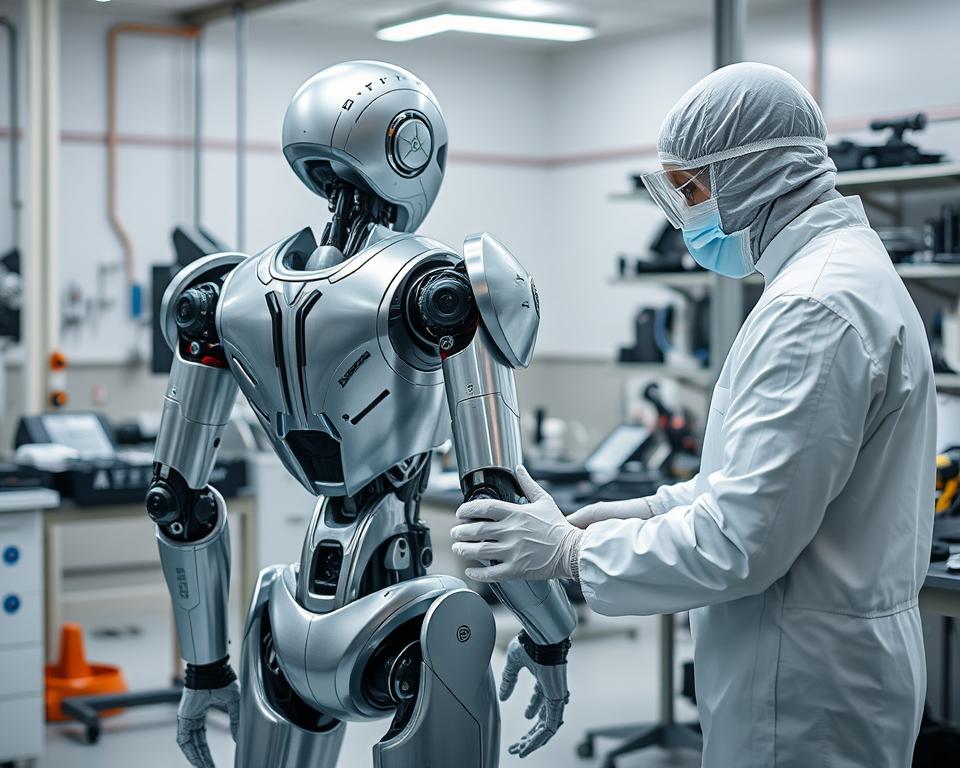
Knowing these costs is important for planning your budget. It helps keep your robot running as expected.
Thinking about both regular care and possible repairs helps make better choices. This is true for both personal and business use of humanoid robots.
Application of Humanoid Robots in Various Industries
Humanoid robots are changing many fields, like healthcare, education, and entertainment. They are good at many tasks, from helping patients to teaching in schools.
Healthcare
In healthcare, humanoid robots help with patient care. They keep patients company and support them, mainly the elderly. They can check vital signs and remind patients to take their medicine.
- Enhancing patient engagement through interactive therapy sessions
- Assisting healthcare professionals with routine tasks
- Providing emotional support to patients
Education
Humanoid robots are changing education by making it more fun and interactive. They teach subjects like math and language arts. They also help students with special needs.
Key benefits include:
- Personalized learning experiences
- Enhanced student engagement
- Improved understanding of complex concepts
Entertainment
In entertainment, humanoid robots create amazing experiences for people. They can dance, sing, and even talk to humans in real-time.
Examples include:
- Robotics shows and performances
- Interactive theme park attractions
- Companion robots for events and exhibitions
Humanoid robots have many uses across different industries. As technology gets better, we’ll see even more cool things they can do.
Economic Impact of Humanoid Robots
Humanoid robots are becoming more common, and their economic effects are clear. They might replace some jobs, but they also open up new career paths in robotics, AI, and maintenance.
Job Displacement Concerns
Humanoid robots could lead to job losses in some areas. Jobs that involve repetitive tasks or manual labor are at risk. For example, manufacturing lines using these robots might need fewer people.
But, the job loss story is more complicated. A McKinsey study says up to 800 million jobs might be lost by 2030. Yet, up to 140 million new jobs could be created.
New Job Creation Opportunities
Humanoid robots aren’t just replacing people; they’re also creating new jobs. The need for skilled workers in their development, deployment, and upkeep is growing. This includes complex engineering and programming.
Robots in healthcare, for instance, can help with patient care. This creates a need for professionals who can work with these robots.
Key areas where new jobs are being created include:
- Robotics engineering and development
- AI programming and training
- Robot maintenance and repair
- Data analysis for robot performance optimization
It’s important to understand how humanoid robots affect the economy. While they might replace some jobs, they also bring new opportunities and productivity gains.
When thinking about the cost of humanoid robots, consider the long-term benefits. These include increased productivity and new job opportunities. A detailed cost comparison between different models can help businesses make smart choices.
For those looking to buy humanoid robots, finding the cheapest options is a good start. But remember, the cost should be weighed against the long-term benefits these robots can offer.
The Future of Humanoid Robot Pricing
The cost of humanoid robots is set to change with new tech and bigger production. It’s key to know what will affect their prices in the future.
Expected Technology Advancements
New tech will greatly impact humanoid robot prices. Better manufacturing, AI, and sensors will make them more efficient and capable.
Key technological advancements include:
- Enhanced AI and machine learning capabilities
- Advances in sensor technology and integration
- Improved manufacturing techniques, such as 3D printing
Potential Price Reductions
As tech gets better and production grows, prices will drop. More demand and bigger production will make robots cheaper.
The table below shows how prices might fall with new tech and market changes:
| Year | Average Price Range | Key Technological Advancements |
|---|---|---|
| 2025 | $50,000 – $100,000 | Improved AI, Enhanced Sensors |
| 2030 | $30,000 – $70,000 | Advanced Manufacturing Techniques, Increased Production Volume |
| 2035 | $20,000 – $50,000 | Further Integration of AI, Wider Adoption |
As prices drop, humanoid robots will be used in more places. They’ll be in healthcare, education, entertainment, and services. Knowing these trends helps businesses and people thinking about buying humanoid robots.
Financing and Investment Options for Purchasers
When you’re thinking about getting a humanoid robot, knowing your financing options is key. You might choose to lease or buy, based on your budget, how you plan to use it, and your long-term goals.
Leasing vs. Purchasing
Leasing a humanoid robot can be a cost-effective solution for those needing it for a while. It lets you use advanced robotics without a big upfront cost. Buying it outright, though, means you own it and might save money in the long run.
Whether to lease or buy depends on how you plan to use the robot. For example, leasing might be better for a short-term project. But if you’re going to use it for ongoing research, buying might be the way to go.
| Option | Advantages | Disadvantages |
|---|---|---|
| Leasing | Lower upfront costs, flexibility, latest technology | No long-term ownership, potential for higher total costs |
| Purchasing | Full ownership, potential long-term savings, customization | High upfront costs, maintenance and upgrade responsibilities |
Grants and Funding Opportunities
For many, looking into grants and funding opportunities is a big part of financing a humanoid robot. Governments, research groups, and private companies offer grants for robotics projects. These often support innovation, education, or solving social problems.
To find these grants, you need to research and apply to the right ones. This means writing a detailed proposal about your project, its budget, and what you hope to achieve.
Knowing your financing options, like leasing, buying, and grants, helps you make a smart choice. Whether you choose leasing for a short-term need or funding for a purchase, there are many ways to get a humanoid robot.
Consumer Demands and Market Trends
More people want humanoid robots because of their many uses. As they learn about these robots, they will use them more.
These robots are now part of our lives. They help at home and do hard jobs in industries. This is because of better robotics and AI.
Growing Demand for Personal Robots
More people want personal robots because they are cheaper and do more. They want robots to help with everyday tasks like cleaning and being friends.
Key features driving this demand include:
- Advanced AI capabilities
- Improved mobility and dexterity
- Enhanced user interfaces
Trends in Business Applications
In businesses, humanoid robots are used for things like customer service and logistics. They can talk to people and do hard jobs, making them very useful.
Businesses use humanoid robots to:
- Make customers happier
- Work better and faster
- Save money on labor
As technology gets better, we’ll see more cool uses of humanoid robots in our homes and workplaces.
Conclusion: Assessing ROI on Humanoid Robots
Looking at the return on investment (ROI) for humanoid robots means checking their long-term gains. These include saving money, boosting productivity, and opening up new revenue paths. The prices of humanoid robots range from budget-friendly to high-end, with extra features.
Long-Term Value
When thinking about the cost of humanoid robots, it’s key to look at both the upfront cost and the long-term benefits. This includes the total cost of owning the robot, upkeep costs, and how it can make processes more efficient. Comparing different robots can show which one is the best value.
Balancing Costs and Benefits
To figure out if humanoid robots are worth the investment, you need to balance the initial cost with the potential gains. While the cheapest robots might seem appealing, it’s important to think about the long-term benefits they can offer to a company.
FAQ
What is the average cost of a humanoid robot?
Humanoid robots can cost anywhere from ,000 for simple models to over 0,000 for advanced AI ones. This depends on the features and what you plan to use it for.
How do research and development expenses affect the cost of humanoid robots?
Research and development costs a lot. It’s about investing in new tech, testing, and improving the robot’s skills. These costs add up and affect the final price.
What are the main components that determine the cost of a humanoid robot?
The cost of a humanoid robot depends on sensors, actuators, power supplies, and software. High-quality parts and advanced features make it more expensive.
Can customizing a humanoid robot increase its cost?
Yes, customizing a robot for specific tasks can raise the price. It means adding unique features and software, which costs more.
What are the ongoing costs associated with owning a humanoid robot?
Owning a humanoid robot comes with ongoing costs. This includes maintenance, repairs, and replacing parts. These should be considered when calculating the total cost.
Are there financing options available for purchasing humanoid robots?
Yes, you can finance a humanoid robot through leasing or buying. There are also grants and funding to help with the cost.
How do humanoid robots impact the job market?
Humanoid robots can change the job market in many ways. They might replace some jobs but also create new ones in robot development and maintenance.
What is the expected future trend in humanoid robot pricing?
Future prices for humanoid robots might drop as technology improves and production gets more efficient. This could make them more affordable.
What are the benefits of investing in humanoid robots?
Investing in humanoid robots can save money and boost productivity. They can also open up new revenue streams, making them a good investment.
How do consumer demands influence the humanoid robot market?
What people want drives the humanoid robot market. Growing interest in robots for personal and business use pushes the development of new models.
What are the most affordable humanoid robot options?
The cheapest humanoid robots are usually the basic models. They have fewer features but still offer useful capabilities at a lower price.
How do I determine the best humanoid robot for my needs and budget?
To find the right humanoid robot, think about what you need it for and your budget. Look at different models and their features to make the best choice.