Can robots really act like humans? The growth of artificial intelligence robots has made big steps. Now, machines can talk and act like us in new ways.
Making humanoid robots needs many fields. You need robotics, machine learning, and coding skills. This guide will show you how to make humanoid robots that can do hard tasks and talk to us easily.
Key Takeaways
- Understanding the key components of humanoid robots
- Design principles for creating advanced robots
- Software development for humanoid robots
- Ethical considerations in building AI humanoids
- Latest techniques and technologies in AI and robotics
Introduction to AI Humanoids
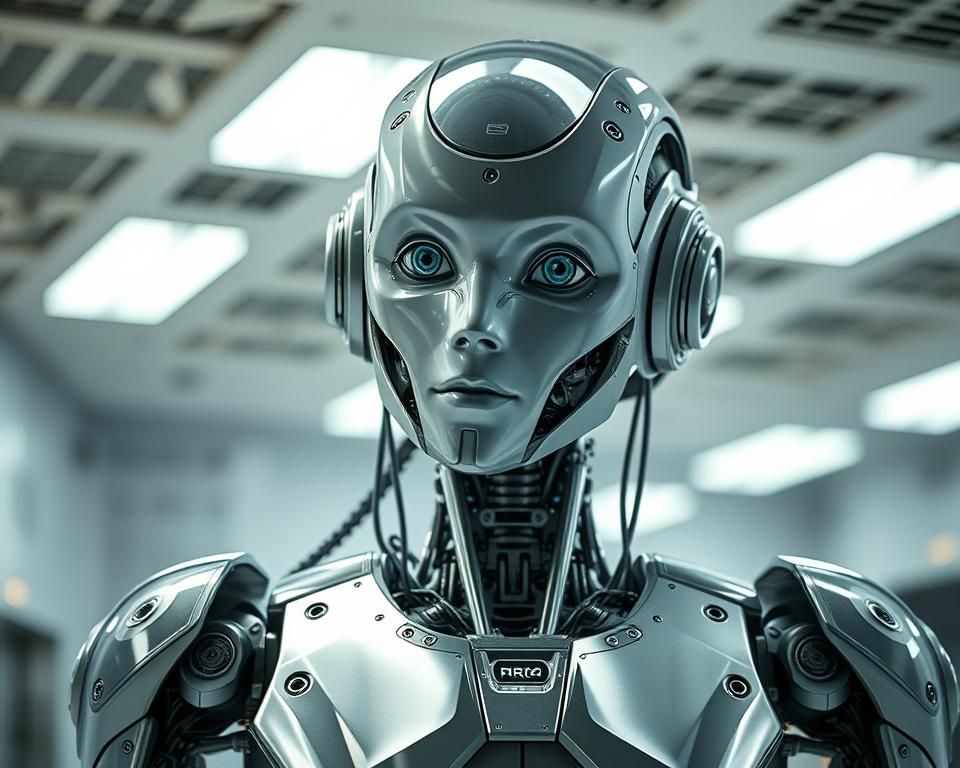
AI humanoids are robots that look and act like humans. They are at the edge of new technology. These robots can look and act like us, making it easier for them to interact with us.
What are AI Humanoids?
AI humanoids are complex machines. They use robotics, artificial intelligence, and sometimes emotional intelligence. This lets them act like humans in a natural way.
They have advanced sensors and actuators. These help them see and react to their surroundings.
The things AI humanoids can do include:
- Recognizing and responding to human emotions
- Understanding and executing voice commands
- Performing tasks that require human-like dexterity
- Engaging in conversation using natural language processing
Importance of AI Humanoids in Technology
AI humanoids are very important in technology. They could change many areas, like healthcare, customer service, education, and entertainment. They make things more human-like, which can make our lives better.
Some benefits of AI humanoids are:
- Enhanced human-robot interaction
- Increased efficiency in task execution
- Improved user experience through personalized interaction
- Potential to assist in healthcare and elderly care
As AI humanoids get better, they will likely be a big part of our lives. They will change how we use technology and interact with each other.
Key Components of AI Humanoids
AI humanoids have core parts like sensors, actuators, control systems, and power sources. These work together. They let robots see, decide, and act.
Sensors and Actuators
Sensors help AI humanoids see their world. They use cameras, microphones, and touch sensors. Actuators, like electric motors, let robots move.
Types of Sensors and Actuators:
| Component Type | Function | Examples |
|---|---|---|
| Sensors | Perceive Environment | Cameras, Microphones, Tactile Sensors |
| Actuators | Enable Movement | Electric Motors, Pneumatic Muscles |
Control Systems
Control systems are AI humanoids’ brains. They process sensor info and send commands to actuators. They use algorithms to decide and act.
Power Sources
Power sources keep AI humanoids running. They power sensors, actuators, and control systems. Batteries and new power cells are used.
These parts make AI humanoids work. As tech grows, we’ll see robots doing more.
Understanding Robotics and AI
To build AI humanoids, we need to understand robotics and artificial intelligence. These two fields work together to make intelligent machines. These machines can interact with humans in a more natural way.
Robotics Fundamentals
Robotics is about designing, building, and using robots. It covers mechanical systems, electronics, and computer programming. Advanced robotics uses advanced sensors and actuators. This lets robots see their surroundings and do complex tasks.
Humanoid robots need precise mechanical design to move like humans. This includes their physical structure and control systems. Robotics experts say making humanoid robots is a big challenge.
Machine Learning Applications
Machine learning is a part of AI that trains algorithms to learn from data. In humanoid robots, it helps them understand and react to their environment. Deep learning techniques are key in letting robots grasp visual and auditory inputs.
- Image recognition for object detection
- Speech recognition for command understanding
- Predictive maintenance to prevent mechanical failures
As
“the future of robotics lies in the ability of robots to learn and adapt to new situations,”
machine learning is crucial for creating more advanced humanoid robots.
Natural Language Processing
Natural Language Processing (NLP) is vital for AI. It lets humanoid robots understand and speak human language. NLP combines computer science, linguistics, and cognitive psychology.
Adding NLP to machine learning makes robots better at talking to humans. For instance, they can learn to understand language nuances. This makes their communication more natural.
The future of AI humanoids relies on robotics and AI progress. This includes machine learning and NLP. As these technologies improve, we’ll see more advanced humanoid robots.
Design Principles for AI Humanoids
Creating humanoid robots that look good and work well is a big challenge. It needs a mix of looks, comfort, and function. This way, robots are not just useful but also safe and fun to be around.
Aesthetic Considerations
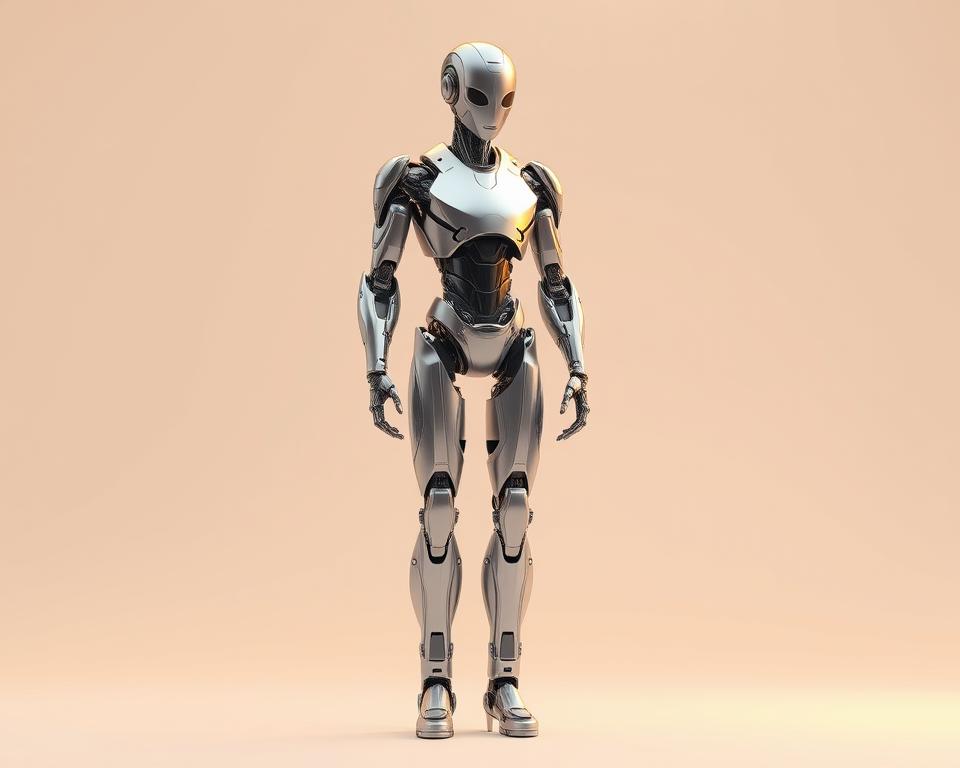
The way humanoid robots look is key to how people feel about them. Designers must make sure the robot looks nice and doesn’t scare anyone. Aesthetics in humanoid robots can change how people see and accept them.
“The design of a robot’s appearance can significantly affect how it is perceived by humans. A well-designed robot can foster a positive interaction, while a poorly designed one can lead to discomfort or mistrust.”
Designers think about the robot’s face, body shape, and colors. For example, robots for healthcare might have soft colors and smiles to calm people.
Ergonomics and User-Friendliness
Making AI humanoids easy to use is very important. The design should make it simple for people to understand and use the robot. Ergonomic design makes things easier and more accessible.
| Design Aspect | Description | Benefit |
|---|---|---|
| Aesthetic Appeal | Pleasing appearance | Increased user acceptance |
| Ergonomic Design | User-friendly interface | Enhanced user experience |
| Functional Design | Efficient operation | Improved productivity |
By following these design rules, makers can create AI humanoids that are both smart and nice to be around. The future of these robots depends on finding the perfect mix of looks and usefulness.
Software Development for AI Humanoids
Software development is key to what AI humanoids can do. It involves making complex programs that control the robot’s actions. This ensures the robot works smoothly with humans.
Programming Languages Used
Choosing the right programming language is important for AI humanoids. Python, C++, and Java are top choices. Python is great for machine learning because it’s easy to use and has lots of libraries.
C++ is favored for its speed and control over hardware. Java is popular for its ability to run on different platforms and strong security.
Frameworks and Platforms
Many frameworks and platforms help develop AI humanoids. ROS (Robot Operating System) is a favorite for its flexibility and modularity. TensorFlow and PyTorch are also used for their machine learning skills.
- ROS (Robot Operating System)
- TensorFlow
- PyTorch
Debugging and Testing
Debugging and testing are vital for AI humanoids. Developers use tools and methods to find and fix bugs. This makes sure the robot works well and safely.
Good debugging and testing are crucial. They help the AI humanoid do tasks right and handle different situations well.
Creating Realistic Movements
Making AI humanoids move like real people is a big challenge. It needs advanced robotics and AI. Several key technologies and methods are used to make this happen.
Motion Planning Techniques
Motion planning is key in making AI humanoids. It figures out the steps a robot needs to take to do a task. Advanced algorithms help plan and carry out these steps, making sure they are safe and efficient.
Techniques like sampling-based motion planning and optimization-based motion planning are used. They help robots move through complex spaces and do tasks that need precise movements.
Human-Like Coordination
Getting AI humanoids to move like people is crucial. It means creating control systems that mimic human movement and interaction.
Researchers use machine learning and control theory to achieve this. These methods let robots learn from humans and adjust their movements.
Simulation Tools
Simulation tools are vital for AI humanoid development. They let researchers test and improve robot movements in a virtual space before real-world use.
Physics-based simulation and virtual reality are some tools used. They help simulate different scenarios and test robot performance in a controlled setting.
Incorporating Emotion Recognition
AI humanoids can now understand and respond to human emotions better. This makes their interactions with us more natural and easy to follow.
AI for Emotional Intelligence
Creating emotional intelligence in AI humanoids needs advanced tech. This tech lets them pick up on emotional signs like facial expressions and voice tones. They then respond in a way that feels right.
Key Components of Emotional Intelligence in AI Humanoids:
- Facial recognition software
- Speech pattern analysis
- Machine learning algorithms for emotional cue recognition
Emotional intelligence in AI humanoids means more than just seeing emotions. It’s about showing empathy and support. This needs smart programming and a deep grasp of human feelings.
Applications in Interaction
Emotion recognition in AI humanoids has many uses. It helps in healthcare and customer service, making interactions more personal and caring.
| Industry | Application | Benefit |
|---|---|---|
| Healthcare | Patient care and companionship | Enhanced emotional support for patients |
| Customer Service | Personalized customer interaction | Improved customer satisfaction |
| Education | Interactive learning experiences | More engaging and effective learning |
Adding emotion recognition to AI humanoids is a big leap. It makes these robots more like us and more interactive. As this tech gets better, we’ll see even smarter machines that truly get and respond to our feelings.
Enhancing Communication Skills
Improving AI humanoids’ communication skills is key for a better user experience. This means using advanced tech to help robots understand and talk back to humans well.
Voice recognition technologies play a big role in this. They let AI humanoids get what people say, making talks smoother. Thanks to machine learning and natural language processing, these systems get better all the time.
Voice Recognition Technologies
Voice recognition is essential for AI humanoids to get and act on voice commands. This is important for tasks where you don’t need to use your hands. Better algorithms have made these systems more accurate and quicker.
For example, AI humanoids with top-notch voice recognition can set reminders, give info, or even chat. This makes using them more fun and opens up new ways to use them in different places.
Multi-Modal Communication
Multi-modal communication is also crucial for AI humanoids. It means they can talk in different ways, like text, voice, and gestures.
This lets AI humanoids talk more like people, changing how they communicate based on the situation and what the user likes. For instance, a robot might use voice and visual displays together to share info better.
- Enhanced user experience through personalized interaction
- Increased flexibility in communication modes
- Better adaptability to different user needs and preferences
By using both voice recognition and multi-modal communication, AI humanoids can talk and interact more like real people. This makes them more useful and fun to have around.
Ethical Considerations in AI Humanoids
The rise of AI humanoids brings up big ethical questions. These robots are getting smarter and more independent. This makes us wonder how they will affect our lives and society.
Addressing Privacy Concerns
Privacy is a big worry with AI humanoids. They can talk to people and gather personal info. It’s important to make sure these robots protect our privacy.
Key Privacy Considerations:
- Data collection and storage practices
- Consent mechanisms for data usage
- Anonymization and encryption techniques
The Trolley Problem in Robotics
The trolley problem is a big deal for AI humanoids. It’s about making tough choices when there’s no right answer. Teaching robots to make fair decisions is really hard.
Implications for Society
AI humanoids could change a lot of things. They might affect jobs, how we interact with each other, and even our personal relationships. We need to think about these changes to make sure they’re good for everyone.
| Aspect | Positive Impact | Negative Impact |
|---|---|---|
| Employment | Assistance in labor-intensive tasks | Job displacement for certain roles |
| Social Interactions | Enhanced companionship for the elderly | Potential reduction in human-to-human interaction |
| Human Relationships | Increased assistance for people with disabilities | Blurred lines between human and robot relationships |
In conclusion, the ethics of AI humanoids are complex. We need to tackle privacy issues, the trolley problem, and think about how they’ll change society. By doing this, we can make sure AI humanoids help us all.
The Future of AI Humanoids
AI humanoids are on the verge of a major breakthrough. They are set to change the tech world. It’s clear that humanoid robots will be key in many industries soon.
The growth of AI humanoids is driven by several trends. One big one is combining advanced robotics with AI. This lets robots do complex tasks with great accuracy.
Trends in Development
The future of future robots includes better machine learning. This will make robots more able to talk and work with humans. Also, new sensor and actuator tech will boost humanoid robot skills.
There’s also a push to make robots that can really talk to humans. This means they need to look and act like people. They also need to understand and meet human emotions and needs.
Potential Applications in Various Industries
AI humanoids have many uses across different fields. In healthcare, they can help with patient care. They can be friends and helpers for the elderly and those who need it.
In customer service, humanoid robots can give one-on-one help. This can make customer experiences better. In manufacturing, they can help make things more efficiently and accurately.
- Healthcare: Patient care and companionship
- Customer Service: Personalized assistance
- Manufacturing: Enhanced production efficiency
As advanced robotics keeps getting better, AI humanoids will become a big part of our lives. They will change many industries and how we work and live.
Case Studies: Successful AI Humanoids
AI humanoids are changing the world of robotics. They show the power of intelligent machines. We’ll look at two examples: Boston Dynamics’ Atlas and SoftBank Robotics’ Pepper.
Boston Dynamics’ Atlas
Boston Dynamics’ Atlas is a robot made for search and rescue. It can move and manipulate objects in tough places. Atlas is great for disaster situations because it can handle hard terrains.
Boston Dynamics says, “Atlas can do many tasks, like search and rescue, in different places.” This shows how versatile and useful Atlas can be.
SoftBank Robotics’ Pepper
SoftBank Robotics’ Pepper is all about talking to people and helping with customer service. It can understand and show emotions. Pepper is loved by businesses for making customer service better.
Pepper’s success shows AI humanoids can help in many business areas. They give insights into what customers like and want.
Challenges in AI Humanoid Development
AI humanoid development is facing many obstacles. These include technical and financial challenges. It’s important to understand these to move forward and create better AI humanoids.
Technical Limitations
Creating AI humanoids is hard because of technical issues. We need better algorithms for movement and interaction. Also, we must improve sensors and processing power for complex tasks.
Developing machine learning models is key for AI humanoids to learn and adapt. But, we need to improve data processing and algorithmic efficiency a lot.
Financial Barriers
AI humanoid development is also expensive. It costs a lot to research and develop advanced robotics and AI. This includes high costs for talent, hardware, and software.
| Aspect | Cost Factor | Impact on Development |
|---|---|---|
| Research and Development | High talent acquisition costs | Delays in innovation due to budget constraints |
| Hardware and Software | Expensive cutting-edge technologies | Limited access to latest tech for smaller developers |
| Testing and Validation | Cost of simulation tools and real-world testing | Increased costs for ensuring safety and efficacy |
To overcome financial barriers, we need to work together. Collaborations between industry leaders, startups, and academic institutions can help share resources and lower costs.
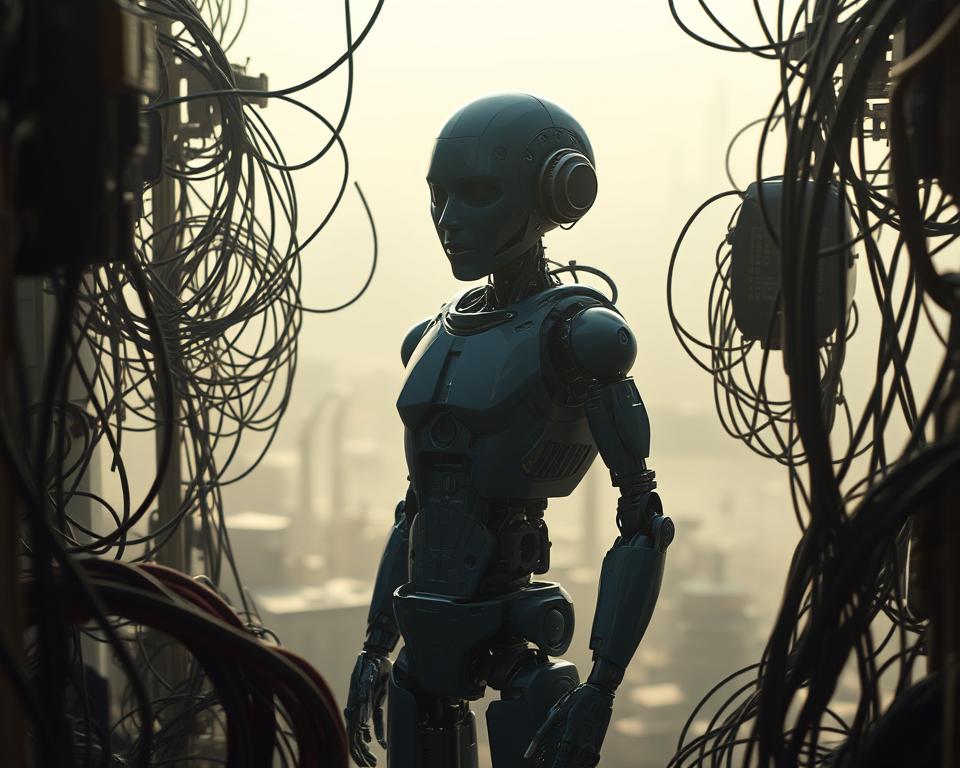
In conclusion, AI humanoid development is facing big challenges. We need to tackle these technical and financial hurdles to make progress. This will help us unlock the full potential of AI humanoids in many areas.
Conclusion: The Path Forward for AI Humanoids
The journey to create AI humanoids is complex and involves many fields. We’ve seen how combining sensors, actuators, control systems, and power sources is key. This mix helps make robots that can act like humans.
Key Takeaways and Future Directions
This guide highlights the need for AI humanoids to look and feel like people. It’s also crucial to develop software for realistic movements and to understand emotions. The future looks bright for ai humanoids and humanoid robots, with chances to help in healthcare, education, and more.
Fostering Innovation
To move forward with future robots, we need to boost innovation and teamwork. By sharing ideas and working together, we can tackle the challenges of making AI humanoids. This will help them make a real difference in our world.
FAQ
What are AI humanoids and how do they work?
AI humanoids are robots that look and act like humans. They use advanced robotics, artificial intelligence, and machine learning. This lets them interact and make decisions like people do.
What are the key components of AI humanoids?
AI humanoids have sensors, actuators, control systems, and power sources. These parts work together. They make a robot that can move and act like a person.
How do AI humanoids recognize and respond to emotions?
AI humanoids use AI to understand and react to human feelings. This helps them talk and act in a way that feels more natural and caring.
What are the potential applications of AI humanoids?
AI humanoids can help in many areas like healthcare, customer service, and manufacturing. They make interactions better, improve customer service, and boost productivity.
What are the challenges faced in AI humanoid development?
Making AI humanoids is hard because of technical, financial, and ethical issues. Solving these problems is key to making AI humanoids better.
How do AI humanoids communicate with humans?
AI humanoids talk to people using voice recognition and other ways. This makes their interactions more natural and effective.
What are the ethical considerations in AI humanoid development?
There are big ethical questions like privacy, the trolley problem, and how they’ll affect society. It’s important to make sure AI humanoids are used responsibly.
What is the future of AI humanoids?
The future looks bright for AI humanoids. They’re getting better and will be used in more places. They could change how we work and live.
What are some examples of successful AI humanoids?
Robots like Boston Dynamics’ Atlas and SoftBank Robotics’ Pepper are great examples. They show what AI humanoids can do and have been used in many ways.
How can AI humanoids be used in healthcare?
AI humanoids can help in healthcare by caring for patients, aiding in rehab, and making visits better. They can also help with tasks like checking vital signs and reminding patients to take medicine.
What is the role of machine learning in AI humanoids?
Machine learning is key for AI humanoids. It lets them learn and get better over time. This makes them more helpful and efficient in their interactions with us.
How do AI humanoids use natural language processing?
AI humanoids use natural language processing to understand and create human-like speech. This lets them talk and communicate with us more naturally.