Are robots going to take over human jobs?
The growth of humanoid robots is changing how we work. They can do tasks that need human-like skills, like putting things together, checking them, and moving stuff around. These robots are getting more important. The market for them is set to explode, hitting $66 billion by 2032.
This guide dives deep into the world of humanoid robots. We’ll look at their features, types, and uses. Knowing about these advanced machines can help businesses and people bring new ideas and efficiency to their work.
Key Takeaways
- Humanoid robots are changing industries with their human-like abilities.
- The market for humanoid robots is expected to hit $66 billion by 2032.
- These robots can do tasks like assembly, inspection, and moving things.
- Understanding humanoid robot features and types is key to using their full potential.
- Humanoid robots are leading to new ideas and better work in many fields.
Introduction to Humanoid Robots
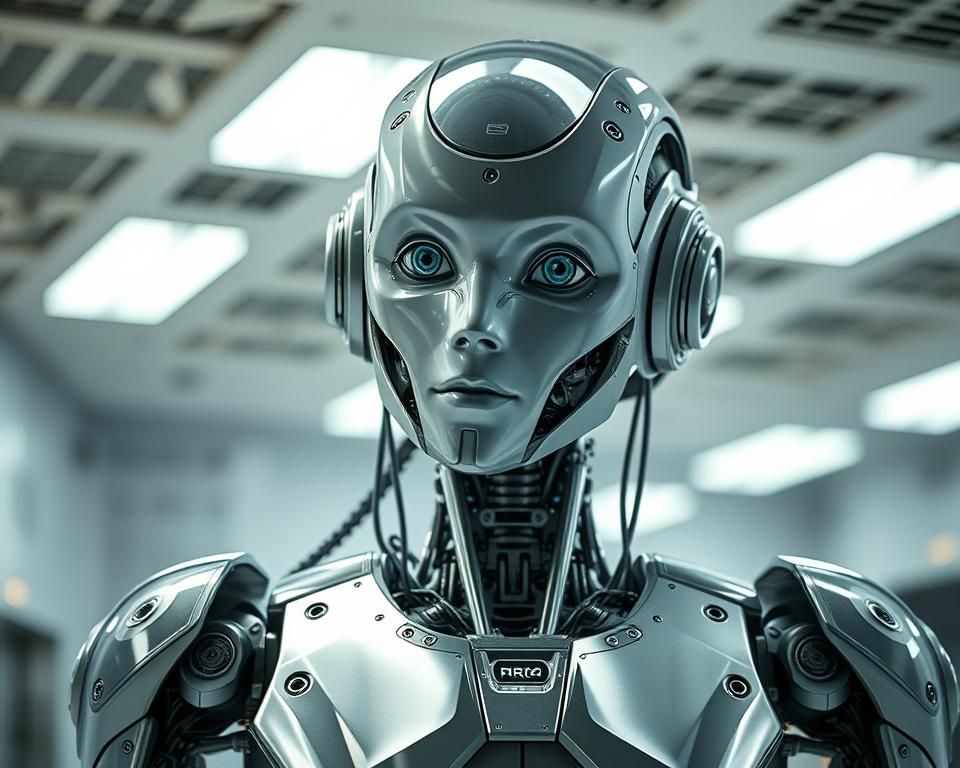
Humanoid robots are a big step in robotics, letting machines act more like us. They are made to look and act like humans. This makes them great for places where things are not always the same.
Definition and Characteristics
Humanoid robots look and act like people. They can move like us and do tasks that need human skills. Some key features of humanoid robots include:
- Advanced mobility and movement capabilities
- Human interaction capabilities, such as speech and facial recognition
- Integration with artificial intelligence (AI) for enhanced decision-making
These traits make humanoid robots useful in many areas. They can help in service, entertainment, research, and more.
History of Humanoid Robots
Humanoid robots have been around for decades. But, thanks to AI and robotics, they’ve gotten much better lately. The first humanoid robot, Wabot-1, was made in 1973. Now, robots like ASIMO and Sophia can do a lot more.
Some key moments in humanoid robot history include:
- The first humanoid robot, Wabot-1, was introduced in 1973
- Robots like ASIMO and Sophia were developed
- AI and machine learning have made robots smarter
Importance of Humanoid Robots in Today’s World
Humanoid robots are very important today. They can change many industries and make our lives better. They help in healthcare, education, and customer service.
Humanoid robots are important because they can:
- Help humans with different tasks and jobs
- Make working with robots better
- Find new ways to solve hard problems
Popular Types of Humanoid Robots
The world of humanoid robotics is vast and varied. It includes service, entertainment, and research robots. These robots are made to look and act like humans, making them useful for many tasks.
Service Robots
Service robots help humans with tasks like healthcare, customer service, and housework. They have advanced AI and can move around easily. For example, Pepper by SoftBank Robotics is used in stores and hospitals to help and keep people company.
Entertainment Robots
Entertainment robots are made for fun, like playing games, telling stories, and being friends. They have cool sensors and AI to understand and talk back to humans. Sophia by Hanson Robotics is famous for its human-like looks and talks.
Research and Development Robots
Research robots are used in science to improve robotics. They test new AI, movement, and how humans and robots interact. ASIMO by Honda is a leader in research, showing what humanoid robots can do.
Dr. Hiroshi Ishiguro, a robotics expert, says, “The future of humanoid robots is in working well with humans. They can make our lives better with their skills and flexibility.” Humanoid robots have many uses, from helping in healthcare to entertaining us.
Notable Humanoid Robots in Use
ASIMO, Sophia, and Pepper are top humanoid robots known for their advanced features. They show the power of humanoid robotics and are used in real-world settings.
ASIMO by Honda
ASIMO, made by Honda, is a leading humanoid robot. It can help humans with various tasks. It can run, climb stairs, and understand gestures.
Its creation pushed robotics forward, improving how it moves and interacts with people.
Sophia by Hanson Robotics
Sophia, from Hanson Robotics, looks and acts like a human. It’s used in customer service and education.
Its skill in reading and reacting to human feelings makes it great for improving human-robot talks.
Pepper by SoftBank Robotics
Pepper, by SoftBank Robotics, aims to connect with humans on a personal level. It’s used in retail and customer service.
Pepper can spot and respond to human emotions. This makes it a favorite for businesses wanting to better serve customers.
| Robot | Developer | Key Features |
|---|---|---|
| ASIMO | Honda | Advanced mobility, gesture recognition |
| Sophia | Hanson Robotics | Human-like interaction, emotion recognition |
| Pepper | SoftBank Robotics | Personal interaction, emotion response |
Key Features of Humanoid Robots
Humanoid robots are special because of their advanced features. These features help them move, interact, and make decisions like humans. They are key to the robots’ potential uses in many industries.
Mobility and Movement
Humanoid robots can move like humans. This is thanks to advanced robotics engineering. They can mimic human gait and gestures.
Their ability to move makes them flexible. They can navigate complex environments and perform tasks that need flexibility and coordination.
Human Interaction Capabilities
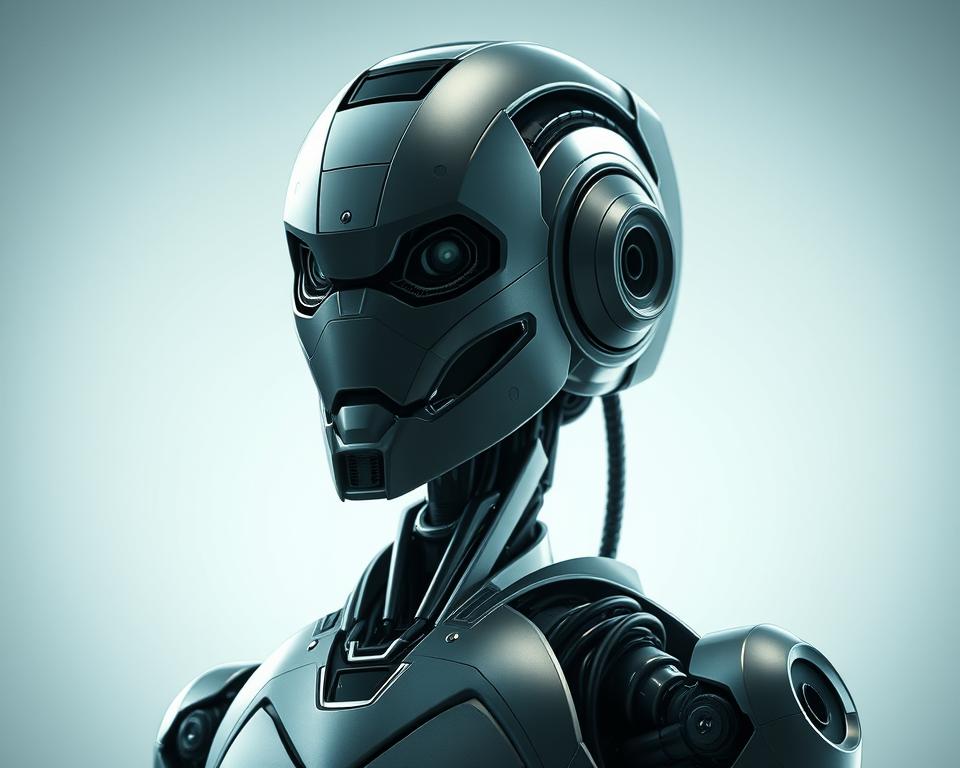
Humanoid robots are made to interact with humans naturally. They have advanced sensors and cameras. These help them recognize and respond to human emotions, gestures, and voice commands.
This makes them perfect for customer service, healthcare, and education.
Artificial Intelligence Integration
Artificial intelligence (AI) is a big part of humanoid robots. It lets them make decisions and learn from their interactions. AI algorithms help them process vast amounts of data, recognize patterns, and adapt to new situations.
This feature is crucial. It helps them perform complex tasks and interact with humans effectively.
| Feature | Description | Benefit |
|---|---|---|
| Mobility and Movement | Advanced robotics engineering for human-like movement | Enhanced flexibility and coordination |
| Human Interaction Capabilities | Sensors and cameras for recognizing human emotions and gestures | Natural and effective human-robot interaction |
| Artificial Intelligence Integration | AI algorithms for data processing and decision-making | Improved ability to perform complex tasks and adapt to new situations |
Applications of Humanoid Robots
Humanoid robots are used in many fields, like healthcare and customer service. They can move and act like humans. This makes them great for working with humans.
Healthcare Assistance
In healthcare, humanoid robots help with patient care and even surgery. For example, Robear helps lift patients. This makes it easier for healthcare workers.
“Robots are not just tools, they are partners in care,” says Dr. Robotics Expert. He points out how robots are changing healthcare.
Education and Teaching
Humanoid robots are also used in schools to improve teaching. They can help teach, give personalized lessons, and even teach programming.
- Enhancing student engagement through interactive learning
- Providing personalized education plans
- Assisting in special education needs
Customer Service Enhancement
In customer service, humanoid robots help make experiences better. They can answer questions, give information, and even help in stores.
SoftBank Robotics‘ Pepper robot shows how robots can improve service. They make interactions more fun and engaging.
“The future of customer service is not just about humans; it’s about creating a seamless experience with the help of robots.”
Advancements in Humanoid Robot Technology
The field of humanoid robotics is seeing big changes. These changes come from new ideas in robotics, AI, and sensors. They help make robots that can act more like humans and do tricky tasks.
Innovations in Robotics Engineering
Robotics engineering has made huge strides. This has made humanoid robots more agile and skilled. Advances in mechanical design and actuation systems let robots move like humans. For example, new servo motors and advanced kinematic structures make robots more mobile and flexible.
Some key innovations include:
- Improved mechanical designs for better stability and balance
- Advanced actuation systems for more natural movement
- Enhanced control algorithms for precise motion planning
Improvements in AI and Machine Learning
AI and machine learning are key for humanoid robots’ brains. Advances in deep learning algorithms help robots understand humans better. This makes their interactions more effective. Also, improvements in natural language processing (NLP) let robots have deeper conversations.
Notable improvements include:
- Better facial recognition and emotion detection
- Enhanced language understanding and generation
- More sophisticated decision-making algorithms
“The integration of AI and machine learning into humanoid robots is revolutionizing their ability to interact with humans and perform complex tasks.”
Enhancements in Sensor Technology
Sensor technology is vital for humanoid robots. It lets them see and react to their world. Advances in sensor fusion techniques make sensory data more accurate. This helps robots move and interact better. Enhancements in tactile sensing also let robots handle objects and feel physical touch.
Key enhancements include:
- Improved sensor accuracy and reliability
- Advanced sensor fusion techniques
- Enhanced tactile sensing capabilities
Challenges Faced by Humanoid Robots
Humanoid robots face many challenges. These include ethical, technical, and societal concerns. These issues must be solved for robots to be widely used.
Ethical Concerns
Developing and using humanoid robots raises ethical questions. One big issue is privacy. These robots collect and use personal data, which must be kept safe. There’s also worry about job displacement as robots take over human tasks.
Another concern is how robots might be used. They could be used in harmful ways, like surveillance or in the military. It’s important to have rules to stop this.
Technical Limitations
Humanoid robots have big technical hurdles. They struggle with mobility and stability. Even with progress, they find it hard to move in complex spaces or stay balanced.
Another problem is their intelligence and decision-making. AI has improved, but robots still can’t make decisions like humans. This limits their use in complex situations.
Societal Acceptance Issues
Getting people to accept humanoid robots is tough. Many find them unsettling, a feeling known as the “uncanny valley.” To overcome this, robots need to look and work better. People also need to understand the good and bad of robots.
We also need clear rules and standards for robots. This includes safety guidelines, who’s responsible in accidents, and making sure robots respect society’s values.
Future Trends in Humanoid Robotics
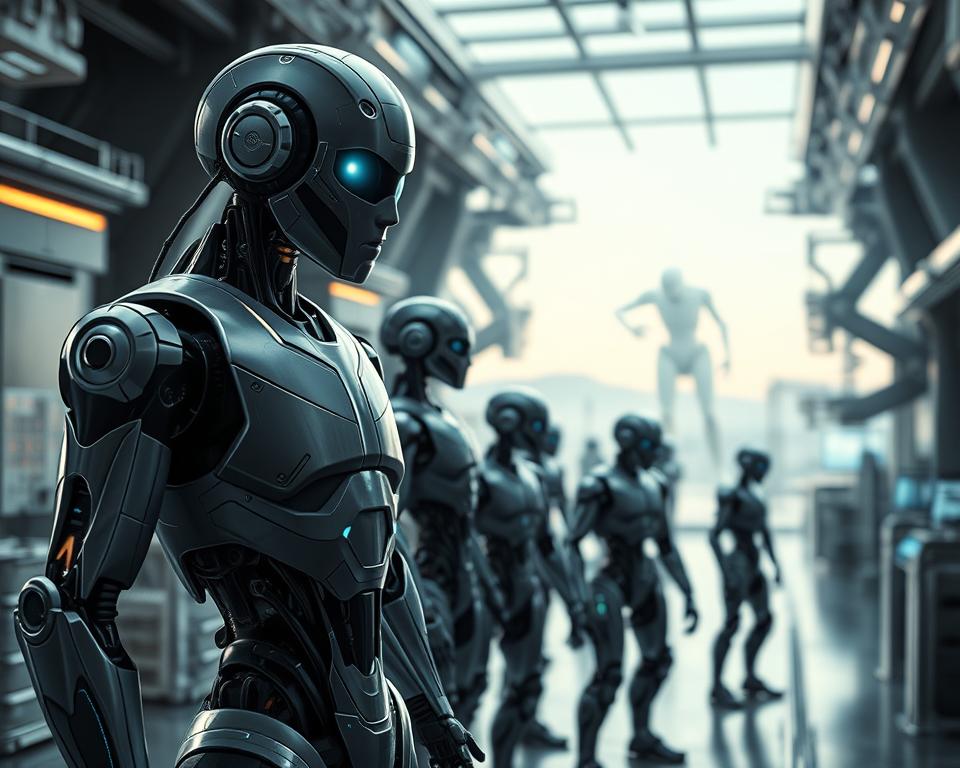
The next generation of humanoid robots will change industries and society a lot. This is thanks to AI getting better. We’ll see these robots more in our daily lives as tech advances.
Evolving Roles in Industry
Humanoid robots will do more complex jobs in places like factories, hospitals, and shops. They can move like humans and talk to us. This makes them very useful in these areas.
- Manufacturing: They’ll help on assembly lines, making things faster and cheaper.
- Healthcare: They’ll help with patient care, being friends and helpers to the elderly and disabled.
- Customer Service: They’ll make shopping and staying in hotels better for everyone.
Predictions for AI Improvements
AI getting better will help humanoid robots a lot. They’ll be able to learn, adapt, and make choices on their own.
| AI Improvement | Description | Impact on Humanoid Robots |
|---|---|---|
| Machine Learning | Enables robots to learn from data and improve performance over time. | Enhanced adaptability and decision-making capabilities. |
| Natural Language Processing | Allows robots to understand and respond to human language. | Improved human-robot interaction and customer service capabilities. |
| Computer Vision | Enables robots to interpret and understand visual information. | Better navigation and object recognition capabilities. |
Potential Societal Impact
Humanoid robots will change society a lot. They’ll bring many benefits but also raise some concerns. These include jobs being lost, privacy issues, and ethical questions.
Benefits: They can make life better for the elderly and disabled, improve service, and make work more efficient.
Concerns: Jobs might be lost, and we need rules for using these robots ethically.
We must deal with these worries while using humanoid robots to make the future better.
Humanoid Robots in Popular Culture
Humanoid robots have been a big part of movies and TV shows for years. They entertain and shape how we see these machines. This is true for both old sci-fi classics and new hits.
Representation in Movies and TV Shows
Many films and TV shows feature humanoid robots. They are often key characters or important to the story. Here are a few examples:
- C-3PO and R2-D2 from the Star Wars series, showing robots with their own personalities.
- Sonny from I, Robot, based on Isaac Asimov’s stories, showing robots can make choices on their own.
- Robby the Robot from Forbidden Planet, a classic robot helping humans in the future.
Impact on Public Perception
Media’s take on humanoid robots shapes how we see them. Some movies show robots as helpful, while others make them seem scary. This mix of views affects what we think robots can do and might be like.
Movies like Ex Machina and Her make us think about AI and robots. They make us wonder about the ethics of creating advanced robots.
Educational Tools in Storytelling
Humanoid robots in movies and TV also teach us about robotics and AI. They make learning fun by weaving these topics into stories. This way, we learn about the good and bad sides of robots.
For example, documentaries and shows like Sophia by Hanson Robotics and ASIMO by Honda show real robots. They show what these robots can do and how they might help us in the future.
In short, humanoid robots in movies and TV are very important. They entertain and teach us about robots. They help us understand the good and bad sides of these advanced machines.
The Role of Government in Robotics Regulation
As robotics advance quickly, governments worldwide face a pressing need for clear rules. Humanoid robots, in particular, raise big questions about safety, privacy, and ethics.
Regulatory Frameworks and Standards
Regulations for robotics differ greatly across countries. For example, the European Union has the Machinery Directive for robot safety. In contrast, the United States has a mix of federal and state laws.
Key aspects of current regulations include:
- Safety standards for robot design and manufacturing
- Guidelines for robot operation in public spaces
- Data protection and privacy laws
The table below shows some key regulations and their impact on humanoid robot makers:
| Regulation | Description | Impact on Humanoid Robots |
|---|---|---|
| EU Machinery Directive | Safety requirements for robots | Manufacturers must comply with safety standards |
| US State Laws | Varying regulations across states | Manufacturers must navigate different state requirements |
| GDPR (EU) | Data protection and privacy law | Humanoid robots must be designed with data protection in mind |
Future Regulatory Challenges
As humanoid robots become more common, governments will face new regulatory hurdles. Ensuring regulations keep up with tech advancements without hindering innovation is a big challenge.
The main challenges include:
- Balancing innovation with safety and security concerns
- Addressing ethical issues related to robot autonomy and decision-making
- Developing regulations that are adaptable to future technological developments
International Cooperation on Robotics Policies
Given the global robotics industry, international cooperation on regulations is key. Governments, international bodies, and industry players must work together. They aim to create harmonized rules for humanoid robots.
Key areas for international cooperation include:
- Developing common safety and performance standards
- Sharing best practices in robot regulation
- Collaborating on ethical guidelines for robot development and use
Real-World Case Studies
Humanoid robots are changing the game in real-world settings. They’re making a big splash in many industries, showing their worth and potential. These robots are versatile and bring lots of benefits.
Elder Care Facilities
In elder care, humanoid robots are making a big difference. They offer companionship and help to the elderly. For example, Pepper by SoftBank Robotics can understand and respond to emotions, making care more personal. “Robots in elder care are improving seniors’ lives,” a study found.
Emergency Response Scenarios
In emergencies, humanoid robots are key. They can explore disaster zones, check damage, and give vital info to teams. Their human-like movements help them reach places regular robots can’t. Experts say,
“Humanoid robots boost disaster response by offering timely data and insights.”
Retail Environments
Retail is also seeing the benefits of humanoid robots. They’re used to better customer service and shopping. Robots like Sophia by Hanson Robotics chat with customers, answer questions, and suggest products. They’re changing retail by making it more interactive and fun.
Collaborations Between Companies and Institutions
Private companies and academic institutions are teaming up to change humanoid robotics. These partnerships are key to making more advanced humanoid robots.
Private Sector Innovations
The private sector is leading the way in humanoid robotics. Humanoid robot manufacturers like Boston Dynamics and SoftBank Robotics are making robots that can talk and act like humans.
For example, SoftBank’s Pepper robot is helping in retail and customer service. It can understand and respond to human feelings, which is a big step forward.
Academic Partnerships
Academic institutions are important in making humanoid robots better. They work with companies to do research and develop new ideas.
Universities and research centers are helping with AI and machine learning. This lets humanoid robots do complex tasks and act more like humans.
Cross-Disciplinary Research Efforts
Research from different fields is also key. By mixing insights from robotics, AI, psychology, and more, we can make robots that are smart and socially friendly.
| Research Area | Contribution to Humanoid Robotics | Examples |
|---|---|---|
| Robotics Engineering | Advancements in mobility and interaction capabilities | ASIMO by Honda, Atlas by Boston Dynamics |
| AI and Machine Learning | Enhanced decision-making and learning capabilities | Sophia by Hanson Robotics, Pepper by SoftBank |
| Psychology and Social Sciences | Better understanding of human-robot interaction | Studies on robot acceptance in social environments |
These partnerships will keep pushing the limits of top humanoid robots. They will be used in many areas, like healthcare, education, and customer service.
The Impact of Humanoid Robots on Employment
Humanoid robots are changing the job market, bringing both good and bad news. As they enter different fields, people worry about their effect on jobs.
Job Creation vs. Job Displacement
Humanoid robots might replace some jobs, mainly those that are repetitive or boring. But, they could also open up new career paths in robotics, like maintenance and programming.
Job Displacement: Jobs that are repetitive or can be automated are at risk. This includes roles in manufacturing, customer service, and healthcare.
Job Creation: New jobs will appear that we can’t yet imagine, just like the internet did. Roles in robot maintenance, AI training, and ethics are already starting to show up.
| Industry | Potential Job Displacement | Potential Job Creation |
|---|---|---|
| Manufacturing | Assembly Line Workers | Robot Maintenance Technicians |
| Customer Service | Customer Service Representatives | AI Training Specialists |
| Healthcare | Simple Caregivers | Robotics Nurses |
New Skill Requirements for Workers
As humanoid robots become more common, workers will need new skills. They’ll need technical skills in robotics and AI, and soft skills that automation can’t replace.
Technical Skills: Workers will need to learn programming, robotics maintenance, and AI management.
Soft Skills: Skills like creativity, problem-solving, and communication will become more important. These are harder to automate.
Human-Robot Collaboration Opportunities
Humanoid robots offer chances for humans and robots to work together. This can make work more efficient and productive.
Collaborative Benefits: Working together can make things safer, more productive, and more satisfying for everyone.
Examples: In manufacturing, robots can help with assembly. In healthcare, they can assist with patient care and rehabilitation.
Conclusion: The Future of Humanoid Robots
The future of humanoid robots looks bright. They could become a big part of our lives, thanks to new technology. We’ve seen robots that can move like us and talk to us.
Key Developments
Robots like ASIMO by Honda and Sophia by Hanson Robotics are leading the way. They show how robots can help in healthcare, education, and more. These robots are making a big difference.
Future Prospects
We’ll see more robots in our daily lives soon. They will help in many areas. This will lead to even more improvements in robotics.
Continued Exploration
We encourage you to keep learning about humanoid robots. They could change our world in amazing ways. With ongoing research, the future of robots is full of promise.
FAQ
What are humanoid robots?
Humanoid robots look and act like humans. They have advanced AI, sensors, and actuators. This lets them interact with people and their surroundings.
What are the different types of humanoid robots?
There are many types of humanoid robots. Some are for service, others for entertainment, and some for research. Each type has its own purpose.
What are some notable examples of humanoid robots?
Famous humanoid robots include ASIMO by Honda, Sophia by Hanson Robotics, and Pepper by SoftBank Robotics. They are known for their advanced abilities and uses in different fields.
What are the key features of humanoid robots?
Key features of humanoid robots include mobility, ability to interact with humans, and AI. These features help them do complex tasks and interact naturally with people.
What are the applications of humanoid robots?
Humanoid robots are used in many areas. They help in healthcare, education, and customer service. They are also used in research, entertainment, and other fields.
What are the benefits of using humanoid robots?
Using humanoid robots brings many benefits. They improve efficiency, enhance customer experience, and boost productivity. They can also help humans with tasks and provide companionship.
What are the challenges faced by humanoid robots?
Humanoid robots face challenges like ethical concerns, technical limits, and societal acceptance. Overcoming these challenges is key for their widespread use.
How are humanoid robots regulated?
Regulations for humanoid robots vary by country and industry. Governments and regulatory bodies are working to set clear guidelines for their development and use.
What is the future of humanoid robots?
The future of humanoid robots looks bright. Advances in AI, robotics, and sensors will make them more important in many areas of life.
How will humanoid robots impact employment?
Humanoid robots may create new jobs but could also replace some. They can also help humans work better together, leading to more efficiency.
What are the best humanoid robot manufacturers?
Top manufacturers include Honda, Hanson Robotics, and SoftBank Robotics. They are known for their innovative designs and cutting-edge technology.
How are humanoid robots used in popular culture?
Humanoid robots appear in movies and TV shows. They often represent future tech or make social comments. They can also teach through storytelling.