Can machines really act like humans? The goal of making a humanoid robot that can talk and act like us is a big challenge. It needs a lot of advanced robotics technology, smart AI, and detailed sensors.
Creating a human-like robot is more than just building a body. It’s about making a robot that can understand and react to its surroundings. This article will show you how to start, from designing its body to adding AI and sensors.
Key Takeaways
- Understanding the mechanical structure required for a humanoid robot
- Integrating AI for advanced decision-making capabilities
- Implementing sensory systems for enhanced interaction
- Exploring the challenges in creating a human-like robot
- Reviewing the current state of advanced robotics technology
Understanding Human-like Robots
Robots that look and act like humans are becoming more common. These humanoid robots are made to work with people better. They are good for many uses.
Definition and Characteristics
Human-like robots, or robotic humanoids, can move and look like people. They are built to do tasks that humans do. This makes them very useful.
What makes humanoid robots special includes:
- They look like humans
- They can move and act like people
- They can understand and show human feelings
Importance of Human-like Robots
Humanoid robotics is changing many fields. They help in healthcare, service, and entertainment. They make things better for everyone.
| Industry | Application | Benefits |
|---|---|---|
| Healthcare | Patient care and rehabilitation | Enhanced patient support and recovery |
| Service | Customer service and support | Improved customer experience |
| Entertainment | Interactive experiences | Increased engagement and enjoyment |
As humanoid robotics gets better, we’ll see even more advanced robots. They will be able to work with humans in new and exciting ways.
Historical Context of Robotics
Robots have come a long way from simple machines to advanced human-like robots. This journey shows our creativity and tech skills. Robotics has changed a lot, thanks to better mechanical systems, AI, and sensors.
Evolution of Robotics Technology
Robots started as simple machines for repetitive tasks. But, with AI and mechanical engineering progress, they became more complex. They took on new roles.
Major advancements include:
- Development of more sophisticated AI algorithms
- Improvements in mechanical design and materials
- Integration of advanced sensory systems
Investments in advanced robotics technology have made robots more lifelike. They can now better interact with their surroundings and people.
Milestones in Human-like Robots
Human-like robots, or lifelike robots, have reached many milestones. These include:
| Year | Milestone | Description |
|---|---|---|
| 1961 | First Industrial Robot | Unimate, the first industrial robot, was installed in a General Motors factory, marking the beginning of robotics in manufacturing. |
| 1990s | Advancements in AI | Significant advancements in AI led to more sophisticated robotic systems capable of learning and adapting. |
| 2000s | Humanoid Robots | The development of humanoid robots like ASIMO and QRIO showcased the potential for robots to mimic human movements and interactions. |
The growth of realistic robot technology is exciting. As tech gets better, we’ll see robots that can interact with us like never before.
Key Components of a Human-like Robot
Making an AI human replica means combining many advanced systems. A human-like robot is complex. It needs mechanical, sensory, and control systems to work well.
Mechanical Structure and Design
The mechanical part of a human-like robot is key to its human-like movements. Advanced materials and designs make it strong and flexible. It should be able to move in many ways, showing off its dexterity and precision.
When designing the robot’s mechanics, consider:
- Lightweight yet durable materials
- Articulated joints for enhanced mobility
- Balancing stability with flexibility
Sensory Systems
Sensory systems are vital for a human-like robot to understand and react to its surroundings. It has visual, auditory, and tactile sensors to interact with humans and objects naturally.
Integrating sensory systems means:
- Using cameras and computer vision for object recognition
- Implementing microphones and audio processing for voice commands
- Adding tactile sensors for feedback and interaction
Control Systems
The control systems of a human-like robot are its brain. They process sensory information and guide the mechanical parts. Sophisticated algorithms and AI techniques help it behave like a human.
“The development of control systems that can interpret and respond to complex human behaviors is a significant challenge in robotics.”
Good control systems need:
- Advanced AI and machine learning capabilities
- Real-time processing for immediate responses
- Integration with sensory feedback for adaptive behavior
Artificial Intelligence in Robotics
Artificial intelligence is key in making robots like humans. It lets them act naturally in their world. AI helps robots learn, adapt, and do complex tasks, just like humans.
Role of AI in Human-like Robots
AI does many things for human-like robots. It helps them understand and use lots of data. Machine learning lets them get better with time.
AI also makes robots precise and skilled. It works with sensors to let robots see and act on their surroundings.
Types of AI Used
There are a few AI types in human-like robots:
- Machine Learning: Helps robots get better with data.
- Deep Learning: Uses neural networks for complex data.
- Natural Language Processing: Lets robots understand and speak human language.
| Type of AI | Functionality | Application in Robotics |
|---|---|---|
| Machine Learning | Learning from data | Improves robot performance over time |
| Deep Learning | Analyzing complex data | Enhances robot’s ability to recognize patterns |
| Natural Language Processing | Understanding and generating human language | Facilitates human-robot interaction |
These AI technologies are making robots smarter. They can now interact with us in a more natural way. As advanced robotics technology grows, we’ll see even more advanced robots.
The Importance of Mobility and Dexterity
Humanoid robotics needs a deep understanding of how to move and be dexterous. This is key for robots to act like humans in different places.
Designing Human-like Movements
Making robots move like humans is complex. It involves creating systems that can bend and move like our limbs. This requires smart control algorithms and precise engineering for smooth movements.
The table below highlights key considerations in designing human-like movements:
| Design Aspect | Human Characteristic | Robotic Implementation |
|---|---|---|
| Flexibility | Range of motion in joints | Advanced actuators and joints |
| Balance | Center of gravity adjustment | Sensors and dynamic stabilization |
| Coordination | Synchronized limb movement | Complex control algorithms |
Challenges in Mobility
Creating robots that move like humans is hard. It’s tough to keep balance, move smoothly, and last long. These issues need new ideas in robotics technology.
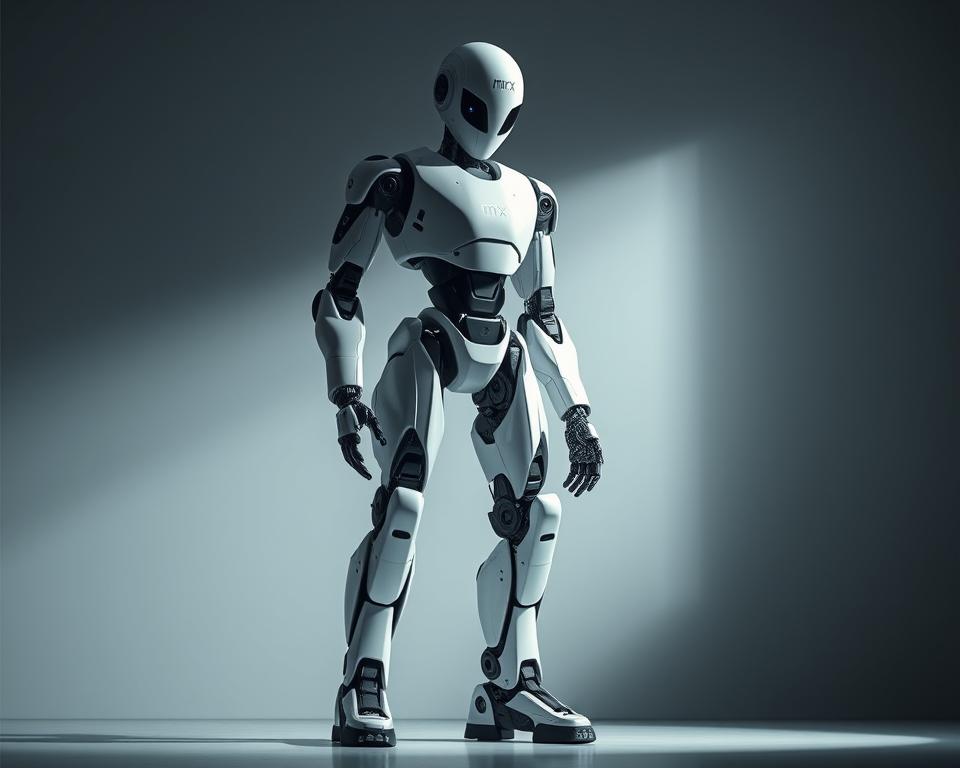
To solve these problems, experts are looking into new materials and designs. They want to make lifelike robots better at moving and doing tasks. This way, humanoid robots can help us more in our daily lives.
Programming a Human-like Robot
To make a robot like a human, you need to program it well. This means writing code for basic tasks and using advanced learning algorithms. These algorithms help the robot act like a person.
Coding for Interaction
It’s important to code a humanoid robot so it can talk and act like us. You need to write software that lets the robot understand and answer human commands. This is done with programming languages and frameworks that support artificial intelligence and robotics.
Python is a favorite for robotics because it’s easy to use and has lots of libraries. For example, TensorFlow and PyTorch help with machine learning. Here’s a simple example of how Python can make a robot say hello:
import numpy as np

# Simple greeting response
def greet(name):
return f"Hello, {name}!"

print(greet("Human"))
Machine Learning Fundamentals
Machine learning is a part of AI that lets robots learn from data. For a humanoid robot, it helps with recognizing faces, understanding speech, and doing tasks. It’s like how we learn from our experiences.
Machine learning has several steps:
- Data collection
- Model training
- Model evaluation
- Deployment
Neural networks are key in robotics machine learning. They can learn from lots of data to do hard tasks. For example, a robot can learn to read human emotions from faces.
Here’s a table that shows the main differences between traditional programming and machine learning for robots:
| Aspect | Traditional Programming | Machine Learning |
|---|---|---|
| Programming Style | Rule-based | Data-driven |
| Flexibility | Limited by predefined rules | Can adapt to new data |
| Complexity | Can become complex with many rules | Can handle complex patterns with large datasets |
In summary, making a robot like a human needs coding and machine learning. By using these methods, developers can make AI human replicas that are more like us and useful.
Ethical Considerations in Robot Design
Ethical thoughts are key in making humanoid robots. They affect how these robots work and how they interact with people. As robots join our daily lives, we must think more about these ethics.
Robots that look like humans bring up big ethical questions. They could be used in ways that might hurt people, either on purpose or by accident. So, we need to think deeply about the rightness of making such robots.
Moral Implications of Robotics
Robotics raises big moral questions. We must think about how robots might change our lives, like in healthcare and education. They could have a big impact on us.
In healthcare, robots must be safe and work well to protect patients. In schools, they should teach the truth without bias.
Regulations and Safety Standards
To keep humanoid robots safe, we need rules and safety checks. These should cover how robots are made, tested, and used. They should also have guidelines for different places.
Groups that make laws must work with robot makers and users. They need to create rules that work and are safe. This means looking at risks and finding ways to lessen them.
By focusing on ethics in robot design, we can make sure humanoid robots help society. They should make our lives better, not worse.
Prototyping Your Design
Prototyping is key in making a lifelike robot. It lets designers test and improve their ideas. This step turns the design into a real model for evaluation and enhancement.
Tools and Technology for Prototyping
Creating a humanoid robot needs various tools and tech. 3D printing is a big help, making complex parts fast. CAD software also plays a role, helping design the robot’s mechanics and electronics.
Testing and Iteration Process
After building a prototype, it’s tested thoroughly. This checks its performance, durability, and how well it works. This testing phase is vital for spotting what needs bettering.
The insights from testing guide the design’s refinement. The prototype is then updated. This cycle keeps going until the realistic robot technology is just right.
Good prototyping needs a clear testing and iteration plan. This ensures the robot is both functional and dependable. With the right tools and tech, designers can make humanoid robots that look and act like humans.
Integrating Sensors for Enhanced Interaction
Advanced robotics technology uses sensors for better human-robot interaction. These sensors help robots understand and react to their surroundings.
The quality of sensors in a robotic humanoid affects how well it interacts with humans and its environment. Effective sensor integration is key to achieving human-like interaction.
Types of Sensors to Consider
Humanoid robots can have different sensors for various tasks:
- Visual Sensors: Cameras and depth sensors that enable the robot to perceive its environment visually.
- Auditory Sensors: Microphones that allow the robot to detect and interpret sounds.
- Tactile Sensors: Sensors that provide the robot with a sense of touch, enabling it to feel and respond to physical contact.
- Proprioceptive Sensors: Sensors that help the robot understand its own position and movement.
Sensor Placement Strategies
Where sensors are placed is very important. They should be in spots that help them collect the most useful data.
| Sensor Type | Optimal Placement | Benefits |
|---|---|---|
| Visual Sensors | Head or torso | Enhanced visual perception |
| Auditory Sensors | Head or ears | Better sound localization |
| Tactile Sensors | Hands or skin | Improved touch sensitivity |
| Proprioceptive Sensors | Joints and limbs | Accurate movement tracking |
By choosing and placing sensors wisely, developers can make humanoid robots more interactive. This makes them more effective and enjoyable to use.
Enhancing Communication Skills
Effective communication is key for robots to work well with humans. Two main technologies help: voice recognition and natural language processing.
Voice Recognition Technology
Voice recognition lets robots understand human speech. It’s essential for artificial intelligence robots to get voice commands right. These systems can handle different accents and speech styles, making talks feel more natural.
Using voice recognition involves complex algorithms. They analyze audio, find patterns, and match them to known commands. This lets AI human replicas do tasks, share info, or chat.
Natural Language Processing
Natural Language Processing (NLP) is also crucial. It helps robots grasp the subtleties of human language, like context and idioms. This skill lets human-like androids give answers that fit the situation.
NLP has many steps, from breaking down words to understanding their meaning. This way, robots can have deeper and more useful talks with people. It builds trust and connection.
Together, voice recognition and NLP make artificial intelligence robots communicate better. They create a natural and easy way for humans and machines to talk.
Powering Your Human-like Robot
Creating realistic robot technology faces a big challenge: finding the best power source. Human-like robots, or robotic humanoids, need advanced power systems. This is to work well and stay functional.
Choosing the right power source is key. It must give enough power but also be energy-efficient. The power source greatly affects the robot’s performance and how long it can work.
Types of Power Sources
There are many power sources for humanoid robots. Each has its own good points and downsides.
- Batteries: Robots often use batteries. They come in types like lithium-ion, nickel-metal hydride, and lead-acid. Lithium-ion batteries are popular because they pack a lot of energy and last a long time.
- Fuel Cells: Fuel cells are another option. They can power a robot for a long time. They turn chemical energy into electrical energy.
- Supercapacitors: Supercapacitors are great for quick energy needs. They can charge and discharge fast.
Energy Efficiency Considerations
Energy efficiency is very important for humanoid robotics. It affects how long a robot can run on one charge or fuel. To improve efficiency, you need to work on the power source and the robot’s systems.
| Power Source | Energy Density | Recharge Time |
|---|---|---|
| Lithium-ion Batteries | High | 2-3 hours |
| Fuel Cells | Very High | Refueling time varies |
| Supercapacitors | Low to Medium | Seconds to minutes |
By picking and improving the power source, developers can make robotic humanoids more useful. They can become practical helpers in many places.
Collaboration with Experts
To make a sophisticated humanoid robot, experts from different fields must work together. Creating an AI human replica needs a team effort. This brings together various skills to solve the complex problems.
Importance of Interdisciplinary Teams
Teams with different skills are key in advanced robotics technology. Engineers, AI researchers, and designers work together. They make robots that work well, look good, and are easy to use.
- Engineers handle the robot’s mechanical parts.
- AI researchers create the robot’s learning and interaction skills.
- Designers make sure the robot is easy to use and looks good.
Choosing the Right Partners
Finding the right partners is crucial for a humanoid robot project. Look for their experience in humanoid robot development. Also, check if they can work well together.
- Check their technical skills and past projects.
- See if they can work together and communicate well.
- Make sure they know about AI and robotics.
Working with the right experts and a diverse team helps. You can tackle the challenges of making a AI human replica. This way, you create a robot that is both useful and interesting.
Case Studies of Successful Human-like Robots
Several notable projects have pushed the boundaries in humanoid robotics. They show remarkable achievements. These projects highlight the technical capabilities of current robotics technology. They also show the potential applications of human-like robots in various fields.
Notable Projects and Innovations
One of the most significant advancements is robots that can mimic human emotions and interactions. For example, Sophia, the Hanson Robotics robot, is famous for its lifelike expressions and conversation skills.
Another notable project is the Atlas robot by Boston Dynamics. It has shown remarkable agility and mobility. Atlas is designed for search and rescue, showing the potential of humanoid robots in challenging environments.
| Project | Developer | Key Features |
|---|---|---|
| Sophia | Hanson Robotics | Lifelike expressions, conversational AI |
| Atlas | Boston Dynamics | Advanced mobility, search and rescue capabilities |
| ASIMO | Honda | Human-like walking, advanced AI |
Key Lessons Learned
The development of successful human-like robots has given us valuable insights. One key lesson is the importance of combining advanced AI with mechanical design. This is to achieve lifelike movements and interactions.
Another crucial aspect is the need for robust sensory systems. These systems allow the robot to perceive and respond to its environment effectively. The use of machine learning algorithms has been key in enhancing humanoid robots’ capabilities.
These case studies show that while there are challenges in developing human-like robots, the rewards are worth it. As technology evolves, we can expect to see even more advanced robotic humanoids in the future.
Future Trends in Human-like Robotics
Human-like robotics is on the verge of a new era. Advances in AI and related tech will be key. We’ll see more advanced and capable robots thanks to these developments.
The use of realistic robot technology will make robots move and act like humans. This will change many industries, like healthcare and manufacturing.
Predictions for the Next Decade
In the next ten years, human-like robots will see big changes. Here are some predictions:
- More robots in healthcare for patient care and rehab.
- Robots will be able to do complex tasks thanks to better dexterity and mobility.
- Robots will learn and adapt to new situations with better AI.
These changes will come from ongoing research in artificial intelligence and robotics technology. As robots get smarter, they’ll interact with us in more meaningful ways.
Potential Innovations on the Horizon
Several new ideas are coming that will change human-like robotics. These include:
- Better sensor tech will help robots understand their world better.
- New power sources will let robots work longer without needing a recharge.
- Robots will work with new tech like augmented reality and the Internet of Things (IoT).
These new ideas will make robots even better and open up new uses in many fields. As advanced robotics technology keeps improving, robots will become a big part of our lives.
Funding and Budgeting for Your Project
Humanoid robotics projects need careful financial planning to succeed. Creating a humanoid robot is complex and expensive. It involves big investments in research, design, and technology.
To budget well for such a project, knowing the estimated costs is key. These costs fall into several main areas: mechanical design and manufacturing, electronic components, software development, and testing.
Estimated Costs of Development
The costs of making a humanoid robot are high. Here’s a look at the main expenses:
| Component | Estimated Cost | Description |
|---|---|---|
| Mechanical Design and Manufacturing | $100,000 – $500,000 | Includes the design and production of the robot’s mechanical structure. |
| Electronic Components | $50,000 – $200,000 | Covers the cost of sensors, actuators, and control systems. |
| Software Development | $80,000 – $300,000 | Involves the development of AI and machine learning algorithms. |
| Testing and Iteration | $30,000 – $100,000 | Costs associated with testing and refining the robot’s performance. |
The total cost can be between $260,000 and over $1,100,000. This depends on the robot’s complexity and features.
Seeking Grants and Investments
Finding funding is key to starting humanoid robot projects. There are many ways to get grants and investments:
- Government Grants: Many governments offer grants for robotics and AI research.
- Private Investors: Venture capitalists and angel investors often back robotics projects.
- Crowdfunding: Platforms like Kickstarter and Indiegogo help raise funds from many people.
- Corporate Partnerships: Working with companies interested in robotics can provide funding and resources.
When looking for grants and investments, a solid proposal is essential. It should outline the project’s goals, budget, and impact.
In conclusion, funding and budgeting are crucial for humanoid robot development. Understanding costs and exploring funding options help project leaders overcome financial hurdles in humanoid robotics.
Conclusion: The Future of Human-like Robots
The creation of human-like robots is a big step forward in robotics. They could be used in healthcare, education, and entertainment. To make these robots, we need to combine advanced robotics and artificial intelligence.
Key Takeaways
Building a human-like robot is complex. It involves understanding its mechanical parts, senses, and control systems. Artificial intelligence helps these robots interact and adapt. Advanced technology makes them move better, be more dexterous, and talk more clearly.
Future Prospects
The future of human-like robots is exciting. With more work in AI and robotics, we’ll see robots that can really help us. Making these robots will need teamwork from many experts, including those in robotics, AI, and ethics.
FAQ
What is a human-like robot?
A human-like robot, also known as a humanoid robot, looks and acts like a person. It has a lifelike appearance and uses advanced artificial intelligence.
What are the key components of a human-like robot?
A human-like robot has a mechanical body, sensors, and control systems. These parts work together to let the robot move, see its surroundings, and talk to people.
How important is AI in human-like robots?
AI is very important for human-like robots. It helps them do complex tasks, learn from their environment, and interact with humans in a natural way.
What types of AI are used in human-like robots?
Human-like robots use different types of AI. This includes machine learning, deep learning, and natural language processing. These allow the robot to understand voice commands, recognize faces, and speak like a human.
How do human-like robots achieve mobility and dexterity?
Human-like robots move and act like humans thanks to advanced mechanical systems. They have actuators, motors, and control algorithms for precise and natural movement.
What are the ethical considerations in designing human-like robots?
Designing human-like robots raises ethical questions. We must ensure their safety, security, and respect for human dignity. We also need to address AI biases and follow regulations and safety standards.
How are sensors integrated into human-like robots?
Sensors are added to human-like robots to improve their interaction with the world. They include tactile, vision, and auditory sensors. These are placed to give the robot a full understanding of its surroundings.
What technologies enhance communication skills in human-like robots?
Technologies like voice recognition, natural language processing, and facial recognition help human-like robots communicate well. They can understand and respond to human needs.
What are the options for powering human-like robots?
Human-like robots can be powered by batteries, supercapacitors, or other energy storage devices. The focus is on energy efficiency to ensure long operation and reduce environmental impact.
Why is collaboration with experts important in developing human-like robots?
Working with experts from robotics, AI, and engineering is key. It helps create safe, efficient, and effective human-like robots. It also tackles the complex challenges in their design and development.
What are the estimated costs of developing a human-like robot?
The cost of making a human-like robot varies a lot. It depends on the design’s complexity, the technologies used, and the production scale. Careful budgeting and planning are needed to find funding through grants, investments, or other means.
What are the future trends in human-like robotics?
Future trends include better AI, improved mobility and dexterity, and more advanced sensors and control systems. These advancements will lead to more natural and effective human-robot interaction.