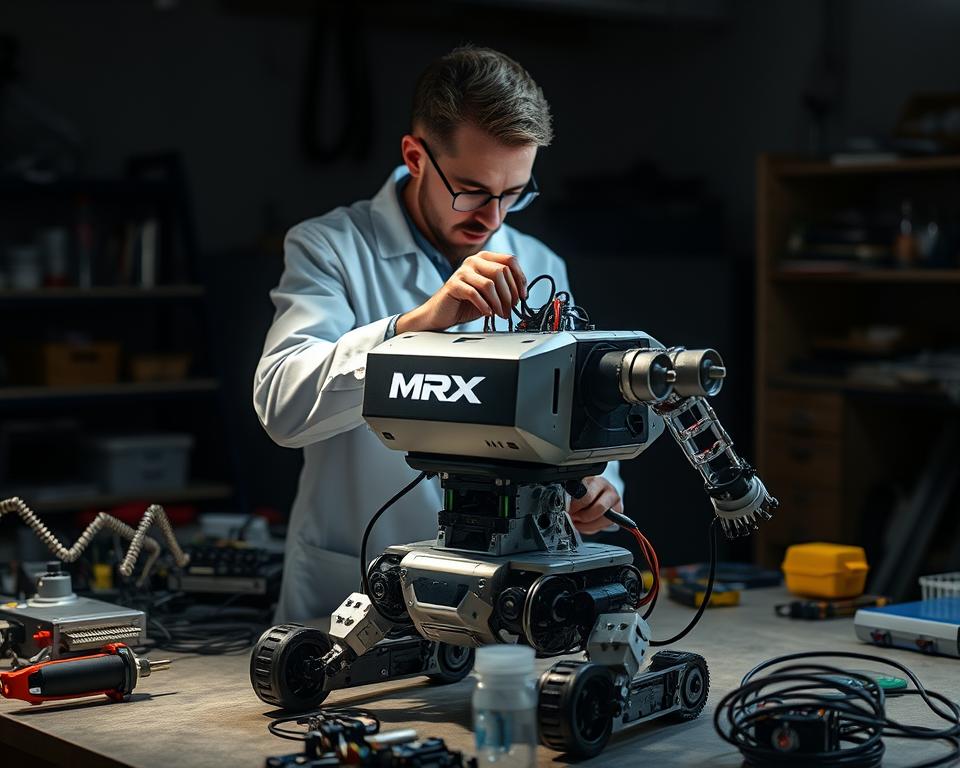
Can we make innovative technology real without a plan? Advanced prototyping is key in robotics. It lets engineers, designers, and inventors turn their ideas into tangible realities.
This tutorial will show you how to make a robot prototype that works. You’ll learn how it helps in innovation and development. By the end, you’ll know how to make a functional prototype in practice.
Key Takeaways
- Understanding the importance of advanced prototyping in robotics
- Learning the steps involved in creating a functional prototype
- Gaining insights into the role of innovative technology in robotics development
- Discovering practical applications of robot prototyping
- Developing skills to transform ideas into tangible realities
Understanding the Basics of Robot Prototyping
Robot prototyping is key for robotics innovators. It’s a crucial step in making robots. Engineers test and refine their designs before mass production.
What is a Robot Prototype?
A robot prototype is an early version of a robot. It tests the robot’s function, performance, and if it’s possible. It lets engineers see problems and fix them before the final product.
Key characteristics of a robot prototype include:
- Functional representation of the robot’s design
- Testability of the robot’s performance and capabilities
- Flexibility for making design adjustments
Importance of Prototyping in Robotics
Prototyping is vital in robotics. It checks design assumptions and tests functions. It finds problems early, which is crucial for advanced robotics.
“Prototyping is an essential step in the development of robotic systems, enabling the transformation of conceptual designs into tangible, testable products.”
Common Applications of Robot Prototypes
Robot prototypes are used in many areas like healthcare, manufacturing, and transportation. They are very useful for solving different problems in the real world.
| Industry | Application | Benefits |
|---|---|---|
| Healthcare | Surgical robots, patient care robots | Enhanced precision, improved patient outcomes |
| Manufacturing | Assembly robots, inspection robots | Increased efficiency, reduced labor costs |
| Transportation | Autonomous vehicles | Improved safety, enhanced mobility |
In conclusion, knowing about robot prototyping is essential for engineering design in robotics. Understanding prototypes helps innovators make robots better.
Essential Components of a Robot Prototype
To make a working robot prototype, you need to pick the right parts. The quality and fit of these parts greatly affect the robot’s performance.
Sensors and Actuators
Sensors and actuators are key for a robot to interact with its world. Sensors help the robot see its surroundings. Actuators let it move and act. For example, ultrasonic sensors detect obstacles, and servo motors help with precise movements.
The right sensors and actuators depend on the robot’s task. A navigation robot might use GPS and lidar sensors. A robotic arm could have force sensors and servo motors.
Microcontrollers and Processors
The brain of a robot is its microcontroller or processor. They handle sensor info and send commands to actuators. Arduino boards and Raspberry Pi processors are popular choices.
When picking a microcontroller or processor, think about its power, memory, and compatibility. A strong processor is key for complex tasks and algorithms in automated systems.
Power Supply Options
A good power supply is crucial for a robot’s steady operation. You can choose from batteries, solar panels, or wall adapters. The best option depends on the robot’s use and mobility needs.
- Batteries are portable but need careful consideration of power and rechargeability.
- Solar panels are great for outdoor or long-term use.
- Wall adapters work well for stationary robots or those with a steady power source.
Structural Materials
The materials used in a robot’s build affect its strength and durability. Metals, plastics, and composites are common choices. Each has its own benefits, like strength, durability, and weight.
| Material | Advantages | Disadvantages |
|---|---|---|
| Aluminum | Lightweight, corrosion-resistant | Can be expensive, prone to scratches |
| ABS Plastic | Impact-resistant, easy to make | May deform in high temperatures |
| Carbon Fiber | Strong and light | Expensive, hard to work with |
By choosing and combining these key components, developers can build strong and efficient robot prototypes. These robots meet specific needs in automated systems and robotic development.
Designing Your Robot Prototype
Designing a robot prototype is a detailed process. It mixes creativity with technical skills. This stage is key because it sets the stage for the robot’s success.
Conceptualizing the Design
The first step is to think about what the robot will do. You need to know where it will work and what tasks it will handle. AI integration and machine learning algorithms can boost its abilities.
For example, if it’s for navigation, adding sensors and mapping tech is important. Think about power, durability, and how users will interact with it too.
Using CAD Software
Computer-Aided Design (CAD) software is essential for robot making. It lets designers create detailed models and test them before building. Tools like SketchUp, SolidWorks, and Fusion 360 help design parts, like limbs, for specific servos.
CAD software makes designing easier, cuts down on waste, and lets you create complex shapes.
Prototyping Best Practices
There are key steps for a good robot prototype design. These include:
- Improving the design based on feedback and tests.
- Using modular designs for easy updates.
- Making sure the design can grow and adapt.
- Adding safety features for the robot and users.
Following these tips and using CAD software helps designers make strong, smart, and useful robot prototypes.
Developing the Control System
Creating a sophisticated control system is crucial for your robot prototype. It’s the robot’s backbone, making it efficient and effective.
Introduction to Robot Operating Systems
A Robot Operating System (ROS) is a flexible framework for robot applications. It’s popular because of its capabilities and code sharing ease.
Key Features of ROS:
- Modularity: It lets you build complex robot behaviors with various components.
- Package Management: It makes installing, updating, and managing software packages easy.
- Hardware Abstraction: It abstracts the robot’s hardware from the application code.
Programming Languages for Robotics
Many programming languages are used in robotics, each with its own strengths. The choice depends on the project’s needs.
Popular Programming Languages:
- Python: Simple and versatile, Python is great for sensor data processing and algorithm development.
- C++: It offers high performance and control, ideal for tasks needing efficient processing and real-time responses.
Software Tools for Control Development
Many software tools help develop control systems for robot prototypes. They make development easier and improve robot performance.
ProtoPie Connect can send signals from a game controller to Arduino. This shows how different systems can work together for complex control. Such integration is key for next-gen robotics, enabling advanced robot behaviors.
During prototype testing, these tools are essential for debugging and refining the control system. They ensure the robot works as planned.
Building the Physical Model
The physical model of a robot prototype is its backbone. It needs a thoughtful approach to its construction. This stage is crucial as it turns the conceptual design into a real form that can be tested and refined.
Choosing the Right Materials
Choosing the right materials for your robot prototype is key. It affects its durability, functionality, and performance. Metals like aluminum and steel, plastics such as ABS and polycarbonate, and composites are common choices.
Material Properties:
| Material | Strength | Weight | Cost |
|---|---|---|---|
| Aluminum | High | Low | Moderate |
| ABS Plastic | Medium | Low | Low |
| Carbon Fiber | Very High | Very Low | High |
Assembly Techniques
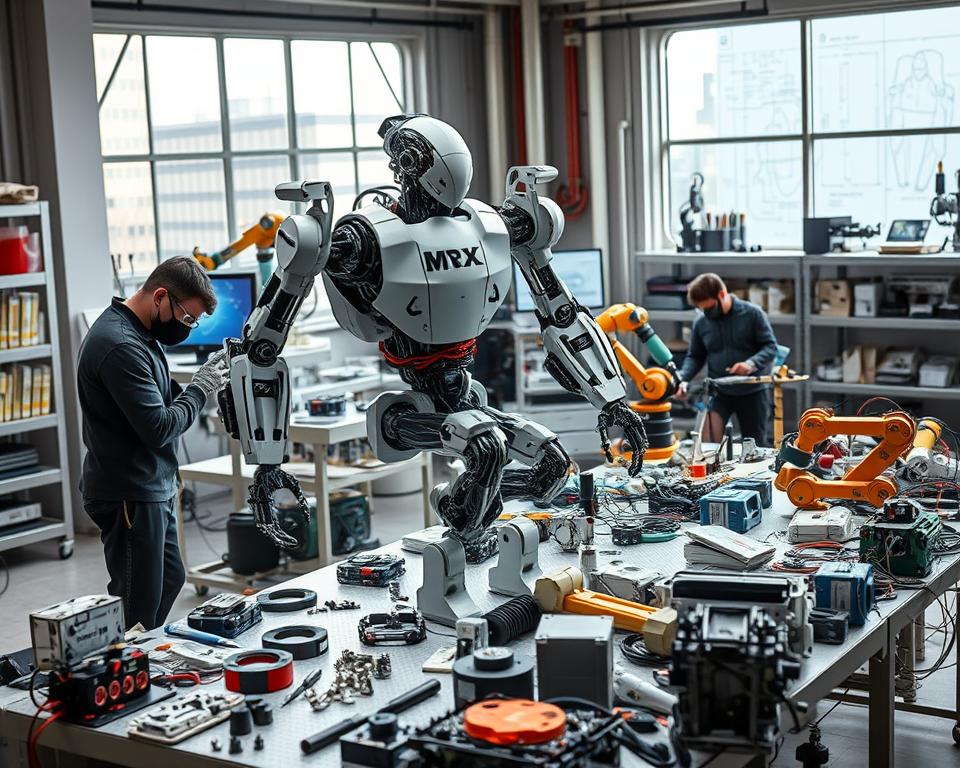
Assembling the robot prototype involves combining mechanical parts, sensors, and electrical systems. Techniques like welding, bolting, and adhesive bonding are used. The choice depends on the materials and needed structural integrity.
For example, robot arm parts can be assembled by following the instructions they came with. This ensures a precise and secure connection.
Electrical Wiring and Connections
Proper electrical wiring and connections are crucial for the robot’s reliable operation. This means choosing the right gauge wires, using the right connectors, and ensuring connections are secure and insulated to prevent short circuits.
Best Practices:
- Use color-coded wires for easier identification.
- Secure wires to prevent damage from moving parts.
- Test all connections before powering the system.
By carefully building the physical model of your robot prototype, you set the stage for successful testing and iteration. This leads to a refined and functional robotic system.
Testing Your Robot Prototype
Before a robot prototype is ready, it must go through detailed testing. This step is key to finding and fixing any problems. It makes sure the robot works as planned and meets all the design and performance standards.
Testing is more than just checking if the robot works. It’s about seeing how it handles different situations, interacts with its surroundings, and adapts to surprises.
Importance of Testing
Testing a robot prototype is very important. It helps find any design or component issues that could cause problems or safety risks. By using innovative technology in testing, developers can test the robot in real-world-like scenarios. This reduces the chance of failures later on.
Also, thorough testing makes the robot more reliable and efficient. It ensures the robot meets all the engineering design standards.
Robotics expert Rodney Brooks says, “The real test of a robot is not how well it performs in a controlled environment, but how it copes with the unpredictability of the real world.” This shows why detailed testing is crucial for robots to work well in real life.
Different Testing Methods
There are many testing methods in robotics, each with its own purpose. These include:
- Simulation testing, where the robot’s operations are simulated in a virtual environment.
- Functional testing, which checks if the robot can do its intended tasks.
- Stress testing, designed to test the robot’s limits, checking its durability and performance under extreme conditions.
By using these methods together, developers can fully test their robot prototypes. This makes sure the robots are strong, efficient, and reliable.
Debugging Common Issues
During testing, many problems can come up, like software bugs or hardware failures. Fixing these problems needs a careful plan. First, find the problem, then figure out why it’s happening, and fix it.
For example, if a robot doesn’t respond to commands, it might be a communication problem or a faulty sensor. By testing each part and using diagnostic tools, developers can fix these issues. This improves the robot’s performance.
Let’s say a robot is tested by sending it a message to move a certain distance, like “base, value:45.” If it doesn’t move correctly, the problem might be with the command processing or the actuator. By carefully debugging, the cause can be found and fixed.
Iterating on Your Design
Improving a robot prototype is a cycle of feedback, adjustment, and keeping records. This cycle is key in robotic development. It helps make automated systems better and more functional.
Gathering Feedback
Getting feedback is a big part of improving your robot. You test it in different situations to find what needs work. You can get feedback from users, simulations, or performance data. This helps you know what to fix in your design.
To get good feedback, try these methods:
- Do thorough user testing to see how your robot works in real life.
- Use simulation tools to test your robot in different scenarios.
- Watch performance metrics to find trends that show where to improve.
Making Necessary Adjustments
After you’ve gathered and looked at feedback, it’s time to make changes. You might need to change the design, tweak settings, or update parts. The goal is to fix problems and make your automated system better.
When adjusting, remember these tips:
- Focus on the most important changes first.
- Test each change separately to avoid new problems.
- Keep a record of every change for later use.
Documenting Changes for Future Reference
Keeping records of changes is important but often forgotten. It helps you keep track of your robotic development progress. By documenting every change, you can see how your design has grown and make better choices later.
Good documentation should have:
- Clear descriptions of the changes.
- Why you made each change.
- What happened after you tested the changes.
By following this cycle, you can make your robot prototype better. This helps improve automated systems and robotic development overall.
Advanced Features in Robot Prototyping
Adding the latest tech to robot prototypes is key to their success. Robotics keeps getting better, and adding smart features is crucial. This makes prototypes work better and more efficiently.
Incorporating AI and Machine Learning
One big step forward is adding AI integration and machine learning algorithms. These help robots learn, adapt, and do complex tasks better.
For example, ProtoPie lets developers make digital interfaces for robot arms. It helps them understand signals from game controllers and Arduino boards. This makes the robot more interactive and easier to control.
Integrating IoT Capabilities
Adding IoT capabilities to robot prototypes is also popular. It lets robots connect to the internet. This way, developers can monitor and control them remotely, making them more useful.
IoT helps collect and analyze data in real-time. This lets developers improve their prototypes based on how they perform. It makes the robots more efficient and reliable.
Enhancing User Interactions
Making robot prototypes easy to use is vital. By creating simple and intuitive interfaces, developers can reach more people. This makes the prototypes more accessible.
Advanced tools help create interfaces that are both functional and user-friendly. They can respond to voice commands, gestures, or other inputs. This makes the user experience smooth and enjoyable.
Funding and Resources for Robotic Prototypes
Creating a robotic prototype is a big challenge, including finding the money needed. As robotics gets better, creators look for different ways to fund their work.
ProtoPie leads in advanced prototyping. It helps developers make complex robotic prototypes.
Where to Find Grants and Sponsorships
Grants and sponsorships are key for robotics projects. Government agencies, private foundations, and companies offer money for new robotics ideas.
- Government Grants: The National Science Foundation (NSF) gives grants for robotics research and development.
- Private Foundations: Groups focused on tech often fund robotics projects.
- Corporate Sponsors: Companies interested in robotics might sponsor projects that fit their goals.
Crowdfunding Options for Innovators
Crowdfunding is a big hit for funding robotic prototypes. Sites like Kickstarter and Indiegogo let creators share their projects and get support.
| Crowdfunding Platform | Features | Fees |
|---|---|---|
| Kickstarter | All-or-nothing funding, project showcase | 5% of raised funds |
| Indiegogo | Flexible funding options, global reach | 4% of raised funds |
Networking with Industry Professionals
Networking is key for getting resources for robotic prototypes. Conferences, workshops, and online forums are great for meeting people who can help.
Going to robotics conferences is very helpful. It’s a chance to show off prototypes and get feedback from experts.
By using these funding and resource chances, robotics creators can speed up their prototype work. They can make their ideas real.
Compliance and Safety Standards
In the world of robot prototyping, following safety and compliance standards is key. This ensures both the robot’s function and the safety of users. As technology advances, sticking to these standards becomes even more critical.
Understanding Regulatory Requirements
Robot prototypes must meet many regulatory requirements. These rules change based on the robot’s use and where it’s used. For example, robots for healthcare must follow strict FDA rules in the U.S.
Key regulatory considerations include:
- Electrical safety standards
- Electromagnetic compatibility (EMC)
- Mechanical safety standards
Safety Protocols for Prototype Testing
Testing robot prototypes needs strict safety rules to avoid accidents and ensure they work well. This means spotting dangers, adding safety features, and training staff on what to do in emergencies.
Effective safety protocols include:
- Conducting thorough risk assessments
- Using personal protective equipment (PPE)
- Implementing fail-safes and emergency stops
Ensuring User Safety
User safety is a big deal in robot prototype development. Designers must think about how users will interact with the robot. They need to add features that lower the risk of injury or harm.
Strategies for ensuring user safety include:
- Designing intuitive user interfaces
- Incorporating safety sensors and collision detection
- Providing clear user manuals and safety guidelines

Showcasing Your Robot Prototype
Showcasing a robot prototype is more than just showing it off. It’s about sharing a story of innovation and engineering design.
When you present your robot, you aim to grab the attention of your audience. This could be investors, users, or peers in the industry. A good presentation can make your robot’s unique features stand out, making it more relatable and engaging.
Creating a Compelling Presentation
To make a strong presentation, first figure out what you want to say. This could be about the robot’s function, its uses, or the problems it solves. Use simple language and avoid jargon that might confuse people.
Visual aids are key in a presentation. Use high-quality images, videos, or live demos to show what your robot can do. Experts say, “Visual content can really help people understand and get excited about what you’re showing.”
“The way you present your robot prototype can be just as important as the technology itself.”
Utilizing Demonstrations Effectively
Demos are a great way to show off your robot’s abilities. They let people see it in action. Make sure your demo is smooth and shows off the robot’s best features.
Think about where you’ll be presenting. Make sure the place is good for a demo, with enough room and no distractions. As shown in the image below, using a camera feed can make your presentation better.
Engaging with Potential Investors
Talking to investors needs a smart plan. Be ready to discuss the tech, market chances, competition, and money plans.
Showing off your robot is about more than the tech. It’s about sharing a vision for the future. By clearly sharing your ideas and showing what your robot can do, you can win the support and funding you need to make your project real.
Community and Support Networks
The journey of robotic development gets better with community help. Talking to others with similar interests can offer great insights and ideas. It’s a chance to get tips and solve problems together.
Online forums and groups are key to connecting with the robotics community. Here, developers can share knowledge, ask questions, and work on projects together. For example, Sphero’s community is active and helps with their robotic tools.
Joining Robotics Forums and Groups
Online forums are full of useful information for robotic developers. By joining these forums, you can learn a lot and get ideas for projects. There are forums for specific programming languages or robotic platforms.
As Benjamin Franklin said, “An investment in knowledge pays the best interest.” Being part of these communities helps you grow your knowledge and stay up-to-date with robotics.
“The robotics community is a vibrant and diverse group of individuals who are passionate about creating innovative automated systems.” –
Attending Workshops and Conferences
Workshops and conferences give you hands-on experience and a chance to meet others in the field. These events are great for learning about new robotics and meeting people to work with or learn from.
- Workshops provide practical experience with new technologies and techniques.
- Conferences offer a platform to present your work and receive feedback.
- Networking opportunities can lead to collaborations and new project ideas.
Utilizing Online Learning Platforms
Online learning platforms are essential for robotic developers to improve their skills. They offer courses on many topics, from programming to robotic systems.
| Platform | Course Offerings | Level |
|---|---|---|
| Udemy | Robotics, Programming | Beginner to Advanced |
| Coursera | Robotics, AI, Machine Learning | Beginner to Advanced |
| edX | Robotics, Automation | Beginner to Advanced |
By using these community resources, robotic developers can improve their projects and keep up with new technology in automated systems.
Future Trends in Robot Prototyping
Robot prototyping is on the verge of a big change. New technologies and creative designs are leading the way. These advancements will change how we see robotics.
Emerging Technologies in Robotics
Robotics is getting better with AI integration and machine learning algorithms. These tools help robots learn and adapt. They can now do complex tasks with more accuracy.
Machine learning algorithms are key. They help robots get better over time. This makes them more useful in many areas.
Impact of Automation on Industries
Automation, thanks to robot prototyping, is changing many industries. Robots are taking over repetitive tasks. This boosts productivity and safety.
Robots are also helping create new products and services. Things we couldn’t do before are now possible.
Predictions for the Future of Robot Prototypes
The future of robot prototypes looks bright. We’ll see more advanced robots soon. They will interact better with their surroundings and people.
As AI integration grows, robots will make their own decisions. They’ll learn from their experiences and data.
Trying new things and learning from failures is key. It’s part of our nature. Embracing this will drive innovation in robot prototyping.
Case Studies of Successful Robotic Prototypes
Robotic prototypes have made big strides in healthcare, manufacturing, and education. They show the power of robotics and help solve real problems. This has led to new ways to improve our world.
Innovative Prototypes in Healthcare
Healthcare has seen a big change with robotic prototypes. For example, robotic surgery systems are now used. They are very precise and help patients heal faster.
Key Features of Healthcare Robots:
- Enhanced precision in surgical procedures
- Ability to perform complex tasks with minimal human intervention
- Improved patient outcomes due to reduced recovery times
Robots are also helping in physical therapy. They assist patients in getting back their strength and mobility.
Robotics in Manufacturing
Manufacturing has been greatly impacted by robotic prototypes. These robots help with tasks like assembly and quality control. This makes work more efficient and cuts costs.
| Application | Benefits |
|---|---|
| Assembly Line Automation | Increased efficiency, reduced labor costs |
| Quality Control | Improved accuracy, reduced defect rates |
Robots also make workplaces safer by doing dangerous tasks.
Educational Robotics Success Stories
Educational robotics is another area where robots make a big difference. They teach programming, engineering, and problem-solving in classrooms.
Benefits of Educational Robotics:
- Enhanced engagement among students
- Development of critical thinking and problem-solving skills
- Introduction to STEM education at an early age
These robots are interactive and educational. They give students real experience in robotics and programming.
The success of robotic prototypes in healthcare, manufacturing, and education shows their huge potential. As technology gets better, we’ll see even more amazing uses of robots in the future.
Maintaining Your Robot Prototype
Keeping your robot prototype in good shape is key to its long life and top performance. A well-kept prototype works better and lasts longer. This is very important in advanced robotics, where things are very complex.
Regular Maintenance Practices
Regular care helps prevent damage to your robot prototype. This includes cleaning sensors, updating software, and keeping mechanical parts lubricated. A regular maintenance plan helps spot and fix problems early.
For example, always level the build platform before printing. This simple step can greatly improve your prototype’s performance.
Upgrading Components for Longevity
Upgrading parts is a smart way to make your robot prototype last longer. You might replace old sensors with new ones or boost the processing power for more complex tasks. Keeping up with new tech makes your prototype stay efficient and useful.
The table below shows some parts that might need an upgrade and why:
| Component | Upgrade Benefit |
|---|---|
| Sensors | Improved accuracy and faster data processing |
| Processors | Enhanced computational capabilities |
| Power Supply | Increased efficiency and reliability |
Troubleshooting Common Problems
Even with regular care, problems can still happen with your robot prototype. Issues like faulty wiring, software bugs, and mechanical failures can occur. A good troubleshooting plan helps solve these problems fast.
If your robot prototype won’t work, first check the power supply and make sure all connections are tight. If it still doesn’t work, look at the user manual or reach out to the manufacturer’s support team for help.
Conclusion: Your Journey in Robotics Begins
When you finish your robot arm prototype, you’ve made a big leap into robotics. This shows your skills and opens new doors in robotics.
Aspiring Innovators
Starting out might feel tough, but every robotics success story began with a prototype. It’s important to face challenges and learn from mistakes in engineering design.
Next Steps
After making your prototype, you’ll need to improve it based on feedback and tests. Think about adding AI and IoT to make your robot even better.
Continuous Learning
Robotics keeps changing with new tech coming out all the time. It’s key to keep up with the latest to do well in this field.
We can’t wait to see what you’ll make next in robotics. Your journey is just starting, and the future is full of possibilities.
FAQ
What is the primary purpose of creating a robot prototype?
The main goal of making a robot prototype is to check if it works well before making many. It helps find and fix any problems early on.
What are the essential components required for building a robot prototype?
To build a robot prototype, you need sensors, actuators, and microcontrollers. Also, power supply options and materials are key for a robot to work well.
How do I choose the right materials for my robot prototype?
Picking the right materials means thinking about durability, weight, cost, and what the robot will do. You want materials that fit the robot’s needs and work well.
What is the role of AI and machine learning in robot prototyping?
AI and machine learning help make robots smarter. They let robots learn and adapt, making them better at interacting with their surroundings.
How can I secure funding for my robot prototype project?
You can get funding through grants, crowdfunding, or by networking with experts. These ways can help you get the money you need to finish your project.
What safety protocols should I follow when testing my robot prototype?
Always wear safety gear and check the wiring when testing your robot. Also, have a plan for stopping the robot quickly if something goes wrong.
How can I effectively showcase my robot prototype to potential investors?
To impress investors, make a strong presentation and show off your robot’s best features. Use clear demonstrations to highlight what makes your robot special.
What are the future trends in robot prototyping?
New trends include using AI, IoT, and advanced materials. These will make robots smarter and more capable in the future.
How can I maintain and upgrade my robot prototype over time?
Keep your robot in good shape by doing regular checks and updates. Fixing problems and upgrading parts helps your robot stay reliable and efficient.
What resources are available for learning more about robot prototyping and robotics?
You can learn a lot online, join robotics groups, or attend workshops and conferences. These places are great for sharing knowledge and growing your skills.
What is the importance of compliance with regulatory requirements in robot prototyping?
Following rules is key to make sure your robot is safe and works right. It helps avoid risks and keeps you out of trouble.
How can I incorporate advanced features such as IoT capabilities into my robot prototype?
To add IoT features, pick the right hardware and software. Plan the system’s design and set up communication protocols for smooth interaction with other devices.