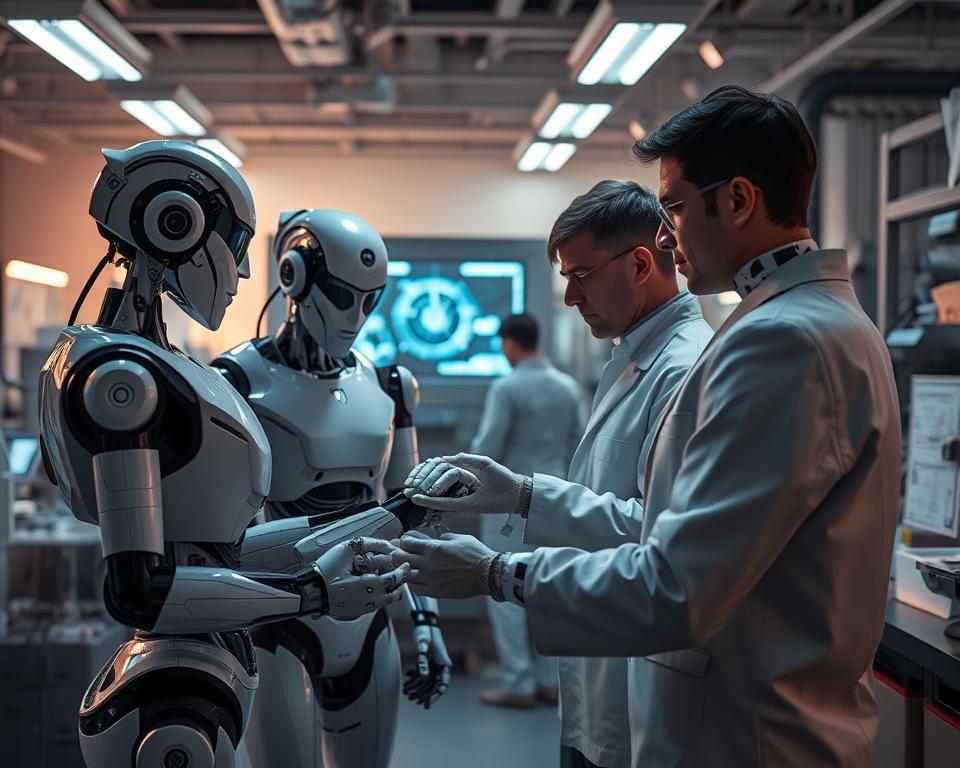
Can machines and humans work together well? As more industries like manufacturing and healthcare use human-robot interaction, this question matters a lot.
The use of artificial intelligence in robotics has made teamwork between humans and robots better. This helps businesses work more efficiently, productively, and safely.
When we look at advanced human-robot teamwork, it’s key to know the best ways to work together.
Key Takeaways
- Understanding the importance of human-robot collaboration in various industries.
- Exploring the role of artificial intelligence in enhancing robotics.
- Identifying techniques to improve human-robot teamwork.
- Recognizing the benefits of effective human-robot collaboration.
- Learning how to implement advanced techniques in human-robot interaction.
Understanding Human-Robot Collaboration
As technology gets better, working with robots is key for doing tasks well. Human-robot collaboration means humans and robots team up in the same space to reach goals together.
This teamwork uses the best of both worlds. Humans solve problems and think creatively. Robots are precise and can work for a long time.
Definition and Importance
Human-robot collaboration is when humans and robots work together, using their unique skills. It’s vital because it automates tasks that are boring or risky. This lets humans do more creative and complex work.
This teamwork makes workplaces safer, products better, and work more efficient. Humans and robots together can do things that are hard or impossible for one to do alone.
Key Benefits of Collaboration
Working together brings many benefits. It makes work more productive, safer, and flexible. By mixing human smarts with robot precision, businesses can do tasks better and faster.
| Benefit | Description |
|---|---|
| Improved Productivity | Humans and robots work together to complete tasks more efficiently. |
| Enhanced Safety | Robots can handle dangerous tasks, reducing the risk to human workers. |
| Increased Flexibility | Collaborative robots can be easily reprogrammed for different tasks. |
Understanding how humans and robots work together helps businesses use new robotics technology. This can lead to innovation and success.
Technological Foundations of Advanced Robots
At the core of next-generation robots are advanced technologies like AI, sensor systems, and software. These tools help robots see their surroundings, make choices, and work with humans better.
AI and Machine Learning in Robotics
Artificial intelligence (AI) and machine learning are key to making robots smarter. AI algorithms help robots handle lots of data, learn from their experiences, and adjust to new situations. Machine learning lets robots get better over time by learning and improving their actions.
The use of deep learning techniques has pushed the field forward. Now, robots can do complex tasks like recognizing objects, understanding speech, and predicting maintenance needs. These skills are vital for robots to work well with humans in changing environments.
Sensor Technology and Communication
Sensor technology is crucial for robots to sense their surroundings. Advanced sensors let robots collect data on things like temperature, pressure, and where they are in space.
Good communication between robots and humans is key. It lets them share information in real-time for smooth teamwork. Wireless communication protocols and sensor fusion techniques help make this possible.
The Role of Robotics Software
Robotics software is essential for advanced robots to work. It tells robots what to do, how to interact with their environment, and how to work with humans. Robot Operating System (ROS) is a popular choice for building robotic apps because it’s flexible and modular.
Creating easy-to-use software interfaces is also important. These interfaces make it simple for humans to control and check on robots. This helps in creating a better working relationship between humans and robots.
Designing Robots for Teamwork
Robots made for teamwork need to work well with humans. They must use advanced technology and understand how humans and robots interact. Robots should be designed to fit well with humans, be good at specific tasks, and easy to use.
Ergonomic and Functional Design Principles
Robots for teamwork should be both ergonomic and functional. Ergonomic design makes robots safe and comfortable for humans. This means they have smooth edges and are easy to work with.
Functional design makes robots good at their jobs. They should be able to reach, be precise, and adapt to different tasks.
Experts say a well-designed robot can make human-robot teams more productive.
“The future of manufacturing lies in the collaboration between humans and robots, where each complements the other’s strengths.”
Customization for Specific Tasks
Customizing robots for specific tasks is crucial. It makes teams more efficient and accurate. For example, in manufacturing, robots can do assembly, welding, or inspection. This lets humans focus on more complex tasks.
- Task-specific customization enhances productivity.
- Robots can be adapted for various industries, from healthcare to manufacturing.
- Advanced robotics technology enables more precise and efficient task execution.
User-Friendly Interfaces
A good interface is key for humans and robots to work well together. Interfaces should be easy to use. This means they should be simple to program, give feedback, and clearly show what the robot is doing.
User-friendly interfaces are very important. As humans and robots work together more, interfaces need to be easy for everyone to use. By focusing on user-friendly design, developers can make robots that are both effective and easy to use.
Enhancing Communication between Humans and Robots
Robots are becoming more common in many fields. It’s important to make sure humans and robots can talk well together. This helps them work together smoothly and get the most out of robotic help.
Natural Language Processing Applications
Natural Language Processing (NLP) helps robots understand and talk back to humans. NLP applications let robots get voice commands and chat a bit. This is great when you don’t need to use your hands.
Thanks to NLP, robots can now do things just by listening to what you say. For example, in factories, workers can tell robots what to do with their voice. This makes things faster and cuts down on manual work.
Visual Communication Techniques
Robots also use pictures and lights to talk to us. They might show a screen to tell us what they’re doing. Or use lights to show their status.
Robots can even use body language to seem more natural. This makes it easier for us to understand what they want or need.
Feedback Mechanisms
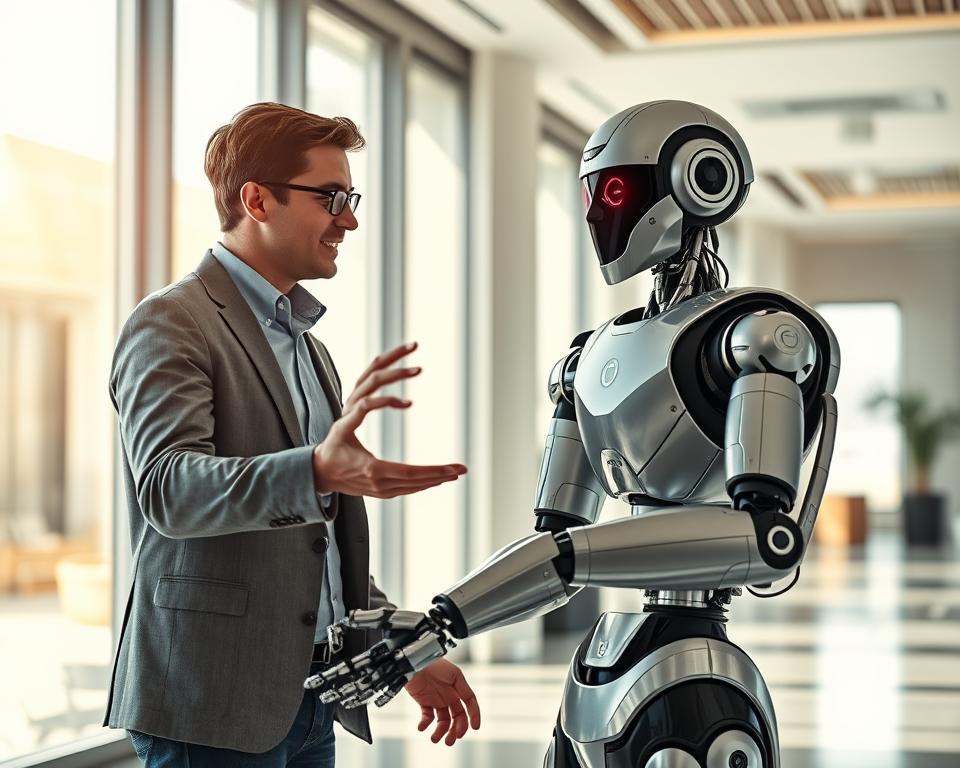
It’s key for humans and robots to talk back and forth. Feedback can be through touch, voice, or sight. This lets robots change what they’re doing based on what we say.
Robots can also tell us things through sound or light. This helps keep things running smoothly and fixes problems fast.
| Communication Method | Description | Benefits |
|---|---|---|
| Natural Language Processing | Enables robots to understand and respond to voice commands | Hands-free operation, improved efficiency |
| Visual Communication | Uses visual cues like LED indicators or display screens | Intuitive interaction, clear status updates |
| Feedback Mechanisms | Allows for two-way communication between humans and robots | Improved task execution, prompt issue resolution |
Training Programs for Effective Collaboration
Success in human-robot collaboration depends on good training programs. These programs teach users how to work well with robots. This makes the work environment better and more productive.
User Training Importance
Training is key for users to know what robots can and can’t do. It builds trust and confidence in the technology. This leads to better teamwork. Also, it makes the workplace safer by reducing accidents and mistakes.
Key benefits of user training include:
- Enhanced understanding of robot capabilities
- Improved trust and confidence in robot technology
- Reduced risk of accidents and errors
- Better adaptation to new technologies
Types of Training Sessions
There are different training sessions for various needs. These include:
- Hands-on training where users work directly with robots
- Theoretical training that explains how robots work
- Simulation training that simulates real-world situations
Each type of training has its own benefits and can be customized for specific needs.
Evaluation of Training Effectiveness
It’s important to check if training is working as planned. This can be done by:
- Getting feedback from users through forms and surveys
- Tracking how well users perform
- Regular checks to see what needs to get better
Keeping training programs up to date is crucial for successful human-robot collaboration.
Safety Considerations in Human-Robot Teams
Advanced robotics technology is changing how we work. It’s important to understand and reduce risks in human-robot teams. Robots are becoming more common in many industries, so making sure they work safely with humans is key.
Understanding Risks and Mitigations
Robots in the workplace bring new safety challenges. Risks include accidents, injuries from robot failures, and health problems from working with robots.
To lower these risks, strong safety measures are needed. Robots should have safety features like collision detection and emergency stops. Regular checks and maintenance of robots are also crucial to avoid problems.
Key Safety Measures:
- Implementing collision detection systems
- Conducting regular maintenance and inspections
- Training personnel on robotic safety protocols
Safety Standards and Regulations
Following safety standards and regulations is vital for safe human-robot teams. Groups like the International Organization for Standardization (ISO) offer guidelines for robot safety.
“The development and implementation of safety standards for robots and robotic systems are essential for minimizing risks and ensuring a safe working environment.” – ISO
Following these standards means knowing and applying safety rules for robots. This includes design, making, and using robots.
| Safety Standard | Description | Application |
|---|---|---|
| ISO 10218 | Safety requirements for industrial robots | Manufacturing and operation of industrial robots |
| ISO/TS 15066 | Technical specification for collaborative robots | Design and operation of collaborative robots |
Creating a Safe Work Environment
More than just rules and protocols are needed for a safe work environment. It’s about building a culture of safety. This includes ongoing training and awareness.
Employers should offer regular training on safety, emergency response, and using robots correctly. This helps everyone stay safe around robots.
Best Practices for a Safe Work Environment:
- Regular safety training for all personnel
- Clear signage and warnings around robotic areas
- Continuous monitoring and improvement of safety protocols
Real-World Applications of Advanced Human-Robot Teams
Human-robot interaction is becoming more common. It’s changing manufacturing, healthcare, and more. This teamwork boosts productivity, safety, and opens new doors in many fields.
Manufacturing and Assembly Lines
In manufacturing, teams of humans and robots are changing the game. Robots take on precise, repetitive tasks. Humans focus on complex decisions and quality checks. This combo has made production faster and better.
- Increased Productivity: Robots work non-stop with humans, boosting output.
- Improved Safety: Robots tackle risky jobs, keeping humans safe.
- Flexibility: These teams quickly adjust to production changes.
Healthcare and Robotics Assistance
In healthcare, robots aid in surgeries, patient care, and rehab. They bring precision and consistency, key in medical work. This teamwork is bettering patient results and care quality.
- Robots aid in minimally invasive surgeries, cutting down recovery times.
- Robotic helpers support patient mobility and rehab, speeding up recovery.
- Robots also handle disinfection and cleaning, keeping areas sterile.
Exploration and Disaster Response
In exploration and disaster response, human-robot teams are crucial. Robots reach areas humans can’t, offering vital info and aid.
- Search and Rescue: Robots with sensors and cameras find survivors in disasters.
- Environmental Monitoring: Robots check environmental conditions in remote or risky spots.
- Disaster Recovery: Robots help clean up and recover after disasters.
The uses of human-robot teams are endless and expanding with tech progress. By tapping into these partnerships, we can see big gains in many sectors.
Ethical Implications of Human-Robot Collaboration
Robots are taking on more roles, raising questions about jobs and ethics. As we move towards more human-robot teamwork, we must think about the ethics involved.
Addressing Concerns on Job Replacement
One big worry is robots replacing jobs. But, some say robots can help humans do more, creating new jobs we can’t predict yet.
To fight job loss, we need education and training. This should get workers ready to work with robots.
Regulations and Guidelines
We need clear rules for safe and fair human-robot teamwork. These rules should cover safety, privacy, and who’s to blame if something goes wrong.
- Setting standards for robot design and function
- Defining roles and responsibilities in teams
- Ensuring AI decisions are clear
Regulators and industry must work together. They should make rules that encourage innovation but also protect workers.
Promoting Responsible Use of Technology
Using robotics wisely is crucial. It’s not just about following rules but also about using robots ethically.
Companies should think about how their tech affects society. They should aim to improve life without causing harm.
By focusing on ethics in robotics, we can make work safer, more efficient, and fairer for everyone.
Case Studies of Successful Human-Robot Teams
Robotic automation has greatly improved human work in many fields. It has made things more efficient, productive, and safe.
Examples from Different Industries
Many industries have seen big wins with human-robot teams. In manufacturing, robots help humans make things faster and better. For example, BMW and Tesla use robots to make cars more precisely and quickly.
In healthcare, robots help with surgeries and care, making medical services better. The da Vinci Surgical System is a great example. It makes surgeries more precise and less invasive.
“The future of healthcare is not just about treating patients, it’s about enhancing the human experience through technology.” –
Analysis of Results and Improvements
Human-robot teams have brought big wins in many areas. Here’s a look at how they’ve improved things:
| Industry | Improvement in Efficiency | Enhancement in Safety |
|---|---|---|
| Manufacturing | 30% | 25% |
| Healthcare | 20% | 40% |
| Logistics | 25% | 30% |
Lessons Learned from Failed Collaborations
Not all human-robot teams work out. But studying these failures helps us learn and do better. For example, a failed team in a factory showed that bad training and poor communication were big problems.
By learning from these failures, we can make human-robot teams more successful in the future.
The Future of Human-Robot Interaction
The next decade will see a big change in how humans and robots work together. This change will come from new technology and people getting used to robots. It’s important to know how humans and robots will team up in the future.
Predictions for Technological Advancements
New tech will be key in changing human-robot interaction. Artificial intelligence (AI) and machine learning (ML) will make robots smarter and more able to understand humans.
Some big tech changes include:
- Improved sensors for better seeing the world
- Advanced ways for robots to talk to humans
- Smart learning for robots to adapt
The Role of Cultural Acceptance
How society views robots is also very important. As robots become more common, people’s feelings about them will change. This will affect how well humans and robots work together.
Things that shape how people feel about robots include:
| Cultural Factor | Impact on Human-Robot Interaction |
|---|---|
| Trust in Technology | More trust means more acceptance and teamwork |
| Societal Norms | How society sees robots affects how they are used |
| Education and Awareness | Teaching people about robots helps them accept them |
Potential Industry Transformations
Robots could change many industries in the future. From making things to helping in healthcare, robots will change work in many ways.
Some big changes could be:
- Manufacturing: Robots helping with making things
- Healthcare: Robots helping in surgeries and caring for patients
- Transportation: Self-driving cars changing how we get around
As we look ahead, we must think about the big changes robots will bring. We need to make sure robots are developed and used in ways that meet society’s needs and values.
Strategies for Continuous Improvement
To get the most out of human-robot teamwork, companies need to always look for ways to get better. They should check and tweak their teamwork often. This keeps it working well and smoothly.
Implementing Feedback Loops
Setting up feedback loops is key to getting better. Asking team members for their thoughts helps spot where things can be improved. This makes teamwork better and encourages everyone to keep learning.
Key parts of good feedback loops are:
- Regular feedback meetings
- Clear ways to report problems
- Steps to change things based on feedback
Leveraging Data for Performance Enhancement
Data is very important for better teamwork between humans and robots. Using data analysis helps find and fix problems. This way, companies can make smart choices and keep getting better.
| Data Type | Application | Benefit |
|---|---|---|
| Performance Metrics | Watching how well things work | Finds where to get better |
| Error Logs | Looking at why things go wrong | Makes things safer and more reliable |
| User Feedback | Learning what users like | Makes things easier to use |
Encouraging Innovation in Workflows
It’s important to keep things fresh in human-robot teamwork. Companies should make it easy for people to share new ideas. This can lead to big improvements in how they work together.
Here’s how to encourage new ideas:
- Give training and tools for solving problems creatively
- Give credit and rewards for new ideas
- Bring together different teams to share views
Building Trust Between Humans and Robots
As humans and robots work together, trust is key. It helps them achieve their goals. Trust is crucial for effective teamwork.
Importance of Trust in Team Dynamics
Trust makes human-robot teams better. When humans trust robots, they do their jobs well. This leads to more work done and better results.
Trust also makes the workplace better. It lowers stress and anxiety when working with robots.
The significance of trust is seen in many areas. It helps with task sharing, making decisions, and talking to each other. Trust lets teams work well together, even when things change.
Techniques for Building Trust
There are ways to build trust between humans and robots. These include:
- Clear communication about what the robot can and can’t do
- Robots that always do their job well
- Easy-to-use interfaces for talking to robots
- Ways for humans to give feedback on how well the robot is doing
Transparency is very important. It helps humans understand how the robot makes decisions. This builds trust in what the robot does.
Measuring Trust in Human-Robot Teams
Measuring trust in teams involves looking at several things. These include how happy users are, how much they rely on robots, and how well the team does. Surveys, interviews, and watching how teams work are common ways to check trust levels.
Understanding trust helps organizations improve teamwork. This leads to better results and more efficiency.
Conclusion: Advancing Human-Robot Collaboration
The potential of human-robot collaboration is huge and diverse. It touches many industries and uses. Advanced robots are making work safer, more efficient, and productive.
The future of robots working with humans looks bright. Next-generation robots will be smarter and more able to work together. This will come from better AI, machine learning, and sensors. Robots will then understand and meet human needs better.
Key Takeaways and Future Directions
For robots and humans to work well together, we need trust and clear communication. We should work on making robots that fit into different work places easily. This will help them work better with people.
By improving how robots and humans work together, we open up new chances for growth and innovation. It’s important to keep making robots that help people and make work safer and more efficient.
FAQ
What is human-robot collaboration?
Human-robot collaboration is when humans and robots work together. They do this to make tasks more efficient and safe in many fields.
How do advanced robots perceive their environment?
Advanced robots use sensors like cameras and lidar to understand their surroundings. This helps them make smart decisions and work well with humans.
What design principles are essential for robots intended for teamwork?
Robots made for teamwork need to be easy to use and fit specific tasks. They should also have designs that are both ergonomic and functional.
How can communication between humans and robots be enhanced?
Better communication can be achieved through natural language and visual methods. Feedback is also key to effective teamwork.
Why is training important for human-robot collaboration?
Training is crucial for teamwork success. It helps users know how to work safely and efficiently with robots.
What safety considerations are crucial in human-robot teams?
Safety in teams is about knowing risks and using strategies to avoid them. Following safety rules and creating a safe space are also important.
Can you provide examples of real-world applications of human-robot collaboration?
Human-robot teams are used in many areas. For example, in manufacturing, healthcare, and disaster response. They help with tasks like assembly, patient care, and search and rescue.
What are the ethical implications of human-robot collaboration?
Ethical issues include worries about job loss and the need for rules. It’s important to use technology responsibly to benefit society.
How can trust be built between humans and robots?
Trust comes from clear communication, reliable performance, and easy-to-use interfaces. These are key for good teamwork.
What is the future of human-robot interaction?
The future looks bright with more tech advancements and cultural acceptance. This will lead to more complex and widespread teamwork.
How can organizations foster a culture of continuous improvement in human-robot collaboration?
Organizations can improve by using feedback and data. They should also encourage new ideas in workflows. This leads to better teamwork.