The robotics world is on the verge of a big change. Humanoid robots are becoming more common in many fields.
These advanced machines can do tasks that need human-like movement and interaction. They are great for jobs like assembly, checking things, and moving materials.
As more people want automation, learning to make lifelike robots is key. This guide will show you how. We’ll cover what humanoid robots are, their types, and where they’re used.
Key Takeaways
- Understanding the definition and characteristics of humanoid robots
- Exploring the various types and applications of humanoid robots
- Learning about the key components and design considerations
- Discovering the historical context and future trends in robotics
- Gaining insights into the process of making human-like robots
Understanding Human-Like Robots
Technology is getting better, and human-like robots are becoming more common. These robots, also called androids or synthetic humans, look and act like people. They are great for jobs that need human interaction.
Definition and Characteristics
Humanoid robots look like people, with a head, body, arms, and legs. They can move around like us and use tools. This makes them useful for many tasks.
These robots have special sensors and motors. They can move like people and react to their surroundings. They also learn from their experiences, thanks to artificial intelligence.
Types of Human-Like Robots
There are many kinds of human-like robots, each for different jobs. Some help with daily tasks like cleaning or cooking. Others work in factories, doing precise jobs.
Robots can be controlled by people or work on their own. This depends on how much they can do by themselves.
Applications of Human-Like Robots
Human-like robots are used in many ways. In healthcare, they help with patient care and surgery. In schools, they make learning fun and interactive.
In factories, they do jobs that are dangerous or hard for people. They can handle materials safely and work in tough places. They are also good at using human tools and equipment.
Historical Context of Robotics
Understanding the history of robotics is key to seeing how far we’ve come. Robotics has evolved slowly, with big steps and new ideas along the way.
Early Developments in Robotics
Robots have been in our dreams and stories for ages. But the real start of robotics happened in the 20th century.
In the 1960s, the first industrial robots came out. They were mechanical arms that could do certain jobs. This changed how things were made.
Key Early Developments:
- Introduction of the first industrial robot, Unimate, in 1961
- Development of robotic arms with enhanced precision and control
- Integration of sensors and actuators to improve robotic functionality
Milestones in Human-Like Robot Technology
Robots that look and act like humans have made big strides. One early example is Walt Disney’s Audio-Animatronics from the 1960s. They were used in theme parks.
“The future of robotics is not just about creating machines that can perform tasks, but about creating beings that can interact and connect with humans on a deeper level.” –
Recently, robots like Sophia and Atlas have been developed. They have advanced AI and can act like humans.
| Year | Milestone | Description |
|---|---|---|
| 1961 | Unimate | First industrial robot introduced |
| 2000s | Humanoid Robots | Development of robots with human-like features and capabilities |
| 2010s | Advanced AI Integration | Integration of AI for enhanced robotic functionality and interaction |
The need for robots that look and act like humans is growing. The market for humanoid robots is expected to hit $66 billion by 2032. This growth is thanks to better AI and robotics, and our need for robots that can interact with us naturally.
Key Components of Human-Like Robots
Humanoid robots are complex systems. They need a mix of mechanical parts, sensors, and smart control systems. These humanoid machines use advanced tech to move and act like humans.
To make smart AI companions, we must understand and combine their main parts. These parts help the robot do tasks that humans do.
Mechanical Structure
The mechanical structure is the robot’s body. It supports its parts and helps it move. It’s made from materials like aluminum or advanced polymers.
A good mechanical structure is key for the robot’s flexibility and precision. Robots for service or companionship need to move easily in human spaces.
| Material | Properties | Applications |
|---|---|---|
| Aluminum | Lightweight, corrosion-resistant | Frames, limbs |
| Advanced Polymers | High strength-to-weight ratio, durable | Body panels, joints |
| Steel | High strength, rigid | Structural components |
Sensors and Actuators
Sensors and actuators are key for humanoid robots. Sensors help them see and understand their world. Actuators let them move and act.
Tactile sensors let a humanoid robot feel and react to touch. This makes it more interactive as an AI companion. Advanced actuators help the robot do precise tasks.
AI and Control Systems
The AI and control systems are the robot’s brain. They let it process info, make choices, and follow commands. Advanced AI lets these robots learn and adapt.
As AI companions, humanoid robots can do many tasks. They can interact simply or solve complex problems. Smart control systems ensure they work well and safely.
By combining mechanical parts, sensors, actuators, and AI, developers make humanoid robots. These robots are not just functional but can also behave like humans.
Designing the Human-Like Robot
Creating a human-like robot needs a mix of design, comfort, and tech. We aim to make robots that look and move like us. They should also interact with us naturally and easily.
When making lifelike robots, looks and function are key. Dr. Hiroshi Ishiguro, a top robotics expert, says, “The design of a humanoid robot should be based on a deep understanding of human behavior and psychology.”
“The design of a humanoid robot should be based on a deep understanding of human behavior and psychology.” – Dr. Hiroshi Ishiguro
Considerations for Appearance
The look of a human-like robot matters a lot. A robot that looks like us can feel familiar and comforting. But, it might also raise wrong hopes about what it can do.
Designers must find the right balance. A robot for customer service might look more human to help with talking. But, a robot for work might focus more on being useful than looking human.
Ergonomic Design Principles
Ergonomics is key in making robotic humans safe and useful. It means designing the robot to fit well with human spaces and jobs.
- Anthropomorphic design: Designing the robot to have a human-like structure and proportions.
- Comfortable interaction: Ensuring that the robot’s movements and presence do not cause discomfort or anxiety.
- Functional adaptability: Allowing the robot to adapt to various tasks and environments.
By using ergonomic design, we can make robots that look good and work well in real life.
Materials Used in Robot Construction
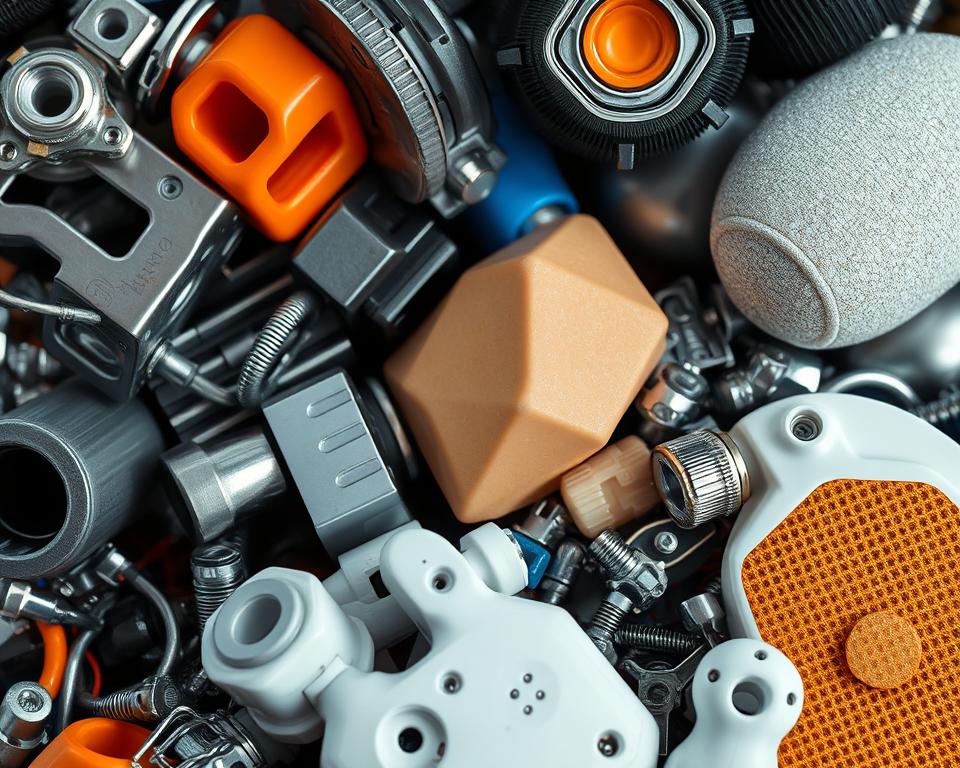
Building humanoid robots, also known as androids or synthetic humans, needs the right materials. The materials chosen affect the robot’s look, how well it works, and how long it lasts.
Common Materials and Their Properties
Humanoid robots are made from different materials, each with its own benefits. Lightweight metals like aluminum and titanium are used for the body. They are strong but light, which helps the robot move easily.
Carbon fiber is also popular. It’s strong, stiff, and doesn’t get tired easily. This makes it perfect for parts that need to last a long time and be light. Plus, it can be shaped in many ways, allowing for creative designs.
Plastics and polymers are used for parts that need to bend or absorb shocks. These materials can be made to have different hardness levels. This makes them good for many uses.
Innovations in Robotic Materials
The world of robotics is always changing, with new materials and tech being discovered. One big area is advanced composites. These are made by mixing different materials to get even better ones. For example, mixing carbon fiber with polymers makes something strong yet light.
Another big step is smart materials. These change their properties when they sense something around them. This lets robots adapt to new situations or even fix themselves.
As new materials and tech come along, humanoid robots will get even better. They will be more advanced, able to do more, and last longer.
Developing Artificial Intelligence
Human-like robots need artificial intelligence to understand and react to us. Creating AI companions that act like humans is key. This requires advanced AI systems.
Building these robots involves several important parts. Machine learning is a big one. It lets robots learn from their experiences and get better over time.
Machine Learning in Robotics
Machine learning is a part of AI that trains algorithms on data. This helps robots make choices and predictions. In robotics, it boosts the robot’s ability to understand and act on its surroundings.
For example, a robot with machine learning can learn to see and react to facial expressions. This makes it better at interacting with us naturally.
Natural Language Processing for Interaction
Natural language processing (NLP) is also crucial for AI in robots. NLP lets robots understand and create human-like language. This makes talking to robots more effective.
With NLP, robots can have conversations, follow commands, and even show personality. This makes them more relatable and artificial beings.
The mix of machine learning and NLP is changing robotics. It’s making robots more advanced and interactive. As AI gets better, we’ll see even more lifelike robots in the future.
Programming Human-Like Behaviors
To make robots more relatable, we need to program them to move and react like humans. This means creating smart algorithms for them to interact naturally with us.
Developers work on two key areas: making robots move like humans and showing emotions. Scripting realistic movements means creating detailed plans for robots to do tasks like us.
Scripting Realistic Movements
Making robots look and move like humans is key. This is done with advanced planning that considers the robot’s design and the task at hand.
For example, a healthcare robot might be programmed to move gently. An industrial robot might be fast and precise.
| Movement Type | Description | Application |
|---|---|---|
| Gait Movement | Mimics human walking | Service Robots |
| Manipulator Movement | Precise arm and hand movements | Industrial Robots |
| Facial Expressions | Mimics human emotions | Social Robots |
Programming Emotional Responses
Programming robots to show emotions is also vital. It makes them more engaging and interactive for us.
This is done with AI that lets robots understand and react to our feelings. For instance, a robot might look sympathetic if it sees we’re upset.
By combining these two, developers can make lifelike robots that interact with us in a more natural and fun way.
Safety Considerations in Human-Like Robots
Human-like robots, also known as robotic humans or synthetic humans, bring unique safety challenges. It’s important to ensure their safety. This involves ethical thinking and following safety rules to avoid accidents and misuse.
The creation and use of human-like robots raise big ethical questions. For example, their use in healthcare, education, and personal help needs careful thought. We must think about how they interact with us.
Ethical Implications
Creating and using human-like robots raises many ethical issues. One big worry is that people might see them as having feelings or consciousness. This could make people feel attached or dependent on them. There’s also a chance these robots could be used to trick or deceive people, either on purpose or by accident.
To lessen these risks, developers need to follow strict ethical rules. They should make sure these robots are clear about being artificial. Also, they should program them to not harm or upset humans.
Safety Standards and Compliance
Following safety standards is key when making human-like robots. This means following current robotics rules and making new ones for these robots. It’s about making sure they are safe and work right.
| Safety Aspect | Description | Compliance Measure |
|---|---|---|
| Physical Safety | Prevention of physical harm to humans through collisions or other interactions. | Implementation of collision detection and avoidance algorithms. |
| Data Security | Protection of user data and prevention of unauthorized access. | Use of encryption and secure data storage practices. |
| Operational Safety | Ensuring robots operate as intended without malfunctioning. | Regular software updates and maintenance checks. |
By focusing on safety and ethics, developers can make human-like robots that are useful and safe. They can be responsible and reliable.
Testing and Iteration Process
Human-like robots, or androids, need a detailed testing and iteration process. This is key to making them work well and safely. It ensures they can do their tasks efficiently.
Prototype Testing
Prototype testing is a vital step in making humanoid robots. It involves making a working prototype and testing it under different conditions. Rigorous testing finds problems and areas for betterment.
Developers check the robot’s mechanical parts, sensor accuracy, and AI. For example, a robot for service tasks might be tested in crowded areas or for precision tasks.
User Feedback and Improvements
User feedback is crucial in the iteration process. It helps developers see how the robot works in real life. This feedback is key for making changes and enhancements.
For instance, if users say a robot has trouble with commands or fails in certain situations, this info can improve the robot’s AI. It makes the robot work better overall.
“The true test of a robot’s capabilities lies not just in its initial performance but in how it adapts to user needs over time.”
Improving the robot involves looking at user feedback and making changes. This might mean tweaking the robot’s design, improving sensors, or updating AI software.
| Iteration Phase | Focus Area | Improvement Actions |
|---|---|---|
| Prototype Testing | Mechanical Structure and Sensor Accuracy | Refine design, Enhance sensor precision |
| User Feedback | AI Decision-Making and Task Performance | Update AI algorithms, Improve task execution |
| Iteration Cycle | Overall Performance and User Experience | Integrate user feedback, Refine robot capabilities |
Through testing and iteration, developers make robots that are not just functional but also easy to use. This cycle is vital for robotics progress. It helps in making robots that can interact well with humans.
Human-Robot Interaction
Human-robot interaction is key to making robots fit well in our world. For AI companions and humanoid machines to work well, they need to talk and act like us.
Designing Intuitive Interfaces
Creating easy-to-use interfaces is very important. This means making systems that get and act on what we say and do. Advanced sensors and AI algorithms help robots understand us better.
Being able to talk in natural language is a big plus. Robots that can chat with us make things easier and more fun.
| Interface Type | Description | Benefits |
|---|---|---|
| Voice Command | Allows users to control robots with voice instructions. | Hands-free operation, ease of use. |
| Gesture Recognition | Enables robots to understand human gestures. | Intuitive interaction, enhanced user experience. |
| Facial Expression Analysis | Allows robots to interpret human emotions. | Emotional intelligence, empathetic interaction. |
Social Acceptance and Human Interaction
Robots need to be seen as friendly and helpful to be accepted. They must interact with us in a way that feels natural and safe.
Designing robots to look and act like us can help. Social robots that can really talk to us can build trust and acceptance.
Cost Analysis of Building Human-Like Robots
Creating human-like robots is a costly endeavor that demands careful financial planning. The expenses involved in developing lifelike robots or robotic humans can be substantial. They include a wide range of components, labor, and development costs.
The financial investment required to build these advanced robots includes several key areas. The cost of components such as advanced sensors, high-precision actuators, and sophisticated control systems can be significant. For instance, high-quality actuators that mimic human-like movements can be very expensive.
Budgeting for Components
When budgeting for components, it’s essential to consider the quality and functionality required for the robot’s intended application. For example, robots designed for research purposes may require more advanced and expensive components compared to those intended for simpler tasks.
A detailed breakdown of component costs might include:
- Advanced sensors: $5,000 – $10,000
- High-precision actuators: $8,000 – $15,000
- Sophisticated control systems: $3,000 – $6,000
The total cost for components alone can range from $16,000 to $31,000 or more, depending on the specifications and requirements of the lifelike robot.
Labor and Development Costs
Labor and development costs are another significant aspect of the overall expense. Developing robotic humans requires a team of skilled engineers, researchers, and programmers. The cost of labor can vary widely based on location, expertise, and the complexity of the project.
Development costs also include the expenses associated with software development, testing, and iteration. This can involve significant investment in AI and machine learning technologies to achieve the desired level of human-like behavior and interaction.
A rough estimate for labor and development costs can range from $50,000 to $200,000 or more, depending on the project’s scope and complexity.
In conclusion, building human-like robots involves a substantial financial investment. By carefully budgeting for components and managing labor and development costs, developers can better navigate the challenges of creating advanced lifelike robots and robotic humans.
Future Trends in Human-Like Robotics
The future of humanoid robots is on the verge of a big change. This change comes from better AI and automation. Human-like robots will soon be more important in many areas of our lives.
Advancements in AI and Automation are leading this change. AI is getting smarter, letting robots learn and act like humans. Automation is also getting better, making things more precise and efficient.
Advancements in AI and Automation
AI and automation are making humanoid robots much better. For example, machine learning algorithms help robots get better over time. Experts say, “The future of robotics is about machines that can learn and adapt.”
“The future of robotics lies in the ability of machines to learn and adapt, making them more versatile and capable.”
Some big improvements include:
- Improved machine learning
- Better natural language processing
- More precise movements
Potential Market Growth
The market for humanoid robots is set to grow a lot. As the tech gets better, more industries will use them. This includes healthcare, manufacturing, and services.
The market will grow as robots become more useful and affordable. What’s driving this growth includes:
| Driver | Description | Impact |
|---|---|---|
| Technological Advancements | Improvements in AI, automation, and robotics | Increased efficiency and capability |
| Cost Reduction | Decreasing costs of production and maintenance | Increased adoption across industries |
| Social Acceptance | Growing acceptance of robots in daily life | Expanded market reach |
As the field keeps evolving, we’ll see new uses for humanoid robots. They will change industries and how we work and live.
Case Studies of Successful Human-Like Robots
Looking at the making of successful human-like robots helps us understand the field better. We learn about the challenges and opportunities. The journey of creating androids and synthetic humans gives us insights into their uses and the lessons learned.
Notable Examples in Industry
Humanoid robots have made a big splash in different industries. Robots like Sophia and Atlas lead in innovation. They show off their skills in talking and moving around.
In healthcare, robots are making a big difference. They help with patient care, rehab, and even surgery. This improves the care given to patients.
Lessons Learned from Development Processes
Creating successful human-like robots is tough. It involves designing easy-to-use interfaces and thinking about safety and ethics. A big lesson is the need for robust testing and iteration to make the robot better.
Another key point is using advanced AI and machine learning. This makes robots understand and respond to human emotions and needs better. It leads to more advanced robots.
| Robot Model | Industry Application | Key Features |
|---|---|---|
| Sophia | Customer Service | Advanced facial recognition, conversational AI |
| Atlas | Search and Rescue | Enhanced mobility, terrain adaptation |
| Robear | Healthcare | Patient care, lifting assistance |
The stories of these robots show their wide range of uses. They also show the field’s potential for growth. By learning from their successes and challenges, we can guide the future of robotics.
Education and Resources for Aspiring Robot Developers
To make humanoid robots, you need to know a lot about robotics, AI, and machine learning. There are many ways to learn these things.
There are courses and certifications for those who want to get into robotics and AI. They cover the basics and more advanced topics.
Relevant Courses and Certifications
Many schools offer special courses in robotics and AI. For example, online platforms like Coursera and edX have lots of courses from top universities.
- Coursera’s Robotics Specialization
- edX’s Artificial Intelligence (AI) course
- Certified Robotics Engineer programs
These courses teach you everything from the basics of robotics to advanced AI. They help you get ready for the tough tasks of making AI companions and humanoid machines.
Online Communities and Forums
It’s important to join online communities to keep up with new things and meet other developers.
Some great forums are:
- Reddit’s r/robotics and r/MachineLearning communities
- Stack Overflow for programming questions
- Robotics Stack Exchange for robotics talks
These places are full of useful info, from solving problems to sharing tips on making humanoid robots.
By using these learning tools and joining the robotics community, you can improve your skills. This way, you can help grow the field of humanoid robotics.
Conclusion: The Future of Human-Like Robots
The world of human like robots is changing fast. Advances in AI, materials, and design are leading the way. This guide has shown us how to make robots that look and act like us. It covers everything from history to safety standards.
Key Developments
Humanoid robots are getting better, thanks to new tech. Improvements in AI, natural language, and design are making them smarter and more lifelike. These advancements will change many areas of our lives.
Future Vision
Human like robots will soon be part of our everyday lives. They will make a big difference in healthcare, education, and customer service. They could even become our friends, thanks to ongoing research and development.
FAQ
What are human-like robots, and how do they differ from other types of robots?
Human-like robots, also known as androids or humanoid robots, look and act like humans. They are different from other robots because they can mimic human appearance and movements. This makes them great for tasks that need human interaction.
What are the key components required to build a human-like robot?
To build a human-like robot, you need a few key parts. These include a mechanical body, sensors, actuators, and AI systems. Together, they help the robot move and act like a person.
How do you program human-like behaviors in robots?
To program robots to act like humans, you use special techniques. Machine learning and natural language processing help robots talk and move like people. This makes them easier to work with.
What safety considerations should be taken into account when developing human-like robots?
Safety is very important when making human-like robots. You must follow ethical rules and safety standards. This ensures the robots are used responsibly and safely.
How do human-like robots interact with humans, and what factors influence their social acceptance?
Human-like robots talk and move like people through special interfaces. How well they are accepted depends on their looks, actions, and how they understand and show emotions. It also depends on what people think is right in their culture and society.
What are the costs involved in building human-like robots, and how can they be managed?
Making human-like robots can be expensive. Costs include parts, labor, and development. To manage these costs, you can plan your budget carefully. You can also look for ways to save money, like using open-source software or working with others.
What are the future trends in human-like robotics, and how will they impact various industries?
The future of human-like robots looks exciting. Advances in AI and automation will lead to more robots in healthcare, education, and entertainment. These changes will make robots more useful and change how we use technology.
What are some notable examples of successful human-like robots, and what lessons can be learned from their development?
Robots from companies like Honda and Boston Dynamics are great examples. They show the importance of good design and testing. They also highlight the need to focus on what users want.
What educational resources are available for aspiring robot developers who want to build human-like robots?
There are many resources for those who want to make human-like robots. You can find courses, certifications, and online communities. These help you learn about robotics, AI, and programming, and offer chances to meet others.
How do synthetic humans or artificial beings differ from human-like robots?
Synthetic humans or artificial beings can mean digital or virtual humans. But human-like robots are physical machines that look and act like humans.
What role do lifelike robots play in enhancing human-robot interaction?
Lifelike robots make it easier for humans to work with them. Their human-like looks and actions make interactions more natural and comfortable.