Can coding and robotics really shape a child’s future? In today’s world, introducing STEM toys and educational robotics to kids is more than a trend. It’s a way to boost creativity, improve problem-solving, and spark interest in science, technology, engineering, and mathematics.
By using hands-on robotics kits, kids can learn important skills for their future. This guide helps parents and teachers understand how to use robotics to encourage learning and creativity.
Key Takeaways
- Understanding the benefits of educational robotics for kids.
- Exploring hands-on robotics kits for coding and creativity.
- Identifying the best STEM toys for enhancing problem-solving skills.
- Learning how to integrate robotics into a child’s learning curriculum.
- Discovering the potential of robotics to foster creativity and innovation.
Introduction to Robotics for Kids
Introducing kids to robotics early can boost their problem-solving and critical thinking skills. As robotics changes our world, it helps kids understand technology and science better.
Robotics education is key in today’s tech world. Through hands-on robotics, kids learn vital skills for life.
Why Robotics Matters in Education
Robotics is vital in education because it combines science, technology, engineering, and math (STEM). This mix helps kids see the big picture of these subjects.
- Improves problem-solving through real-world use
- Boosts creativity and innovation
- Sharpens critical thinking and analysis
Robotics in education prepares kids for a future where tech and automation are crucial. It gives them an edge in the job market.
The Benefits of Learning Robotics Early
Learning robotics early offers many benefits for kids. It sharpens their technical skills and soft skills like teamwork and communication.
- Readies kids for a tech-driven future
- Sparks interest in STEM fields
- Sharpens problem-solving and critical thinking
Robotics classes for children offer a place for kids to learn and grow. These classes are fun and challenging, boosting kids’ confidence.
As kids advance in robotics, they can join robotics competitions. This helps them improve their skills and learn from others.
Understanding the Basics of Robotics
Robotics is about making machines that can do things on their own. They use sensors, actuators, and control systems. It’s a field that combines engineering, computer science, and math to make new ideas real.
What is Robotics?
Robotics is about designing, building, and running robots. It’s a field that needs knowledge of mechanical systems, electrical circuits, and programming. Educational robotics kits help kids learn these things in a fun way.
Kids who learn about robotics get better at solving problems and thinking critically. They also learn to be creative and work well with others. These skills help them in STEM careers and improve their thinking abilities.
Components of a Robot
A robot has several important parts:
- Sensors: These help the robot see and hear its surroundings.
- Actuators: These are the motors that let the robot move or act.
- Control Systems: This is the robot’s brain, which tells the actuators what to do.
- Power Supply: Robots need batteries to work.
Robotics kits for kids have these parts. They let kids build and program their own robots. This way, they learn about coding for kids and how robots work.
Different Types of Robotics Kits for Kids
Robotics kits for kids teach programming and engineering. They also boost creativity and problem-solving skills. These kits are made for different ages and skill levels, so every young enthusiast can find something they like.
Beginner-Friendly Robotics Kits
For younger kids or those new to robotics, beginner kits are great. These kits have visual programming interfaces. This makes it easy for kids to understand and create robotic projects.
- LEGO Mindstorms: A favorite among kids and teachers, LEGO Mindstorms combines building with programming.
- Makeblock mBot: This kit lets kids build and program robots with a simple, graphical interface.
- Dash and Dot: These robots are for younger kids. They teach programming through a fun interface.
Advanced Robotics Solutions
As kids get better at robotics, they can try more advanced kits. These kits have more complex programming and advanced robotics parts.
- VEX Robotics: Provides kits for advanced learners. They focus on metal construction and complex mechanisms.
- Arduino and Raspberry Pi: Not traditional kits, but widely used in advanced robotics. They teach about microcontrollers and single-board computers.
Online Resources and Courses
Adding online resources and courses to robotics kits can make learning better. These resources offer tutorials, project ideas, and communities for support.
- Code.org: Provides coding lessons, including robotics.
- Robotics Online Courses: Sites like Coursera, Udemy, and edX have robotics courses for kids.
- Forums and Communities: Places like Reddit’s r/robotics and robotics forums let kids share projects and learn from others.
Key Skills Developed Through Robotics
Robotics is a big part of education today. It offers a hands-on way to learn. This approach boosts coding skills, encourages solving problems, and promotes teamwork among kids.
Robotics activities teach kids many important skills. These skills are not just about technology. They also include soft skills that employers value a lot.
Coding and Programming Basics
One key skill learned through robotics is coding and programming. Kids learn to write code for robots. They understand programming languages and how to use them to solve problems.
Coding skills from robotics include knowing about variables, loops, and conditional statements. These are basic but crucial in today’s tech world.
Problem-Solving and Critical Thinking
Robotics education also boosts problem-solving and critical thinking. Kids face challenges while designing, building, and programming robots. They need to think creatively to solve these problems.
- Analyzing problems and identifying key issues
- Designing and testing solutions
- Iterating based on feedback and results
Teamwork and Collaboration
Many robotics projects require teamwork, promoting teamwork and collaboration. Kids learn to communicate well, share ideas, and work together towards a goal.
| Skill Developed | Description | Benefit |
|---|---|---|
| Coding and Programming | Understanding programming basics and applying them to robotics | Prepares kids for a tech-driven world |
| Problem-Solving | Analyzing challenges and designing solutions | Enhances critical thinking |
| Teamwork | Collaborating with others on robotics projects | Fosters communication and cooperation |
Robotics helps kids learn about technology and develop important skills. These skills, from coding and problem-solving to teamwork, are vital in today’s world.
Popular Robotics Platforms for Kids
Many robotics platforms are loved by kids and teachers for being easy to use. They offer lots of learning resources. These platforms teach coding and robotics, and also boost creativity and problem-solving skills.
LEGO Mindstorms
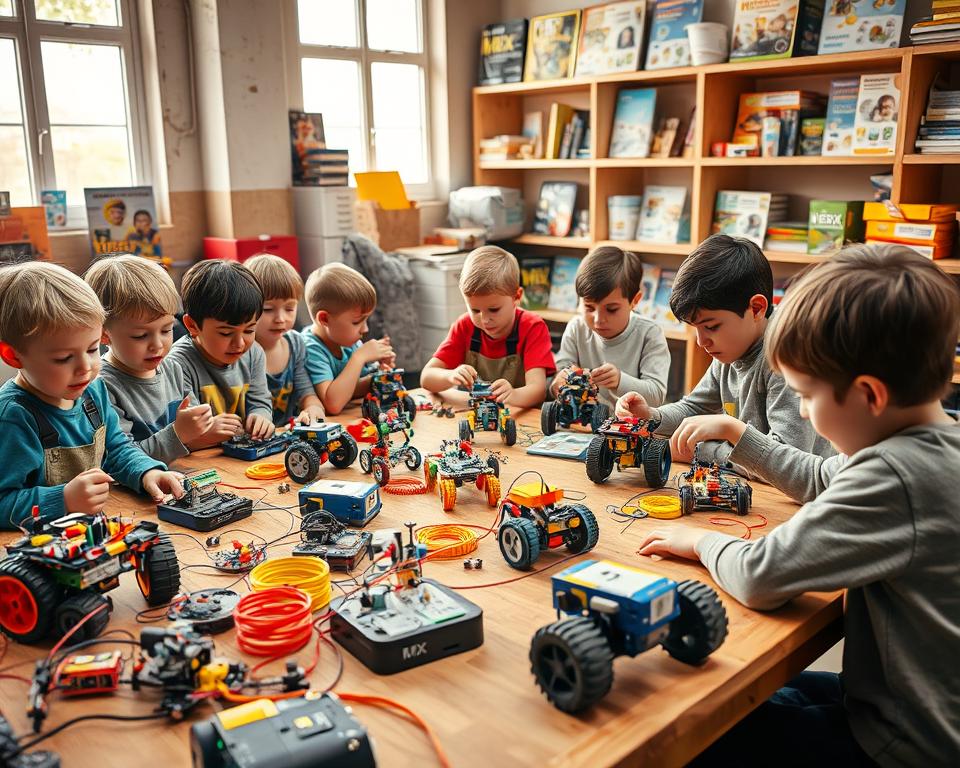
LEGO Mindstorms is a famous robotics kit that mixes LEGO bricks with tech. Kids can build and program their own robots. This promotes hands-on learning and creativity. LEGO Mindstorms kits are great for kids who love building and want to learn programming basics.
“LEGO Mindstorms has changed how kids learn robotics,” says an educational expert. “It’s a perfect mix of fun and learning.”
VEX Robotics
VEX Robotics has kits for all ages and skill levels. Their kits are tough and versatile, good for both newbies and experts. VEX Robotics kits promote teamwork and competition with various challenges.
Makeblock mBot
Makeblock mBot is a beginner-friendly robotics kit. It’s easy to put together and program, perfect for kids new to robotics. Makeblock mBot supports coding for kids with visual programming languages like Scratch.
These top robotics platforms are great for kids to learn and grow in robotics. By using these platforms, kids can improve their coding, problem-solving, and critical thinking skills.
Hands-On Robotics Projects for Kids
Robotics lets kids dive into science, technology, engineering, and math (STEM) in a fun way. Hands-on projects are key, helping kids use what they learn in real life.
Building Simple Robots
Starting with simple robots is a good first step. It teaches kids about robotics basics, like mechanical parts and how to put them together. Kids can use kits with motors, sensors, and controllers to build these robots.
Key components of simple robots include:
- Motors for movement
- Sensors for detecting the environment
- Controllers for programming the robot’s actions
Programming an Autonomous Robot
After getting the hang of simple robots, kids can try programming autonomous ones. They learn programming languages like Scratch or Python. This lets them control the robot’s actions.
The process of programming an autonomous robot teaches kids:
- Logical thinking and problem-solving
- Critical thinking and debugging
- Creativity in designing robot behaviors
Creating an Interactive Robot
Making an interactive robot is a bigger challenge. It involves designing robots that can talk back, touch, or react to other inputs. This project needs both hardware and software skills.
Through these projects, kids learn a lot about robotics and STEM. They also get better at creativity and solving problems. These projects prepare them for even more robotics challenges and competitions.
Important Robotics Competitions for Kids
The world of robotics competitions is exciting and challenging for kids. These events let young innovators show their skills, learn from others, and get inspired.
Robotics competitions are more than just winning. They help kids develop STEM skills, solve problems, and work together. Kids learn to design, build, and program robots, preparing them for tech and engineering careers.
FIRST Robotics Competition
The FIRST Robotics Competition is a top robotics event for kids. Teams must design, build, and program robots quickly, encouraging innovation and teamwork. They share ideas and learn from each other’s strengths and weaknesses.
“The FIRST Robotics Competition is not just about building robots; it’s about building a community of young innovators who are passionate about STEM education.” – Dean Kamen, Founder of FIRST
VEX Robotics Competition
The VEX Robotics Competition is another key event for kids. It lets teams design and build robots, test their programming, and compete. The focus is on solving problems, thinking strategically, and working together.
RoboCup Junior
RoboCup Junior is a global robotics competition for kids. It introduces them to robotics and AI. Teams design, build, and program robots to complete tasks, promoting creativity and teamwork. It’s a great way for kids to improve their STEM skills and confidence.
Here is a comparison of the three robotics competitions:
| Competition | Age Group | Focus |
|---|---|---|
| FIRST Robotics Competition | 14-18 years | Design, build, and program robots |
| VEX Robotics Competition | 12-18 years | Design, build, and program robots |
| RoboCup Junior | 8-19 years | Introduce kids to robotics and AI |
Robotics competitions can change a kid’s life. They help develop important skills, build confidence, and make friends with similar interests.
Integrating Robotics with Other Subjects
Robotics is more than just building machines. It’s a mix of science, math, and art that boosts creativity and innovation in kids. By combining robotics with other subjects, learning becomes more fun and complete.
Robotics and Science
Robotics and science go hand in hand. Students can learn about complex science topics by making robots. For example, building a robot to move on different surfaces teaches about friction and gravity.
Robotics kits like LEGO Mindstorms or VEX Robotics make science experiments fun. Students get to see scientific principles in action.
Robotics in Mathematics
Robotics and math are closely connected. Programming robots requires math skills like geometry and algebra. This makes math more practical and easier to understand.
For instance, figuring out a robot’s arm path involves geometry. Programming a robot to follow a path teaches about coordinates and graphing.
“The use of robotics in education can significantly enhance students’ understanding of mathematical concepts by providing a tangible and interactive learning experience.”
Art and Design in Robotics
Art and design are key in robotics. A robot’s look is as important as its function. This encourages creativity and innovation in kids.
Adding art to robotics projects teaches about design and user experience. Students can design robot looks, create interactive displays, or program LED lights for cool effects.
| Subject | Robotics Integration | Learning Outcomes |
|---|---|---|
| Science | Hands-on experiments with robotics kits | Understanding of scientific principles, enhanced curiosity |
| Mathematics | Practical application of mathematical theories | Improved understanding of geometry, algebra, and trigonometry |
| Art and Design | Designing robot aesthetics and interactive displays | Fostering creativity, understanding of design principles |
In conclusion, combining robotics with science, math, and art makes learning fun and complete. It boosts creativity, problem-solving, and critical thinking in kids.
Tips for Teaching Robotics at Home
Parents can help their kids get into robotics by making a supportive learning space at home. Teaching robotics needs creativity, patience, and the right tools.
Encouraging Creativity and Innovation
To boost creativity and innovation, give kids hands-on robotics experiences. Use robotics kits that let them build and program their own robots.
Key Strategies:
- Offer a range of robotics kits for different ages and skill levels.
- Encourage kids to try new things and learn from their mistakes.
- Do projects that mix robotics with science, math, and art.
Resources for Parents and Educators
There are many resources for teaching robotics at home. You can find online tutorials, robotics kits, and educational books.
| Resource Type | Description | Examples |
|---|---|---|
| Online Tutorials | Websites and platforms with step-by-step guides and courses on robotics. | Code.org, Robot Turtles |
| Robotics Kits | Kits with parts to build and program robots. | LEGO Mindstorms, Makeblock mBot |
| Educational Books | Books with theory and practical exercises on robotics. | “Robotics for Kids” by Dennis J. McBride |
With these resources and tips, parents and educators can make learning robotics fun and effective at home.
Future Trends in Robotics Education
Robotics education is on the verge of a new era. This is thanks to big steps in artificial intelligence and machine learning. It’s clear that robotics will become even more key in shaping education’s future.
The Rise of AI and Machine Learning
The mix of AI and machine learning in robotics education is changing how students learn and work with robots. These technologies make robots smarter, allowing them to do complex tasks and interact in ways we never thought possible.
Some big pluses of AI and machine learning in robotics education are:
- They boost problem-solving skills
- They make robots more independent
- They improve how humans and robots talk to each other
As AI keeps getting better, we’ll see robotics education become even more real and effective. It will get students ready for a world where AI and robotics are everywhere.
The Importance of Inclusivity in Robotics
Inclusivity is key in robotics education. It makes sure all students, no matter their background or abilities, can learn about robotics. This means creating inclusive curricula and offering resources for different learning needs.
Some ways to make robotics education more inclusive are:
- Creating easy-to-use robotics kits and software
- Encouraging diversity in robotics contests and programs
- Teaching educators how to teach inclusively
By focusing on inclusivity, we can make sure everyone gets to enjoy robotics education. This will help build a more diverse and fair community of young robotics fans.
Safety Considerations in Robotics
When kids start with robotics projects, knowing safety rules is key. These kits are not just fun but also teach important skills. They learn about coding, solving problems, and thinking critically. But safety always comes first.
Understanding the Risks
Working with robotics kits can be risky. There are sharp edges, electrical parts, and moving parts to watch out for. It’s important for kids and their parents to know these dangers to stay safe.
- Sharp edges and points on robotic parts
- Electrical components that can cause shock
- Moving parts that can pinch or crush
Safety Tips for Young Builders
To stay safe with robotics kits, follow these tips:
- Always read the manual before starting a project.
- Use protective gear like gloves and safety glasses.
- Work in a well-ventilated area, away from water.
- Follow the manufacturer’s guidelines for assembly and operation.
| Safety Consideration | Description | Precaution |
|---|---|---|
| Sharp Edges | Robotic parts can have sharp edges. | Handle with care, use gloves. |
| Electrical Components | Components can cause electrical shock. | Avoid touching electrical parts, ensure proper assembly. |
| Moving Parts | Robots have moving parts that can cause injury. | Keep fingers away, turn off when not in use. |
By knowing the risks and following safety rules, kids can have a great time with hands-on robotics projects and robotics kits. It helps them grow creatively and prepares them for a career in tech and engineering.
Recommended Books and Resources
Educational resources are key in a child’s robotics education. Parents and teachers can give kids a wide range of learning materials. This helps them learn a lot.
Educational Books on Robotics
Books are a great way to introduce kids to robotics. Here are some top picks:
- “Robotics for Kids” by Mark A. Chambers – A beginner’s guide to understanding robotics.
- “LEGO Robotics: Build and Program Your Own LEGO Robots” by Clive Maxfield – Perfect for kids who enjoy LEGO.
- “Robot Building for Beginners” by David H. Friedman – Ideal for young builders.
Online Tutorials and Courses
Online resources offer interactive learning for kids. Here are some top picks:
- Code.org – Offers free coding courses that can be applied to robotics.
- Robotics Online Courses by Coursera – Provides advanced robotics courses.
- Scratch Programming by MIT – A great platform for kids to learn programming basics.
By using these resources, kids can learn a lot about robotics. They can also develop coding and programming skills.
Crafting a Robotics Curriculum for Kids
To teach robotics to kids, educators must create a balanced curriculum. It should mix theory and practice. A good curriculum helps kids understand robotics deeply.
Essential Topics to Cover
A solid robotics curriculum includes coding, mechanical design, and electronics. Coding for kids is key, teaching languages like Scratch or Python. It also covers robotics basics, like sensors and control systems.
Adding topics for problem-solving and critical thinking is vital. Hands-on projects help kids design and build robots. This way, they apply what they learn to real problems.
Structuring Hands-On Activities
Hands-on activities are crucial in robotics education. They should get progressively harder, helping kids grow their skills. Early projects might use robotics kits, while later ones could involve programming.
It’s important to offer kids a variety of projects. These should mix different robotics aspects. Projects that link robotics with science, math, or art are great. They help kids see the big picture of STEM.
With a well-planned curriculum, educators can give kids a fun and educational experience. This prepares them for STEM careers in the future.
Success Stories: Kids Who Love Robotics
Inspiring stories of kids in robotics show the power of STEM education. These young innovators are not just building robots. They’re also learning coding, problem-solving, and teamwork. Through hands-on robotics projects, they apply theoretical concepts to real-world problems.
Inspiring Examples of Young Innovators
Many kids have excelled in robotics, creating innovative projects. For example, a 12-year-old made an autonomous robot with a LEGO Mindstorms kit. This shows her skills in programming and mechanical design. Such projects show technical skill, creativity, and innovation.
Another story is about a group of kids who entered a robotics competition. They used STEM toys and coding in their project. Their robot solved a real-world problem, showing how robotics applies to everyday life.
How Robotics Has Changed Their Lives
Robotics has deeply impacted these young individuals. It has improved their problem-solving, teamwork, and interest in science and technology. For many, it has also opened doors to engineering and technology careers.
Through kids robotics projects, they’ve learned about perseverance and creativity. Building and programming their robots has given them a sense of achievement and confidence.
As robotics grows, these young innovators’ stories will inspire more kids. By giving them tools and chances to do hands-on robotics, we’re preparing the next generation of technologists and engineers.
Networking and Community for Young Robotics Enthusiasts
Being part of a robotics community is great for kids. They can share ideas, learn from each other, and grow together. This teamwork helps them learn more and keeps their interest in robotics and coding strong.
Local Robotics Clubs and Meetups
Local robotics clubs and meetups are perfect for young fans to meet and share. They can show off their projects and learn from others. These groups also have workshops, competitions, and other fun activities to help kids improve their skills.
Benefits of Joining Local Robotics Clubs:
- Hands-on experience with robotics projects
- Opportunities to participate in local and national competitions
- Networking with like-minded peers and mentors
Many places have groups that host robotics events. For example, FIRST Robotics has chapters all over the United States. They offer a program that includes building and programming robots.
| Organization | Focus | Age Group |
|---|---|---|
| FIRST Robotics | Robotics Competitions | 6-18 years |
| VEX Robotics | Robotics Competitions and Education | 6-18 years |
| RoboCup Junior | Robotics Competitions | 8-19 years |
Online Communities and Forums
Kids without local clubs or who like online chats have many online groups. These places let them share projects, get advice, and learn from others all over the world.
Popular Online Platforms:
- Reddit’s r/robotics and r/learncoding
- Stack Overflow for coding questions
- Robotics subreddits and forums for specific kits like LEGO Mindstorms
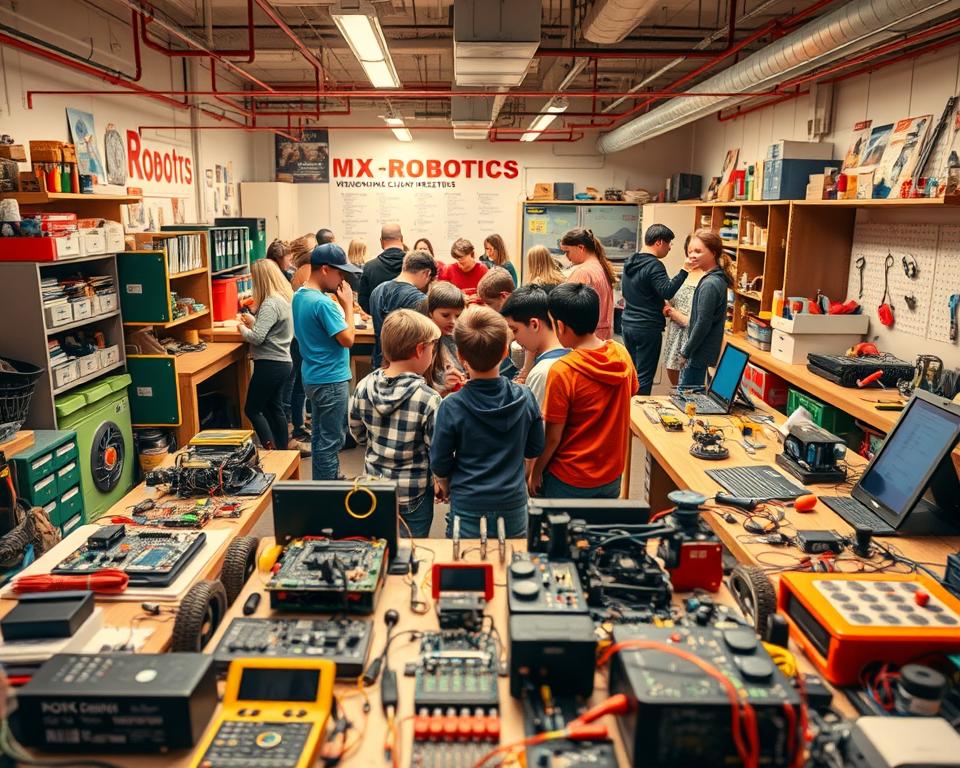
By joining both local and online robotics groups, kids learn more about robotics. They also get better at coding, teamwork, and solving problems.
Conclusion: The Future of Children in Robotics
Robotics education is key in shaping the next innovators and leaders. It boosts kids’ creativity and problem-solving skills. It also prepares them for a future where technology will keep getting better fast.
Lifelong Learning through Robotics
Robotics for kids promotes a lifelong learning culture. As they explore and create with STEM toys and educational robotics, they grow curious. This curiosity can lead to careers in science, technology, engineering, and mathematics.
Building a Brighter Future
Robotics education does more than help kids grow. It helps society value innovation and technology. By investing in educational robotics, we’re building a future where the next generation can solve big challenges and drive progress.
FAQ
What is the best age to introduce kids to robotics?
Kids should start learning about robotics when they are 6-8 years old. This age is perfect for developing problem-solving and creative skills. Some kits are even for 4-year-olds.
What are the benefits of learning robotics for kids?
Robotics teaches kids coding, problem-solving, and critical thinking. It boosts their creativity, teamwork, and collaboration skills too.
What are some popular robotics kits for kids?
Kids love LEGO Mindstorms, Makeblock mBot, and VEX Robotics. These kits are fun, interactive, and easy to use.
How can parents support their child’s robotics education at home?
Parents can encourage creativity and innovation. They should provide resources and guidance. Working on robotics projects together is also great.
What are some online resources for learning robotics?
Online, kids can find tutorials, courses, and forums. Code.org, Robot Turtles, and Robotics Online Courses are great places to start.
How can robotics be integrated with other subjects like math and science?
Robotics makes learning math and science fun. It uses real-world examples to teach programming, math modeling, and science.
What are some safety considerations when working with robotics kits?
Safety is key with robotics kits. Understand risks, follow guidelines, and watch out for electrical and mechanical dangers.
How can kids participate in robotics competitions?
Kids can join the FIRST Robotics Competition, VEX Robotics Competition, and RoboCup Junior. These events let them show off their robotics skills.
What are the future trends in robotics education?
Robotics education will focus more on AI and machine learning. It will also aim to be more inclusive and diverse.
How can educators craft a comprehensive robotics curriculum?
Educators should cover key topics and include hands-on activities. Real-world examples and projects are also important.